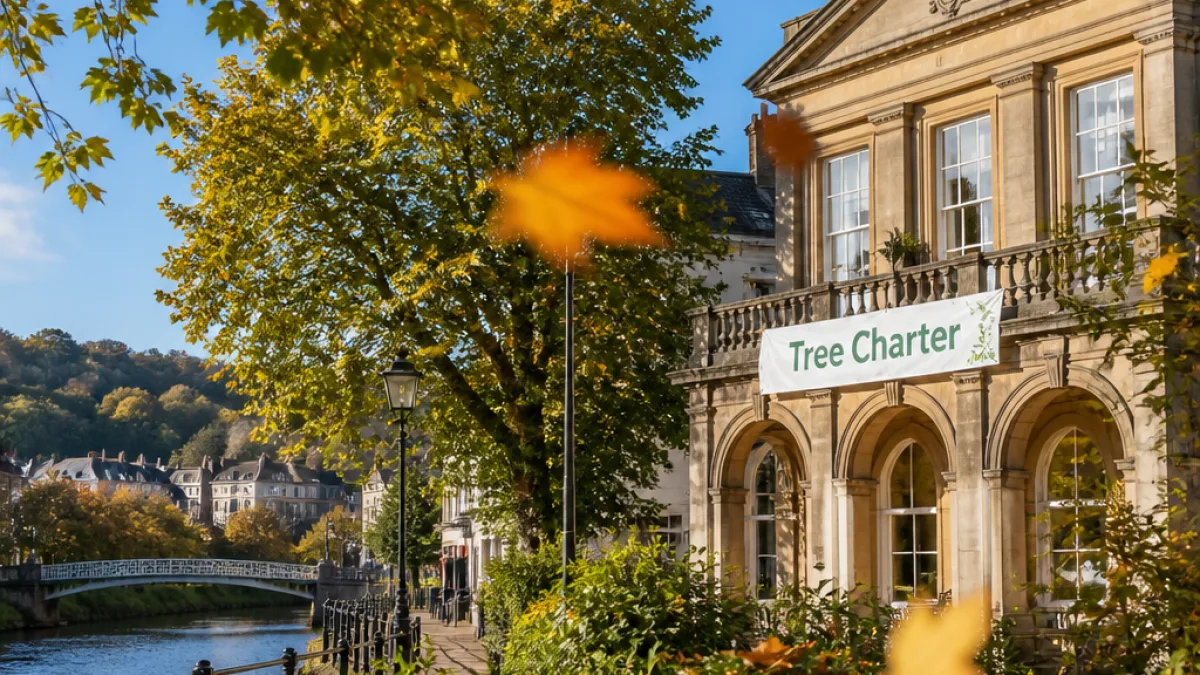
Lewes Town Council has unanimously approved a municipal Tree Charter, making the town the first in England to formally recognise the rights of its local trees, hedgerows and woodlands. The move, backed by councillors across the chamber, declares the intrinsic value of the town’s flora and seeks to protect natural processes that underpin local ecology.
What the charter does — and does not — change
The charter affirms a collective aim for trees in the borough to be allowed to flourish and to sustain ecological processes. It does not create new statutory powers or override national or county planning law. Instead, it is intended as a policy statement and a tool to influence decisions around tree felling, land management and development proposals that affect the town’s green assets.
"the right to flourish and maintain natural ecological processes"
Proponents at the town council said the charter aligns Lewes with an international rights of nature movement, a legal and philosophical approach adopted in parts of Latin America and in other jurisdictions where nature has been granted formal rights. The council’s resolution referenced the experience of countries such as Bolivia, Panama and New Zealand, which have enacted national or regional measures recognising nature in legal frameworks.
Local aims and regional collaboration
Campaigners and environmental groups in Lewes hope the charter will drive a cultural shift in how trees are regarded by local authorities, developers and householders. While the charter itself is not binding, supporters believe it will provide moral and political leverage when felling requests or development proposals put local trees at risk.
Work is already under way with organisations beyond the town boundary. Environmental groups are reported to be engaging with neighbouring councils across the River Ouse catchment area to encourage similar rights‑of‑nature approaches. Those discussions reflect a desire among activists to establish a coherent approach to tree protection across catchment landscapes rather than leaving matters to parcelled planning decisions.
- Unanimous council vote: The Town Council formally approved the municipal Tree Charter.
- Scope: The charter covers trees, hedgerows and woodland within the town.
- Legal status: Non‑binding — intended to influence culture and decisions, not to create new statutory rights.
Local context: why this matters for residents
Lewes is known for its tree‑lined streets, community green spaces and historic specimens such as the town’s well‑regarded Black Mulberry. For residents, the charter is a statement that these features are part of the civic fabric and not merely incidental to development debates. Where appeals against tree felling are lodged, or where planning applications propose removal of mature trees, the council and community groups may now cite the charter when making representations.
Although the legal effect of the charter is limited, its practical impact will be measured in the months and years ahead. Local campaigners will be watching whether planning officers and councillors give the charter weight when advising developers or making decisions on contested sites.
| Item | Detail |
|---|---|
| Adopting body | Lewes Town Council |
| Territory | Town of Lewes — trees, hedgerows, woodlands |
| Legal force | Non‑binding (policy/charter) |
| Comparable approaches cited | Bolivia, Panama, New Zealand |
For those who campaign locally for greater protection of green spaces, the charter represents both a symbolic victory and a practical tool. It gives groups a formally adopted document to reference when lobbying neighbouring authorities or responding to planning consultations. For developers and landowners, it signals increased public scrutiny of proposals that affect significant trees.
Whether the charter prompts wider statutory change will depend on how neighbouring councils respond. The conversations already under way across the River Ouse catchment suggest there is appetite to explore similar measures elsewhere in the locality. If neighbouring authorities adopt parallel charters or policies, the collective effect could be to strengthen safeguards for trees across a larger landscape than just the town.
For now, the charter stands as a local statement of values: a town council choosing to recognise the role of trees in the life of the community and to set out an expectation that they be allowed to flourish. How that expectation is applied in the day‑to‑day business of planning and land management will determine the charter’s practical value to Lewes residents.