
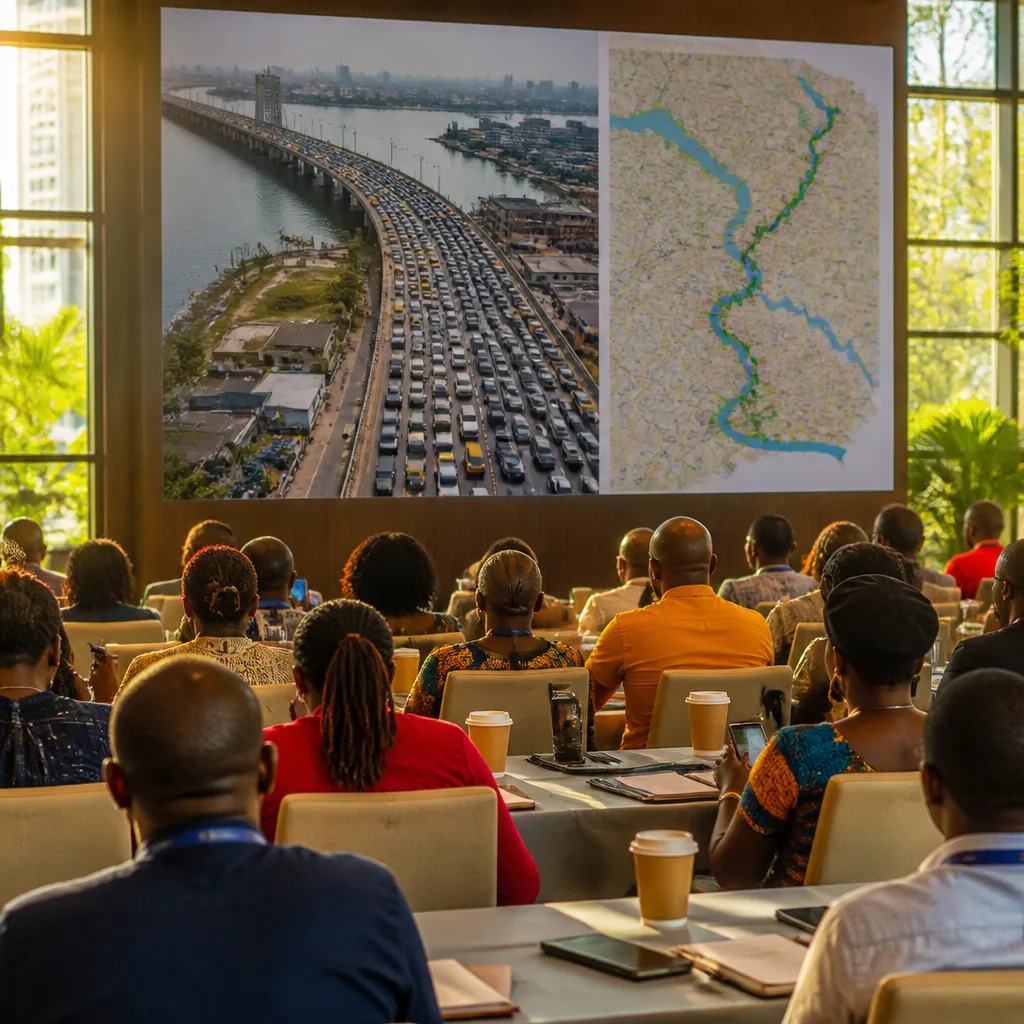
Lagos State Deputy Governor Obafemi Hamzat, who is also the All Progressives Congress (APC) candidate for the 2027 governorship contest, told delegates at PODFEST Naija that the city’s chronic congestion is not merely an infrastructure failure but an ingrained element of everyday living in Nigeria’s largest metropolis.
Traffic as identity and audience
Speaking on Friday, and in remarks circulated the following day by News Central, Hamzat suggested the long hours commuters spend on Lagos roads have become a backdrop to how stories about the city are told — and a captive audience for creative producers. He reflected on the way outside perceptions of Lagos often focus on congestion, large crowds and the sense of chaos, while acknowledging those impressions are not entirely misplaced.
“Anyone who has crossed Third Mainland Bridge at 6 p.m. knows that Lagos traffic is not a problem; it’s just a lifestyle.”
The deputy governor went further, arguing that the time spent in transit contributes to cultural consumption. He told the festival audience he suspected many of the works they create are consumed in short episodes by commuters moving between neighbourhoods such as Ojota and Obalende, and that the traffic itself has, in effect, become a patron of the creative industries.
What this means for creators and commuters
Hamzat urged those working in media, podcasting and entertainment to reframe traffic not only as a problem awaiting technical fixes, but as a lived experience that helps define Lagos. He encouraged creatives to celebrate the phenomenon as part of what makes the city distinct.
- Public perception: Hamzat said the outside narrative around Lagos often emphasises congestion and crowding.
- Cultural impact: He linked long commutes to increased consumption of episodic creative content.
- Industry message: Creatives were told to consider traffic a feature to be acknowledged and even celebrated.
Those comments come amid ongoing debates about urban planning, public transport investment and the pressures of rapid population growth across African cities. While the deputy governor’s remarks reframed congestion in cultural terms, they also underline a basic tension: long commute times can create markets for content, but they are also symptomatic of deeper mobility and infrastructure challenges.
Concrete examples in Hamzat’s remarks
The deputy governor specifically referenced the Third Mainland Bridge, one of Lagos’s principal arteries, using the evening rush hour at 6pm as a shorthand for the city’s routine congestion. His reference to journeys between Ojota and Obalende pointed to everyday commuter flows where people may fill travel time with podcasts, radio, or streamed episodes.
| Reference | Context |
|---|---|
| Third Mainland Bridge | Used as an example of evening congestion and a lived commuting experience |
| Ojota — Obalende | Highlighted as a commuter corridor where episodic content is consumed |
| PODFEST Naija | Event where the comments were delivered to a creative industry audience |
Festival-goers and industry professionals will recognise the commercial logic implicit in his remarks: captive commuters create predictable listening and viewing windows, which can influence how content is produced and released. At the same time, the framing risks normalising long commutes and avoids the policy conversations around reducing journey times, improving public transport or managing urban growth.
For producers, the deputy governor’s comments offer a reminder to tailor formats to the realities of urban audiences — shorter, episodic pieces that fit within a commute may reach listeners more effectively. For residents, the remarks pose a different question: whether embracing traffic as lifestyle should be an acceptance of the status quo, or a spur to demand better mobility solutions.
Hamzat’s remarks were shared publicly by News Central on Saturday, and have added another voice to the ongoing conversation about how Lagosers live with — and make culture from — the daily reality of congestion.














