
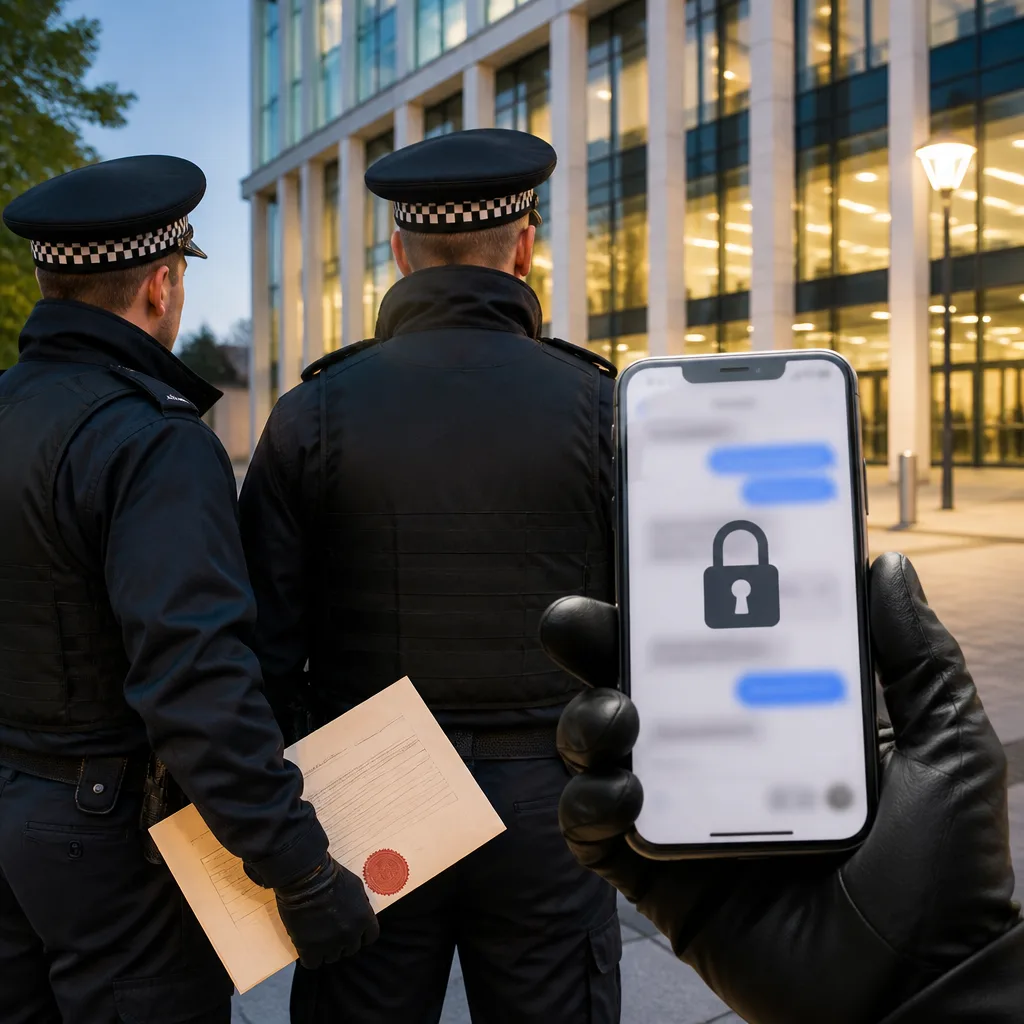
Japan's national police will ask the government to amend the Police Duties Execution Act to allow investigators to remotely access smartphones used by people believed to be directing robberies or frauds, following recommendations from an expert panel, officials said.
Policy shift aimed at disrupting organised recruitment
The move responds to a string of incidents in which criminal groups recruited juveniles, unemployed people and others via social media and instructed them to carry out crimes. Ringleaders frequently communicated through encrypted applications such as Signal and Telegram, and in some cases issued directions from overseas, investigators said. Because end-to-end encrypted messages can be read only on the sender's and recipient's devices, police have found it difficult to intercept plans before offences occurred.
Under the proposal, officers would first identify a mobile device linked to an individual believed to be giving criminal instructions. They would then obtain a judge's warrant permitting remote examination of the handset's communications. The intelligence gathered could be used to warn or protect potential victims and, if necessary, to deploy patrols to areas where a crime was thought to be imminent.
Safeguards and oversight
To address constitutional concerns over the secrecy of communications and privacy, the plan includes several restrictions:
- The National Public Safety Commission would review each case after the fact to confirm compliance with the rules;
- only officers with specialist skills, selected by the National Police Agency, would be authorised to examine devices;
- material outside the scope of a warrant would be deleted, and the user notified afterwards.
"I hope the system will be used properly and effectively," said Toshihiro Kawaide, the University of Tokyo professor who chaired the panel.
Yoshiyuki Morimoto, head of the police agency's secretariat, said the force would work swiftly to put the system in place to help curb the rising harm caused by these crimes. The panel began discussions in August and published the outline of its recommendations on 2 September, according to officials. The agency intends to pursue the legislative revision at the earliest opportunity.
Practical and legal implications
Authorities argue the power is needed because traditional interception techniques are rendered ineffective by end-to-end encryption when messages are accessible only on devices held by organisers or frontline perpetrators. The proposed capability is intended not simply to gather evidence after an offence, but to enable intervention where an attack or scam can be anticipated.
Legal experts and privacy advocates have previously warned that remote access to personal devices carries significant civil liberties risks. The plan’s built-in reviews and restricted access aim to strike a balance between investigative necessity and constitutional protections, but the specifics of how those safeguards will operate in practice remain to be set out in the bills and subsequent regulations.
| Element | Proposed safeguard |
|---|---|
| Authorisation | Judge's warrant required |
| Who can access data | Specialist police officers designated by the National Police Agency |
| Oversight | Post-case review by National Public Safety Commission |
| Handling of irrelevant material | Deletion and notification to device user |
If enacted, Japan would join a broader international debate about the limits of encryption, the powers of law enforcement to access digital communications and the oversight needed to protect citizens' privacy. The police say the change is a response to increasingly sophisticated criminal methods that exploit social platforms and secure messaging to recruit and direct perpetrators.
The National Police Agency made clear it plans to press ahead quickly with drafting the revision and submitting it to lawmakers. Any change to the law will be subject to parliamentary scrutiny and could prompt legal challenges or adjustments depending on responses from civil society groups, privacy campaigners and constitutional lawyers.
For now, the proposal sets out a framework intended to provide investigators with a targeted means of disrupting criminal networks while attempting to maintain legal safeguards for communications secrecy and individual rights.














