
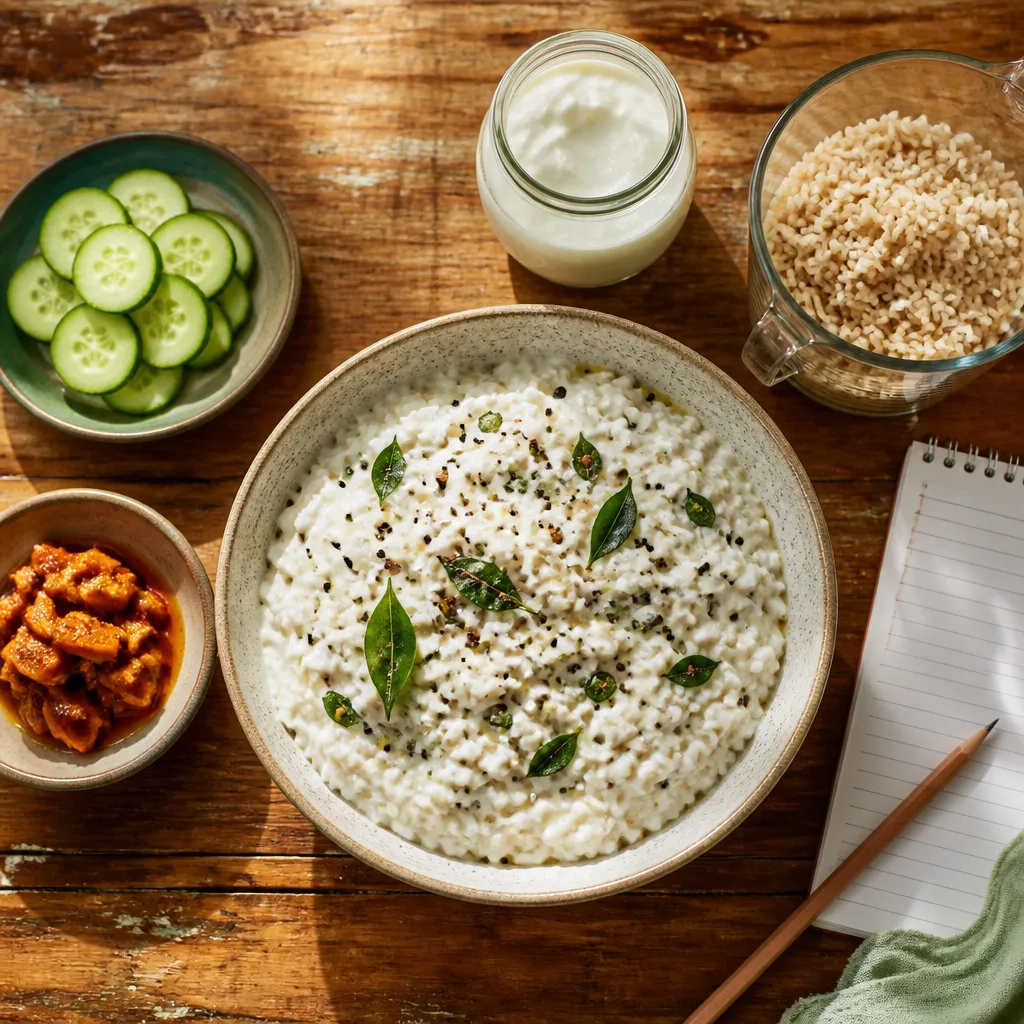
Telugu actor Mahesh Babu has reportedly steered clear of curd rice as part of his dietary routine — but nutrition experts say the simple, familiar dish can be perfectly healthy for many people when prepared and portioned thoughtfully.
What is curd rice and why do people love it?
Curd rice (known variously as thayir sadam, dahi bhat or bagalabath) combines cooked rice with yoghurt and is commonly tempered with mustard seeds, lentils, curry leaves, ginger and chillies. It is often served with pickles or crisp accompaniments and is traditionally regarded as a soothing finish to a spicy meal because of its cooling and digestive properties.
Nutrition: benefits and limitations
Dietitian Amreen Sheikh, chief dietitian at KIMS Hospitals in Thane, told The Indian Express that curd rice can supply useful nutrients — notably protein, calcium and probiotic bacteria from the yoghurt — which may support digestive health.
“The issue rather lies in the quantity, the kind of rice used and the other ingredients that are included in the dish,”
She emphasised that problems arise mainly when portions, rice type or added ingredients make the dish less balanced. For example, curd rice made with highly polished white rice may be less filling and present a relatively high carbohydrate load for people managing weight or blood sugar.
Who should avoid or adapt curd rice?
Certain groups may need to modify or avoid traditional curd rice if they experience adverse reactions to dairy or have specific metabolic concerns:
- People with lactose intolerance or milk-protein allergy — may have bloating, discomfort or other symptoms after dairy.
- Those monitoring blood sugar or weight — polished white rice can raise carbohydrate intake; portion control and rice choice matter.
- Individuals with digestive sensitivities — some may find dairy or particular tempering spices aggravating.
How to make curd rice more balanced
Ms Sheikh suggested practical adjustments that keep the comforting character of the dish while improving nutritional balance. These recommendations are useful for anyone who enjoys curd rice but wants to make it more satisfying or suited to dietary goals:
- Reduce the proportion of rice and increase yoghurt to boost protein and probiotics.
- Use wholegrain or parboiled rice to lower the glycaemic impact and increase satiety.
- Add vegetables, seeds or a protein-rich side (for example, lentil-based dishes) to make the meal more complete.
| Aspect | Typical curd rice | Suggested adaptation |
|---|---|---|
| Rice type | Polished white rice | Wholegrain/parboiled rice |
| Protein | Limited (depends on yoghurt amount) | Increase yoghurt or add protein-rich side |
| Digestive support | Probiotics from yoghurt | Maintain yoghurt; adjust if lactose intolerant |
Putting celebrity diets in context
While an actor’s regimen like Mahesh Babu’s — reportedly excluding curd rice, bread and burgers — may reflect personal fitness aims and a tightly structured lifestyle, Ms Sheikh warned that such restrictive choices are not necessary or appropriate for everyone. Tailoring meals to individual health needs, preferences and tolerance is a more sustainable approach.
In short, curd rice is not inherently unhealthy. It becomes a less suitable option when portion sizes, rice choice or accompaniments undermine satiety or conflict with specific health conditions. Small changes — different rice, added vegetables, larger yoghurt portions or complementary protein — can preserve the comforting qualities while improving nutrition.
For readers who enjoy the dish, these adjustments offer a pragmatic way to keep curd rice on the menu without sacrificing health goals.














