
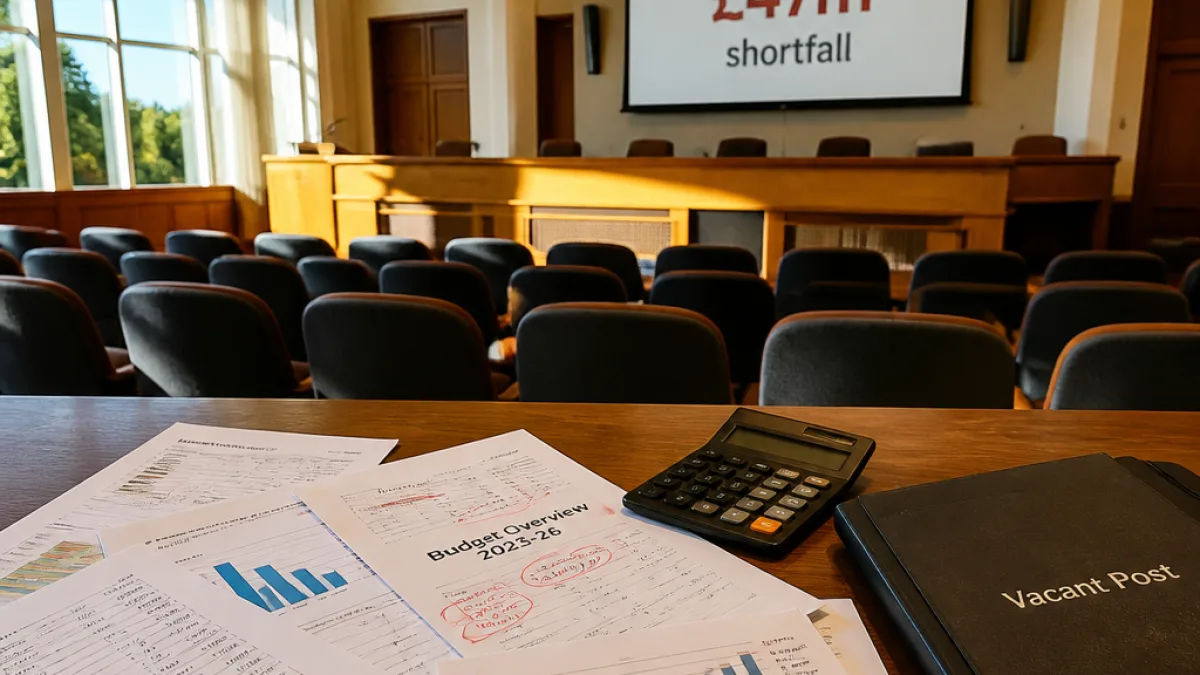
Council sets out Target ’28 to avert growing deficit
Irvine city leaders have instructed officers to develop detailed proposals to eliminate a structural budget shortfall projected to swell sharply over the coming years. The short-term framework, branded Target ’28, seeks to reduce spending and raise revenue so the city avoids what officials said could become an unsustainable deficit.
Officials estimate the city could face an annual shortfall of around $37 million by the start of the 2028 fiscal year on 1 July 2028, with the gap potentially rising to about $47 million before the end of the decade if no corrective action is taken. Council members voted 5-2 to ask staff to keep assessing the options and to return with more concrete measures at an October meeting.
Measures proposed and timetable
City staff set out a package of measures intended to close the immediate structural gap by June 2028. The recommendation is to achieve roughly $27 million in spending reductions and to generate an extra $10 million in revenue by that date. Key elements identified so far include:
- holding and eliminating vacant positions as staff retire or leave;
- reallocating employees internally to maintain critical services while reducing headcount;
- raising a range of fees and increasing cost-recovery for specific services.
A staff report presented to the council noted the adjustments are designed to be long-term changes rather than one-off savings, but council members remain divided over the balance between spending cuts and revenue measures.
“When I learned about this (deficit), I immediately went into cost‑cutting mode,” Councilmember James Mai said at the meeting.
Political disagreement over the approach
While a majority authorised further study of the Target ’28 plan, two councillors dissented. Councilmembers Mike Carroll and James Mai voted against the motion taken forward after backing an alternative proposal that would have reduced councillor stipends and scrapped office budgets — a motion rejected by the rest of the council.
Opponents have warned that reliance on fee increases will shift costs onto residents already facing affordability pressures. “There’s a technical difference between a tax and a fee,” one councillor argued, but added the effect on households will be similar if charges rise sharply.
Context and local consequences
Since 2019, the council has authorised hiring 276 full‑time positions at city hall. The Target ’28 proposals would slow or reverse some of that growth by preventing replacement of vacated posts and by reorganising staff to preserve essential services. Officers have said they will aim to protect frontline provision while targeting efficiencies in administrative and back‑office functions.
The council’s decision to press ahead with further analysis is intended to produce a concrete set of changes in October. That timetable gives officers several weeks to model the distributional impact of fee rises, identify roles for deletion or repurposing and set out any transitional measures for affected employees and service users.
| Item | Target by June 2028 |
|---|---|
| Spending reductions | $27 million |
| Additional revenue | $10 million |
| Projected deficit (July 2028) | $37 million |
| Projected deficit (by 2030) | $47 million |
Residents and community groups can expect more detailed proposals in the autumn as staff return to the council with specific fee schedules, post‑deletion lists and implementation plans. The council’s choices in the coming months will determine whether services can be preserved through efficiency and restructuring alone, or whether the cost burdens will increasingly fall on households through higher charges for municipal services.
Council scrutiny will continue ahead of the next fiscal year, and councillors have signalled the debate will remain a central political issue for the remainder of the term.













