Castle attraction posts big early loss after soft launch
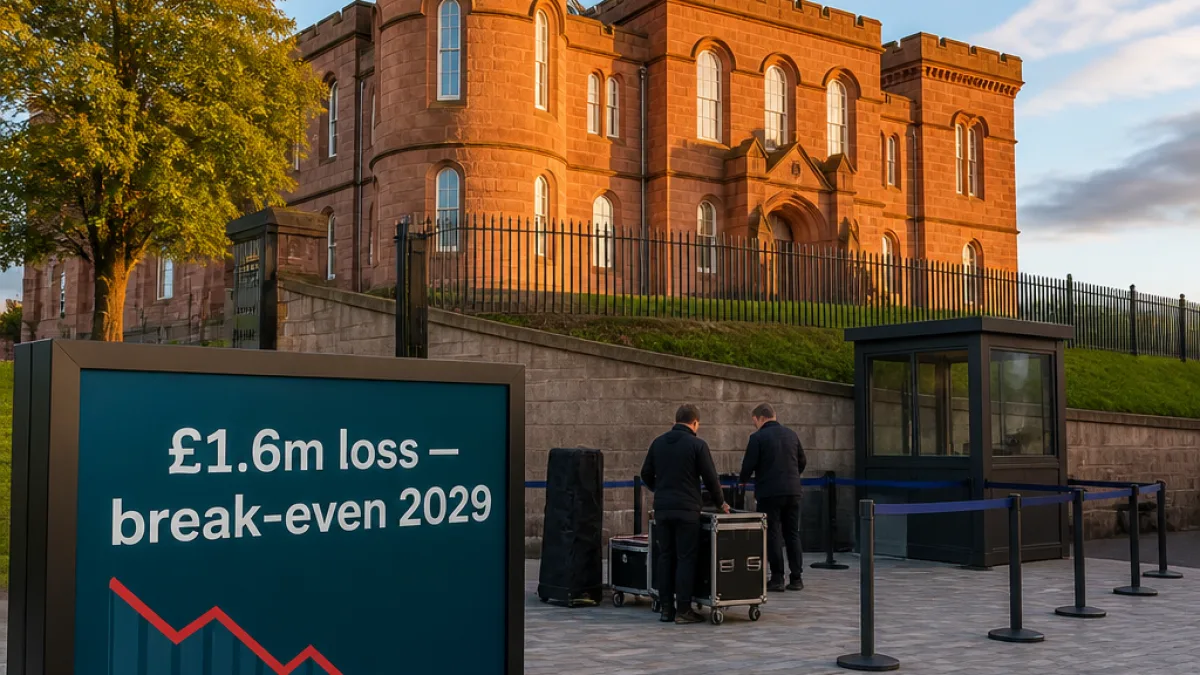
The visitor attraction at Inverness Castle, opened to the public following a soft launch in December 2025 and a formal opening in February 2026, is facing a substantial financial shortfall and will not reach break-even for several years, officials have told Highland Council.
High Life Highland, the charity that operates the castle experience on behalf of the council, has reported the site is set to record a £1.6 million loss in its first year — a reversal from an earlier expectation of a £900,000 profit. The organisation now projects the attraction will not break even until at least 2029.
| Item | Figure |
|---|---|
| First-year projected loss | £1.6 million |
| Earlier projected profit | £900,000 |
| Paying customers to date | 80,000 |
| Proportion of projected footfall achieved | ~55% |
| Capital investment in conversion | ~£47 million |
| Additional support from council (2025/26) | £2.046 million |
Evidence presented to the council’s corporate resources committee shows visitor numbers are running well below expectations. Operators say the attraction has drawn around 80,000 paying customers so far, roughly 55% of forecast levels used in financial modelling for the project.
Staffing and morale under pressure as costs are pared back
Faced with lower-than-anticipated footfall, High Life Highland has moved to a more seasonal staffing model. Staffing levels at the attraction were reduced gradually from 89 full-time staff at the outset to the current figure of 64, the chief executive told councillors.
"I have staff working hard up there in good faith and trying to deliver a really good service just now but what we've done is reduced our staffing from 89 full-time when we opened in December to a current, I think it's 64 and we've done that humanely and incrementally so there hasn't been any reductions - this has been through natural attrition."
High Life Highland’s leadership described the approach as humane and incremental, achieved through natural attrition rather than compulsory redundancies. Nonetheless, concerns were raised about staff morale and the challenge of reducing operating costs while attempting to grow the business.
Public investment and questions about returns
The castle’s conversion from a court building to a public attraction was the product of a multi-year project with substantial public funding. Around £47 million was invested over four years under the City-Region Deal, with additional support provided by both the Scottish and UK governments. Highland Council also provided further financial assistance, including a one-off £2.046 million injection in 2025/26 ahead of the attraction’s opening.
- Project opening: soft launch December 2025; official opening February 2026.
- Current footfall: 80,000 paying customers to date, ~55% of target.
- Operational change: staff reduced from 89 to 64 through natural attrition.
Councillors and local stakeholders will be watching closely as High Life Highland implements its new five-year strategy for growth. The organisation must balance the twin aims of containing operating costs and increasing visitor numbers, while safeguarding the workforce and the long-term promise of the attraction as a draw for tourists and a civic asset for Inverness.
The shortfall highlights the difficulty of translating significant capital investment into sustainable visitor income, particularly in the first year of operation. For residents and taxpayers in the Highlands, the coming months will be crucial in determining whether the castle experience can meet its potential and justify the public funds committed to the project.