
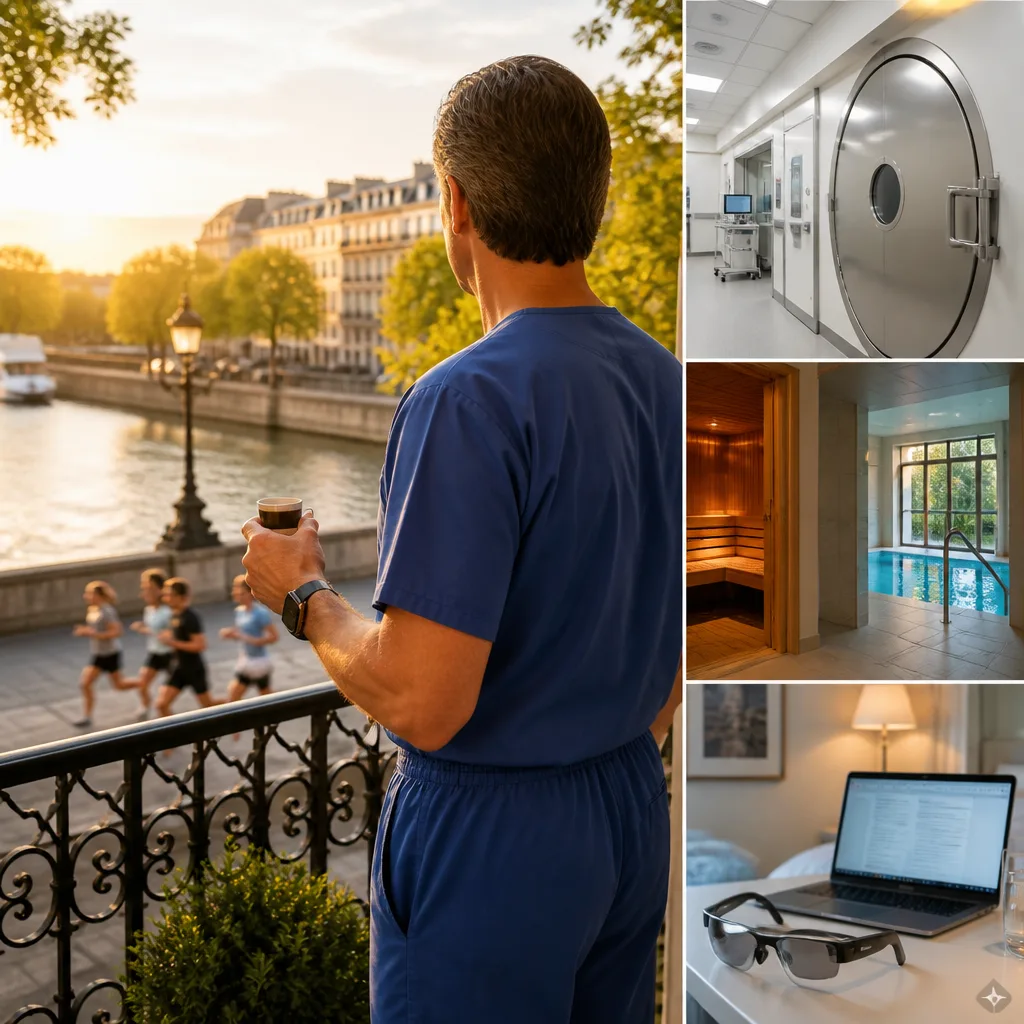
A London plastic surgeon has outlined a disciplined daily pattern that prioritises sport, measured eating and a variety of recovery tools, while embracing selective technology in both clinic and personal life.
Morning habits and daily structure
He starts each day with an alarm at 6.45am, opening the curtains to check the weather and, when the sky allows, sitting on his balcony with an espresso to gather his thoughts. The balcony overlooks a river and offers a chance to watch joggers pass by — a quiet moment before a busy day.
Rather than multiple small meals, he favours a simple approach to nutrition: two substantial, balanced meals — lunch and dinner — avoiding snacks and aiming for a mix of healthy carbohydrates and protein. This is part of a broader commitment to staying in shape, built on a history of competitive sport and sustained by regular gym sessions at the building where he lives. He also works with a personal trainer for added motivation and structure.
Recovery methods that double as clinical tools
Recovery plays a prominent role in his routine. He uses a combination of traditional and technological methods to manage niggles and injuries, including regular sauna visits and swimming. For persistent shoulder and back problems he reports benefit from a TENS machine and a muscle gun.
“I am often wheeled under the Dermalux by my staff to improve the bio-modulation of my skin”
At his Mayfair clinic there is also a hyperbaric oxygen chamber, which he turns to when he has pulled a muscle or tendon; he regards it as undervalued and effective in speeding recovery by increasing oxygen delivery to tissues.
| Tool | Purpose |
|---|---|
| Sauna and swim | General recovery and relaxation |
| TENS machine | Relief for shoulder and back injuries |
| Muscle gun | Targeted muscle recovery |
| Hyperbaric oxygen chamber | Speeds healing of pulled muscles/tendons |
| Dermalux | Skin bio-modulation |
Technology and a measured approach to data
On wearables, his pick is simple: an Apple Watch. He does not track every metric obsessively, warning that constant data scrutiny can become counterproductive. The device is used selectively, for timing challenges or monitoring specific targets.
He has also adopted AI in his professional workflow, particularly to assist with note-taking and producing treatment plans. On the hardware side he uses Meta AI glasses fitted with reading lenses to help with computer work; the glasses link to his phone, join Zoom calls and can be used for on-the-spot AI queries and research.
Work–life balance and wellbeing
Mental fatigue and stress do not appear to be major issues for him. He attributes this to loving his job, maintaining a healthy lifestyle and regular sport, which together keep him well both mentally and physically. His approach marries the practical — disciplined meals, regular exercise, targeted recovery — with selective tech that supports rather than dominates his day.
- Start time: 6.45am alarm and quiet balcony coffee
- Meals: two main meals (lunch and dinner), no snacking
- Exercise: regular gym sessions, personal trainer, sauna and swim for recovery
- Tech: Apple Watch, Meta AI glasses, AI-assisted note-keeping
The picture that emerges is of a clinician who treats recovery and prevention with the same seriousness as clinical practice, and who uses technology pragmatically to boost efficiency and recovery rather than as an end in itself. For readers interested in practical wellbeing tips, the combination of consistent exercise, focused nutrition and targeted recovery tools offers a clear, reproducible blueprint grounded in professional experience.














