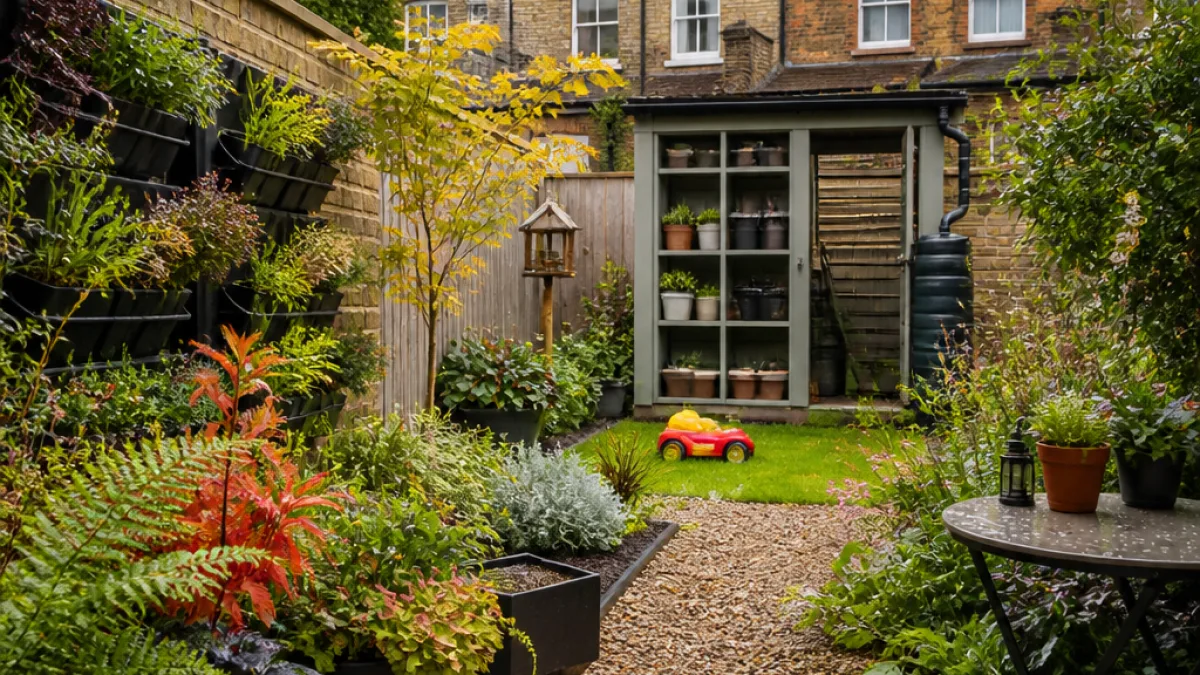
As the summer draws to a close and the city enjoys the first welcome rain, many Oxford households are turning their attention back to their gardens. For those with limited outdoor space, getting the layout and planting right can make a small patch feel significantly bigger and more useful. Amandine Lepers‑Thornton, a garden coach and horticulturist who has worked across Oxford for more than a decade, sets out the common problems she encounters and the practical approaches she recommends.
Small gardens must do many jobs
Space is the most frequent constraint. In Oxford’s terraces, semi‑detached streets and new developments, gardens often have to fulfil multiple roles: seating, storage, play space for children, room for pets, edible planting and sometimes a garden room or office. When a plot needs to tick so many boxes, it can quickly feel cluttered or underused.
"I’ve lived in Oxford for over a decade but I really got to know Oxford gardens through my work as a garden coach."
Lepers‑Thornton argues that a clear assessment of how residents actually use their outdoor space — and how that use changes with the seasons — is the starting point for any improvement. She favours a ‘less is more’ approach for small plots, concentrating on multifunctional solutions and low‑maintenance planting.
Five recurring challenges and practical responses
- Limited space — prioritise zones: seating, storage and planting. Choose adaptable furniture and consider vertical planting to free up floor area.
- Clutter and poor layout — declutter and create sightlines. A single focal point, such as a tree or a planter, can make a space feel larger.
- Water stress in hotter seasons — use drought‑resilient species and mulches to retain moisture, and favour container planting for greater control.
- Need for wildlife value — plant for pollinators and nesting birds by including a mix of native and nectar‑rich species.
- Demand for multi‑use areas — integrate storage into seating and use raised beds which double as benches or play edges.
The horticulturist emphasises that container plants can be especially useful where ground area is limited. Surrounding a seating area with pots and planters creates a relaxed atmosphere while allowing quick seasonal changes and concentrated planting for wildlife or edibles.
Practical suggestions for Oxford households
Readers unfamiliar with garden design may feel overwhelmed. Lepers‑Thornton often works with homeowners who want greater enjoyment from their gardens but lack design knowledge. Her recommendations are straightforward: start by mapping how the garden is used, then focus on impactful, wildlife‑friendly and drought‑resilient planting schemes. Small interventions — a single raised bed, a line of planters, or a compact storage bench — can transform functionality without requiring a full redesign.
| Problem | Practical fix |
|---|---|
| Limited floor area | Vertical planting, stacked planters, foldaway furniture |
| Dry summers | Drought‑tolerant species, mulching, smart watering |
| Need for wildlife | Native shrubs, nectar‑rich perennials, sheltering features |
For many Oxford residents, gardens are not simply decorative: they are extensions of the home, a workspace in which to potter or to grow food, and a refuge for wildlife in an increasingly built‑up city. Small gardens, when planned carefully, can provide all of these benefits without becoming high‑maintenance burdens.
Local gardeners who want to make changes are advised to think seasonally, prioritise multifunctionality, and choose plants and materials that conserve water and support urban biodiversity. With considered design, even the smallest Oxford plot can become a practical and pleasant outdoor room.