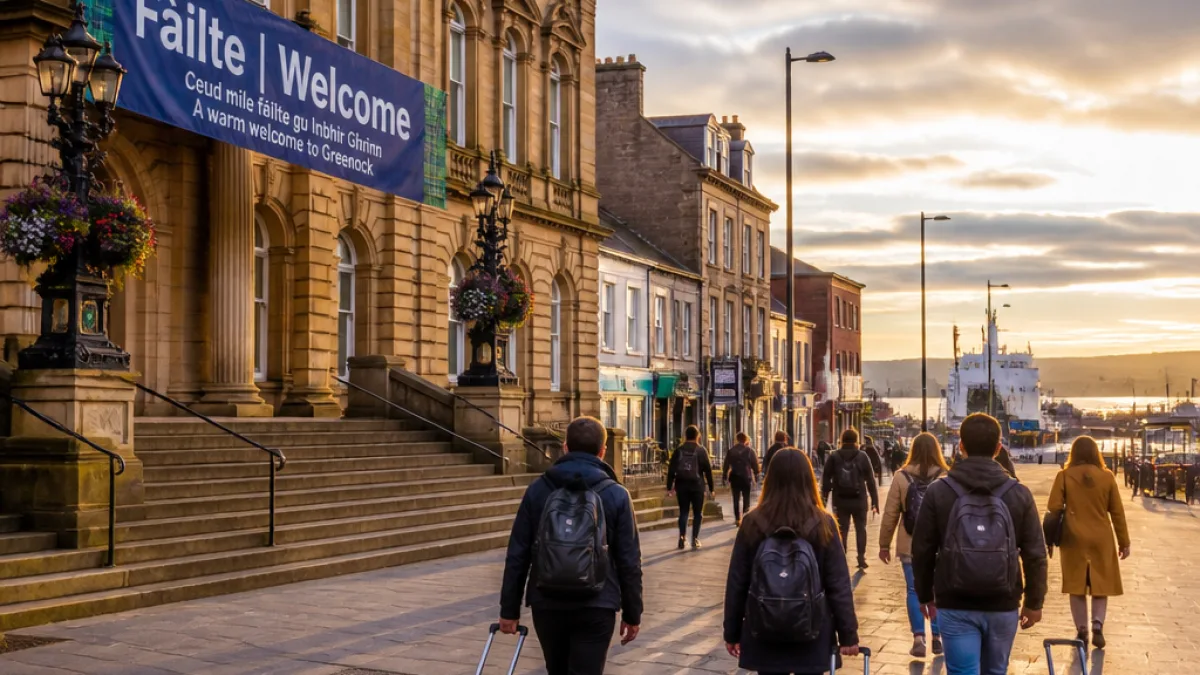
Council strategy aims to reverse decades-long population fall
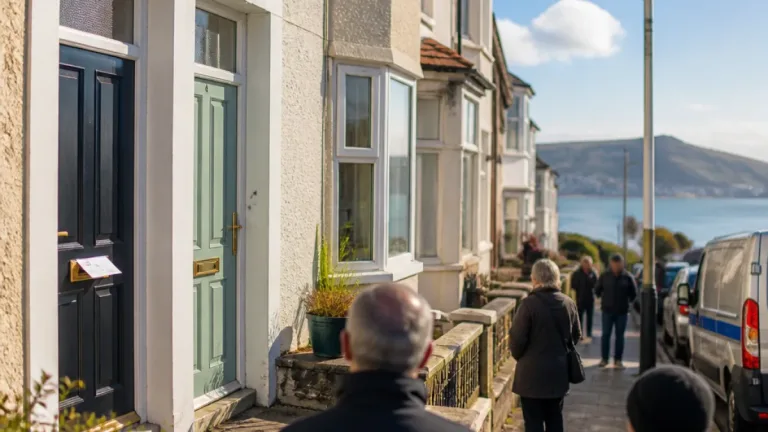
The local council in Greenock has placed attracting refugees and other migrants at the heart of its strategy to confront a sustained decline in the town’s population. The move forms part of a broader effort to sustain local services, boost community life and offset demographic change that has been gathering pace since the late 20th century.
Greenock, roughly 30 kilometres west of Glasgow, once had a substantially larger population during its industrial heyday. Local records and reporting indicate that in 1981 the population stood at about 100,000. Today that figure is around 78,000, and authorities are working from projections that suggest a further fall of about 16% over the next two decades if current trends continue.
| Year | Approximate population |
|---|---|
| 1981 | 100,000 |
| Present | 78,000 |
| Projection (20 years) | -16% from current |
New arrivals already forming part of the community
Residents and community groups say migrants have become visible across the town and include people from Africa, Afghanistan and Syria, together with those who arrived more recently as Ukrainian war refugees. Reporting from the area describes Greenock as reflecting increasing diversity and a number of newcomers have praised local hospitality.
"Scottish people are lovely and accommodating,"
That sentiment, expressed by one African immigrant in local reporting, was echoed by another who described Greenock as a "lovely, friendly" town. Such firsthand impressions have informed council thinking as it seeks to present Greenock as a place where families and individuals can rebuild lives and contribute to the local economy.
Why migration is now part of local planning
The council has identified population decline as its chief priority. The erosion of traditional industries, particularly shipbuilding and related trades which were once central to Greenock's economy, has been a long-term factor in shrinking employment opportunities and encouraging out-migration. Bringing new residents into the town is viewed as a pragmatic response aimed at:
- Halting or mitigating the projected population fall;
- Supporting local services such as schools, shops and transport by enlarging the customer and taxpayer base;
- Reinvigorating community life and addressing labour shortages in local sectors.
Council-led campaigns to attract migrants form part of a broader policy mix. Local authorities across Scotland and the UK have debated the role of migration in sustaining population and economic resilience; Greenock’s approach places newcomers explicitly within the frame of urban renewal.
Local implications and questions for the future
For residents, the policy raises practical questions about housing supply, school places, integration services and the capacity of existing community organisations. It also brings opportunities: a larger, more diverse population can sustain shops, cultural activities and local labour markets that would otherwise shrink further.
Crucially, the success of any scheme to attract migrants will depend on co-ordination between the council, housing providers, health and education services, and community groups. Ensuring that newcomers can access support and employment, while also addressing local concerns about resources, will determine whether migration becomes a long-term solution to depopulation in Greenock.
The council’s initiative represents a significant local policy choice — one that reframes migration from a national political flashpoint into a municipal tool for rebuilding a town shaped by industrial change. How that policy is implemented, and how residents experience the consequences, will be central to Greenock’s future prospects.