
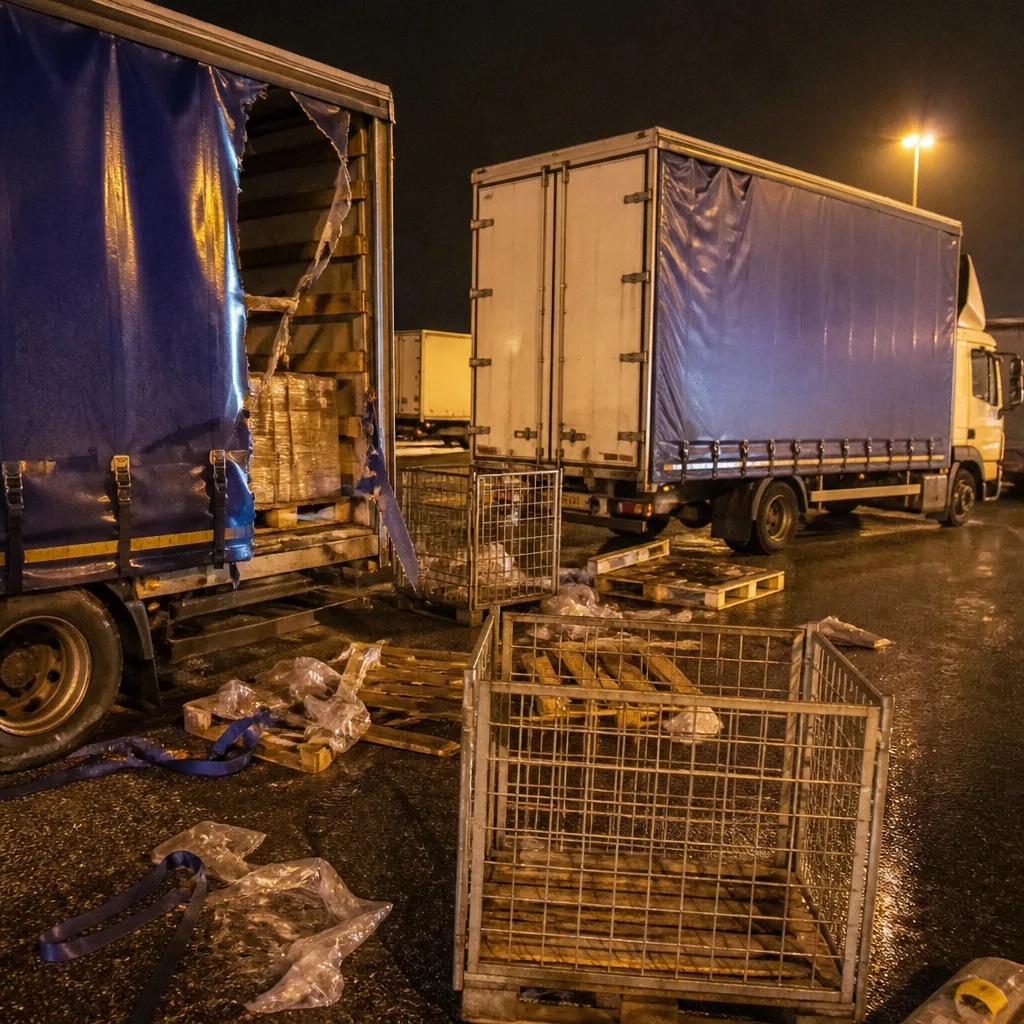
A founder of a small haulage firm has warned that the theft of freight from lorries is crippling small operators and must be treated as a serious organised crime threat. Rhys Hackling, who runs Direct Connect Logistics in Bicester, said one stolen load can be enough to put a business with only a couple of vehicles out of business.
Financial hit can be catastrophic for small firms
Hackling told reporters that a single theft can wipe out the monthly profit of a company running "two or three vehicles on tight margins". He recounted an incident in January 2022 when thieves forced entry to a truck and removed pallets of batteries, leaving the vehicle out of service for three days and the cargo unrecoverable.
"In January 2022, thieves attacked one of our trucks and took pallets of batteries. The truck was off the road for three days and the load was gone."
He said the problem is widespread and affects businesses of all sizes and vintages, adding that there are effectively two ways loads are lost: removal from parked vehicles, and consignments being handed to the wrong person.
Official figures and industry concerns
Hackling cited government statistics he said show an average of nine incidents a day across the UK and more than £65 million worth of goods stolen in the last year. He urged greater protection for drivers and said more must be done to ensure freight crime is recorded and treated as organised rather than merely opportunistic.
His prescriptions are straightforward: better recognition by law-enforcement agencies of the organised elements behind many thefts, and improved safe stopping places for drivers to reduce exposure when vehicles are left unattended.
- Immediate risk: single load theft can eliminate monthly profit for small operators.
- Scale: cited figures of nine incidents daily and over £65m in stolen goods in a year.
- Remedies urged: safer parking for drivers and formal recognition of freight crime as organised crime.
Hackling emphasised that not all thefts are preventable but that many are avoidable with better infrastructure and policing practice. He suggested that some losses stem from handovers to impostors as much as theft from stationary vehicles.
| Measure | Cited figure |
|---|---|
| Incidents per day (UK) | 9 |
| Value of goods stolen (last year) | £65 million+ |
Wider implications for supply chains and policing
The concerns raised sit at the intersection of commercial resilience and policing priorities. Small and medium-sized haulage firms typically operate on tight margins and limited cashflow; the loss of a valuable load can affect payroll, maintenance and the ability to fulfil contracts. Hackling warned that repeat losses threaten the very viability of such businesses.
He further argued that recognition of freight crime as an organised activity would change how incidents are recorded and investigated, potentially unlocking greater resources and intelligence-led responses. Improved secure parking facilities would also reduce opportunities for thieves who target lorries when drivers stop for rest, refuelling or administrative tasks.
The issues described add to wider industry calls for action. Road haulage and logistics bodies have in recent years highlighted gaps in secure lorry parking across the UK and urged government investment. If the figures cited by Hackling accurately reflect the national picture, there are implications for public policy on infrastructure, policing classifications and industry standards for cargo security.
For small operators who already face labour, fuel and regulatory pressures, the additional burden of freight theft represents a pressing business and safety risk. Whether through improved public-private cooperation, targeted policing operations or enhanced secure stopping places, industry leaders like Hackling say a coordinated response is needed to prevent further losses.
Any change in official classification or resources would require action by policing bodies and ministers responsible for transport and criminal justice. Until that happens, the prospect of a single theft putting a micro-haulier out of business remains a stark warning from the sector.














