The deaths of four migrant farmworkers in southern Italy in June have intensified scrutiny of the so‑called agromafia, a network of organised criminal activity alleged to be deeply embedded in the country's agricultural supply chain.
Brutal attack renews focus on exploitation
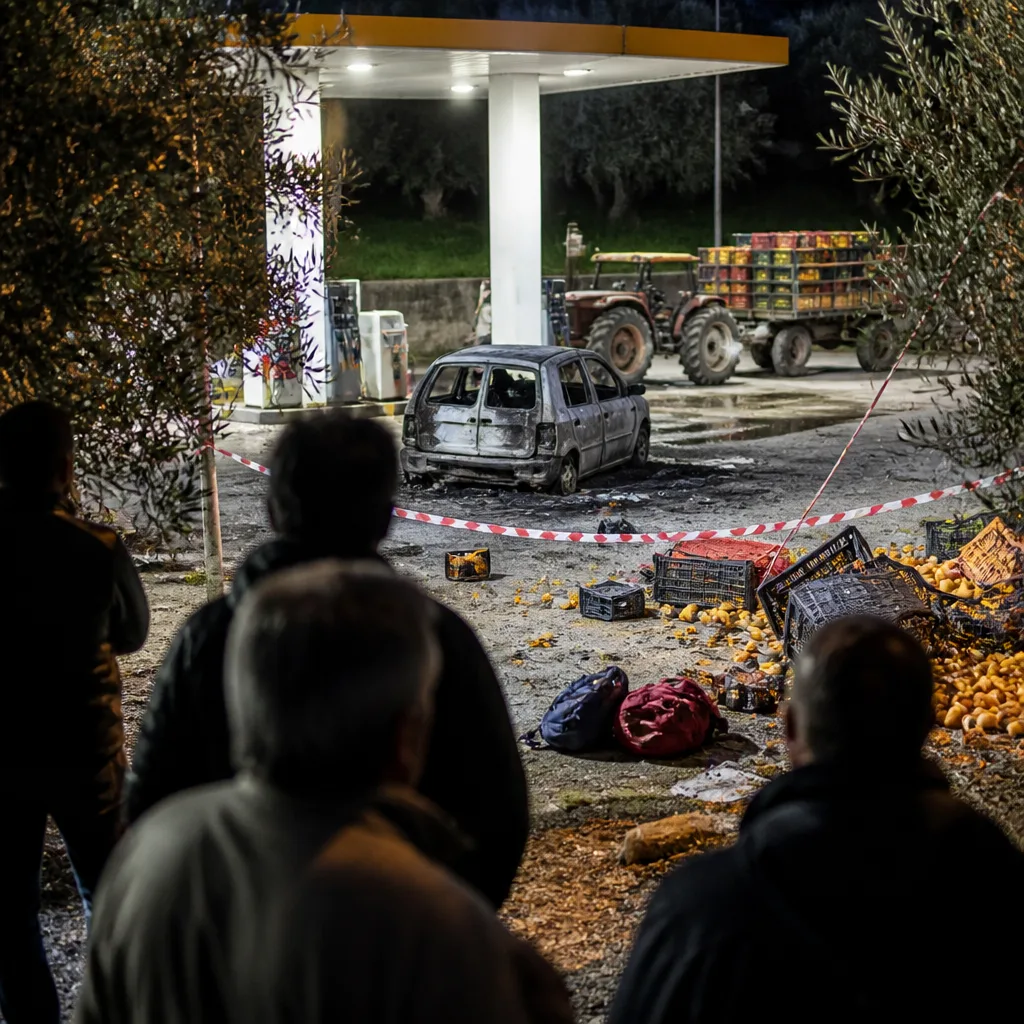
Authorities say the victims — three Afghan nationals and one Pakistani national — were burned to death in a car at a petrol station in Calabria after an apparent dispute over unpaid wages. Surveillance footage released to investigators reportedly shows two men setting the vehicle alight and obstructing the doors to prevent escape. Two Pakistani nationals, described by prosecutors as intermediaries, have been arrested and face charges of aggravated murder.
The case has revived international concern about criminal groups that, according to analysts and law enforcement, have inserted themselves throughout Italy’s farming economy and related markets. Commentators describe the agromafia not merely as labour exploitation networks but as a wide‑ranging ecosystem that touches land ownership, food supply, distribution and public contracting.
Scale and methods of the agromafia
Available reporting estimates the illicit proceeds generated by the agromafia at about €25 billion a year. Organised outfits are accused of deriving profit through a variety of activities including:
- exploitation of vulnerable workers via the caporalato gangmaster system;
- food counterfeiting and price manipulation;
- land appropriation and extortion;
- fraud against public funds and corrupt procurement practices.
| Aspect | Reported detail |
|---|---|
| Estimated annual revenue | €25 billion |
| Typical criminal mechanisms | Labour racketeering, trafficking, counterfeiting, extortion |
Observers say the caporalato model — in which intermediaries recruit, control and supply labour on farms often in illegal or semi‑legal arrangements — is a central mechanism by which profits are extracted. That system relies on the precarious legal and economic status of many migrant workers, who may be paid little or nothing and face threats if they dissent. Critics argue that these informal labour markets create fertile conditions for racketeering, human trafficking and other crimes to flourish.
Deadly pattern and public reaction
This is not an isolated instance of deadly exploitation in Italy’s agricultural sector. Reporting recalls earlier fatal episodes that prompted national outrage: a 2024 case involving an undocumented farmworker, Satnam Singh, who reportedly died after his employer abandoned him following a workplace injury; and the death nearly a decade earlier of Paola Clemente, who collapsed during a long shift in a Puglian vineyard. Such incidents are routinely cited by campaigners and investigators as evidence that exploitative practices in agriculture can reach the level of modern slavery.
For prosecutors and policy makers the challenge is twofold: to secure convictions in complex criminal investigations that cross regional and national boundaries, and to tackle the structural conditions — irregular migration, fragile labour protections and opaque supply chains — that allow criminal ecosystems to persist.
Implications for enforcement and reform
Law enforcement sources say dismantling agromafia networks requires coordinated action across policing, labour inspection and immigration agencies, alongside measures to increase transparency in food supply chains and to protect vulnerable workers. Campaign groups have called for stronger safeguards for seasonal and migrant labour, better access to legal channels of employment and more robust enforcement against intermediaries who profit from exploitation.
Prosecutors will now pursue the pending murder charges in Calabria while investigators continue to map the wider criminal relationships that may be connected to the attack. The case has already prompted renewed political and community debate over how to prevent exploitation and bring those responsible to justice without further endangering the workers whose labour underpins substantial parts of Italy’s food economy.
As the legal process unfolds, officials and advocacy groups emphasise that any effective response will need to combine criminal justice measures with reforms to labour regulation and migrant protections to address the systemic drivers that criminologists say empower the agromafia.