Permit overhaul slashes waiting times and brings departments together
Dorchester County’s move to an electronic permitting platform has dramatically shortened the time applicants wait for decisions and made it easier for residents and businesses to track progress, county officials told councillors on Monday.
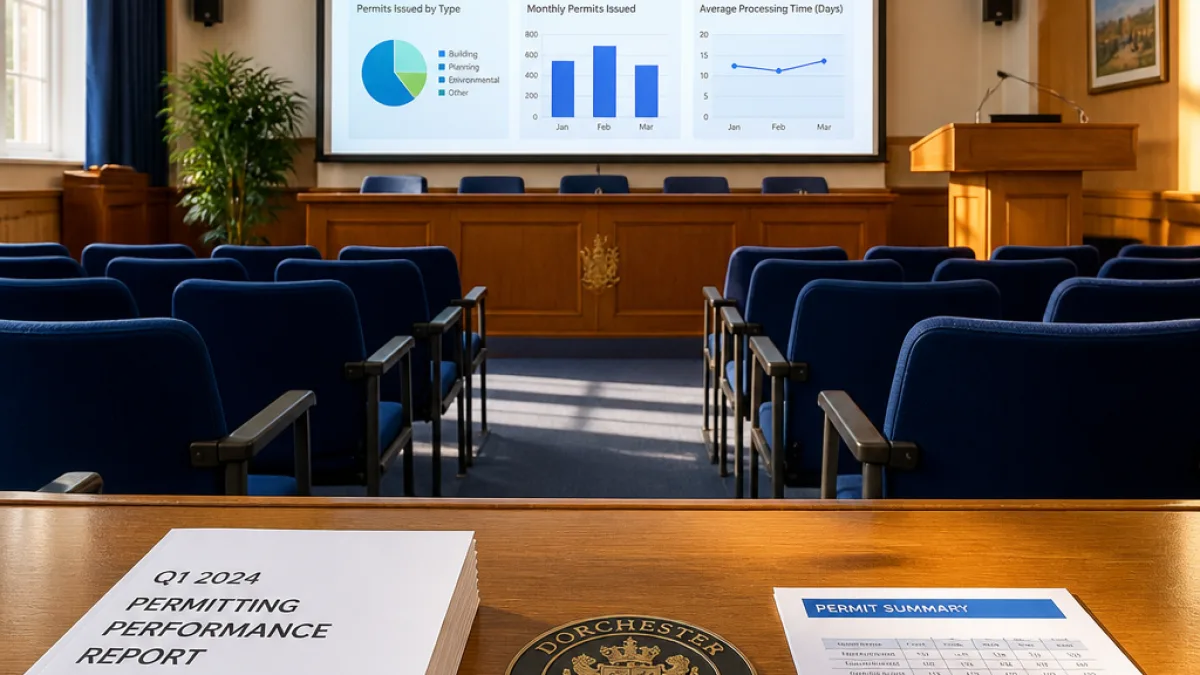
The Planning and Zoning Department’s director, Suzanne Webb, reported that the OpenGov system, introduced in April 2025, has reduced the average permit processing time from around 120 days to just 13 days. Since the launch, the platform has processed 1,864 permits, with the department issuing 1,293 building permits in fiscal year 2026 alone.
- OpenGov software launched: April 2025
- Permits processed since launch: 1,864
- Average processing time reduced from 120 to 13 days
- Fiscal 2026 activity: 1,293 building permits, 2,577 inspections, 640 new 911 addresses
The presentation to the council emphasised that the change was about more than replacing paper with digital forms. Webb said the intention was to create a “more efficient, transparent and coordinated” system across county departments and external reviewing agencies. Centralisation means applicants can submit documents, respond to comments, track their application and pay for permits online—removing the need for repeated trips to county offices.
“I really anticipated at least six months of a transition period,” Webb told councillors. “I thought that was going to be rough for us. It wasn’t. We didn’t have anybody complain about it.”
Officials said the platform allows every agency involved in development review—Planning and Zoning, Public Works, Soil Conservation and the Health Department—to access and comment on applications in the same place. That, they believe, has reduced uncertainty for applicants and cut down on the volume of complaints previously generated by fragmented communications.
| Metric | Figure |
|---|---|
| Permits processed since April 2025 | 1,864 |
| Building permits in fiscal 2026 | 1,293 |
| Inspections in fiscal 2026 | 2,577 |
| New 911 addresses in fiscal 2026 | 640 |
Council President Lenny Pfeffer said the system had made a noticeable difference to residents’ experience. The centralised approach replaces a previous process that relied on separate emails and paper plans for different departments.
What this means for local people and businesses
For householders arranging extensions or conversions, faster processing times should reduce uncertainty and the potential expense of waiting for approvals. Small builders and tradespeople can also benefit: quicker decisions mean schedules can be set earlier and cashflow managed with greater confidence. The addition of online payment and remote access reduces the need for in‑person visits, which is particularly helpful for applicants based some distance from county offices.
For local planning officers and regulatory teams, the centralised record of comments and approvals should speed up co‑ordination and reduce duplicated effort. The count of 640 new 911 addresses in fiscal 2026 underlines an active period of development and civic updates that affect emergency services, deliveries and mapping.
Officials noted the transition was smoother than expected and, according to Webb, generated few complaints. That does not preclude future issues as volumes and types of applications change, but the initial data points to a successful digital transition that residents and businesses in Dorchester County will feel in practical ways: shorter waits, clearer status updates and simpler interactions with the council.
Council members were shown the statistics as part of a wider drive to improve transparency and accountability in development control—an area that touches on housing, local infrastructure and the livelihoods of many small firms in the county.