
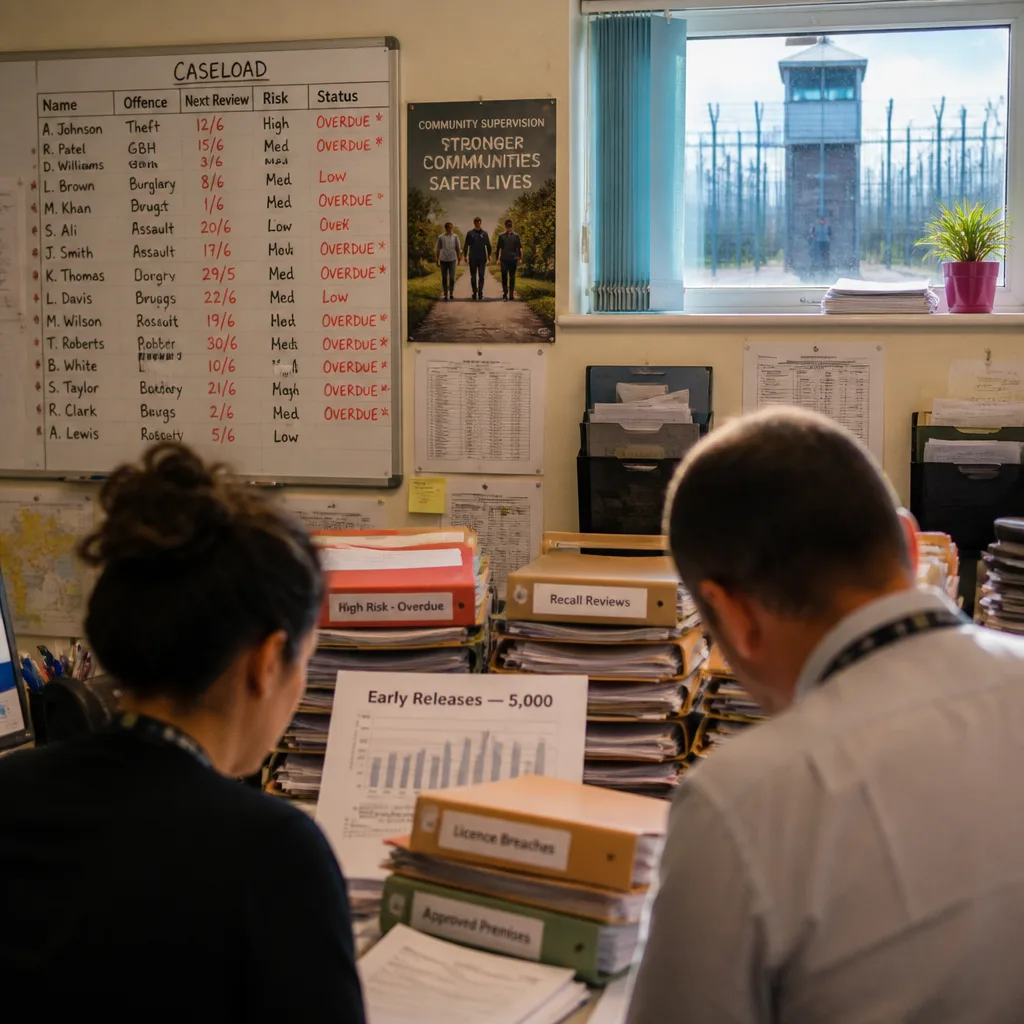
The chief inspector of probation has warned the Government’s scheme to release a cohort of prisoners earlier than planned could increase the risk of serious harm if frontline services are unable to cope.
Inspector highlights strain on staff and caseloads
Martin Jones, who leads inspections of probation in England and Wales, told the BBC that probation officers are facing “unprecedented pressure” and will be asked to manage roughly 5,000 people expected to be freed early under changes to sentencing law.
Inspectors note the Probation Service currently holds a caseload of about 258,000 cases — a figure Mr Jones described as almost three times the number of people held in prison — and warned the early release programme would add considerably to that burden.
“The worst that can happen is that things are missed, plans aren’t put into place and we don’t give people the level of service they need and that leads to serious further offences,”
When directly asked about the potential consequences for public safety, Mr Jones warned the impact could be severe, saying it “could be a serious sexual or violent offence or even murder”.
Government response and measures
A Ministry of Justice spokesperson said protecting the public remained the Government’s “top priority”, pointing to the Sentencing Act and what it described as a record investment in probation and community punishments.
The MoJ cited a £700 million funding package and said it had exceeded recruitment targets for 2025/26, with 1,389 people starting as trainee probation officers in the last year. It also noted that prisoners convicted of rape or child sex offences have been excluded from the early release changes.
| Measure | Figure |
|---|---|
| Probation caseload | 258,000 |
| Planned early releases | 5,000 |
| Trainee probation officers (last year) | 1,389 |
| Investment in probation and community punishment | £700 million |
Downing Street has already delayed the start of early releases. The Prime Minister, Andy Burnham, paused the scheme last month amid strong public and political opposition after reports that two of the killers of a police officer might have been affected by the change. He subsequently moved back the first release date from September to October to give the service more time to prepare.
Union action and frontline concern
Probation staff have expressed alarm. The probation union Napo said the service was struggling to cope under current pressures and ballots of staff produced an emphatic vote in favour of potential strike action in protest at the early-release proposals.
Inspectors and unions argue that without firm guarantees on resources, caseload reductions and effective risk management, the combination of higher numbers in the community and overstretched staff could undermine supervision and public safety.
- Staffing and capacity: Inspectors point to the need for more experienced officers and for caseloads to be reduced to safe levels.
- Timing: The Government has delayed the scheme’s rollout but no new definitive start date has been set beyond the shift to October.
- Safeguards: Specific offences — including rape and child sex crimes — have been excluded from the early-release measures.
Officials say recruitment and investment will address the shortfall, but critics warn that numbers alone may not be sufficient if training, supervision and operational systems are not also improved. The tension between relieving pressure on prisons and maintaining public protection now sits at the centre of the debate about how best to manage the justice system.
As the Government prepares for the revised timetable, inspectors, unions and ministers will face scrutiny over whether pledged resources and practical measures can be delivered quickly enough to prevent any deterioration in offender management and community safety.














