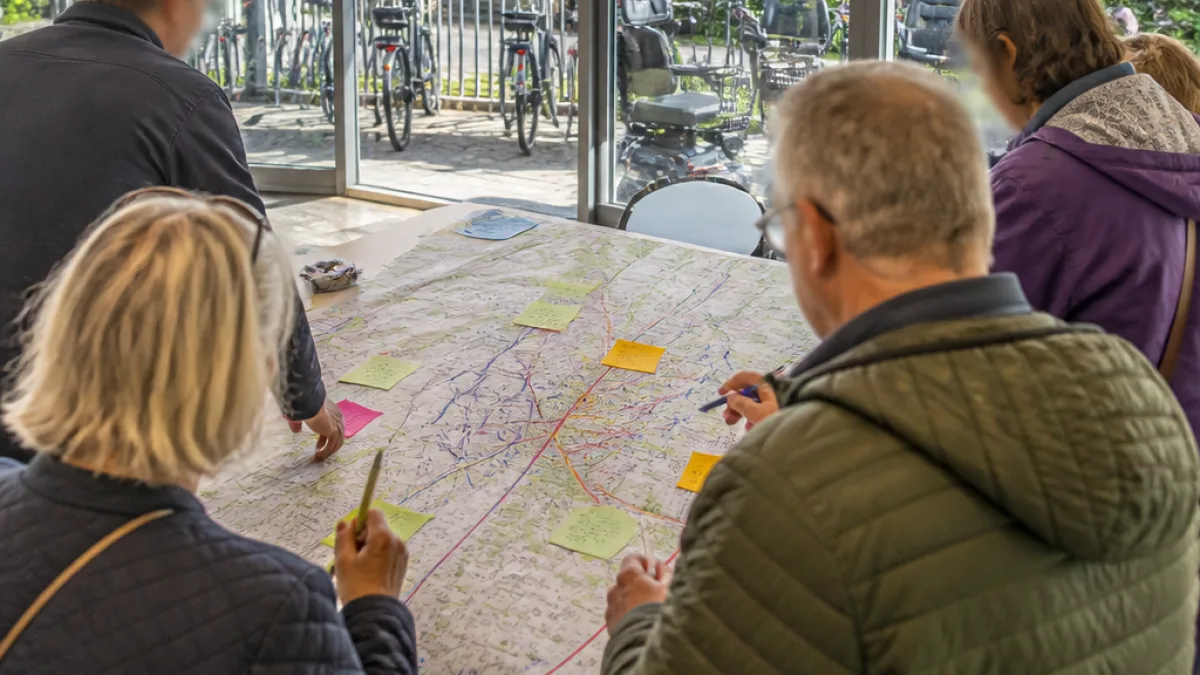
Public meetings set out plan for everyday walking and cycling routes
Residents across Bridgend County Borough are being asked to help shape the future of where people walk, wheel and cycle for everyday journeys. A series of public engagement sessions this August and September will allow people to look at the current Active Travel Network Map and identify routes that need improvement.
The council says the consultation is intended to improve access for those walking or using wheeled mobility, and to make cycling a more practical option for journeys such as travelling to work, school, shops, leisure facilities or public transport links. Planners aim to create a network that is easier, safer and more accessible for everyone, while supporting health and wellbeing and strengthening connections between towns and villages in the borough.
"Active travel includes walking, wheeling and cycling for everyday journeys, such as travelling to work, school, shops, leisure facilities or public transport links."
How and where to take part
The in-person engagement sessions are scheduled as follows:
| Venue | Date | Time |
|---|---|---|
| Bridgend Life Centre | 25 August 2026 | 4.30pm–7.30pm |
| Porthcawl YMCA | 26 August 2026 | 4.30pm–7.30pm |
| Maesteg Sports Centre | 2 September 2026 | 4.30pm–7.30pm |
Those unable to attend the meetings can still contribute via an online survey. People wishing to attend a session delivered in Welsh are asked to give plenty of notice by emailing [email protected] so translation arrangements can be made.
Why this matters locally
For many households in Bridgend, short journeys form a large part of daily life. Better active travel routes could ease pressure on busy roads, improve access to public transport and help people reach schools, shops and leisure facilities more safely. Making routes accessible for those who use wheelchairs or other mobility aids is highlighted as a central aim of the work.
Community input is vital because local knowledge identifies where routes are currently hostile or discontinuous – for example where a safe crossing is missing, pavements are too narrow, or cycle routes end abruptly. The consultation offers residents a chance to point out specific stretches of road or footway that planners may not easily spot from maps or traffic data alone.
- Health and wellbeing: Encouraging walking and wheeling can help reduce sedentary behaviour.
- Connectivity: Improvements could strengthen links between towns and villages across the borough.
- Accessibility: The focus includes safe routes for those using wheelchairs and mobility aids.
Planners will use the feedback to refine the Active Travel Network Map and to prioritise works that make the greatest difference to everyday journeys. For communities, that could mean safer routes to school, clearer connections to bus and rail services, or quieter streets for children to play.
The council has not published a timetable for delivery of specific projects as part of this engagement; the sessions are an early stage in shaping the network. Residents who want to see their local concerns reflected in future schemes are being urged to attend the events or complete the online survey so their views are recorded.
Local campaigners and community groups have in recent years pushed for continuous, protected cycle lanes and improved pedestrian crossings in parts of the borough. This consultation gives those groups, as well as families, commuters and people with mobility needs, an opportunity to influence the next iteration of plans.
The success of the consultation depends on local participation. Completing the survey or attending one of the sessions is the most direct way for people to flag problems they face when travelling around Bridgend and to suggest practical solutions that could shape future street improvements.