
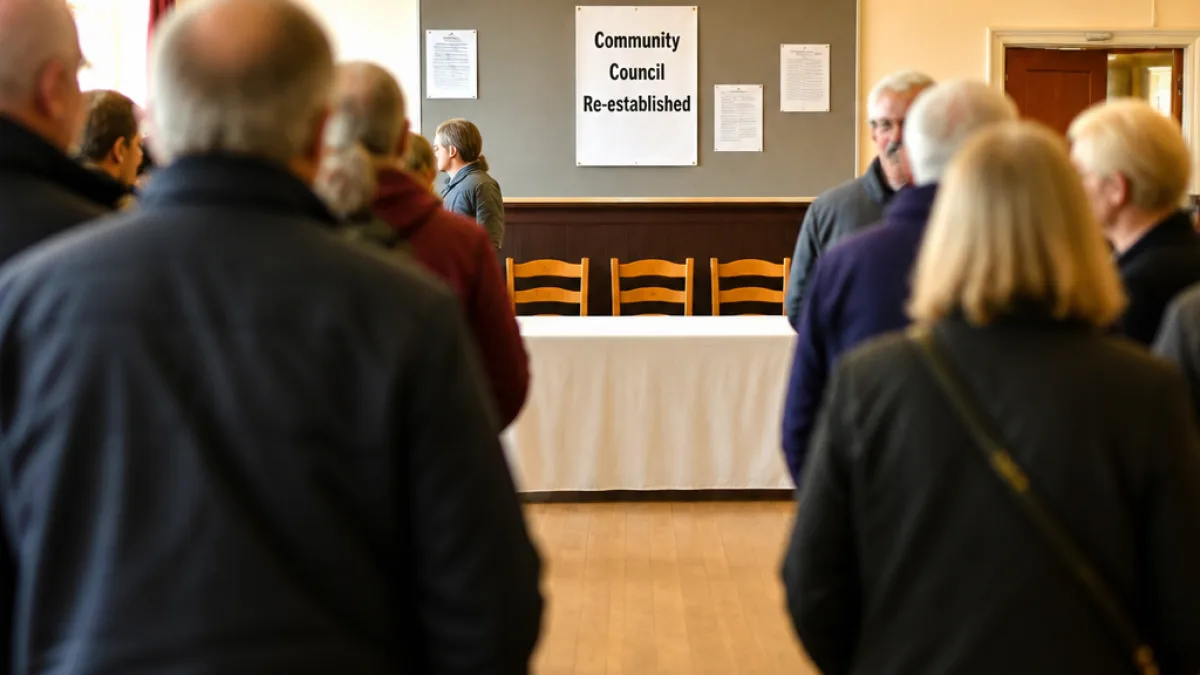
Local democratic voice restored in Barrhead
Barrhead has regained its Community Council after almost four years without local representation, bringing back the town's most immediate forum for residents to raise concerns about planning, services, safety and the environment.
The council was reconstituted following a successful petition and a reopened nominations process earlier this year. Eleven people stood for the available 15 seats — a sufficient number to form the council without the need for a contested ballot.
"We are delighted to see Barrhead Community Council re-established. Community councils play an important role in representing local people and ensuring community views are heard on issues that matter most to residents,"
The comment came from Councillor Julie Ann McHale, convener for communities, who added that the council looks forward to working closely with the newly formed body as it advocates for the interests of the Barrhead community.
Who will sit on the new council
All candidates were elected uncontested as the number of nominations did not exceed the number of available seats. The newly named members are:
- Nazir Ahmad
- Ciara Armour
- Emma Cairns
- Jennifer Cairns
- Heather Cuthbert
- Kenneth Junner
- David Leaf
- Thomas McInally
- Jolene McNaughton
- William McCready
- Rena McGuire
With seats still unfilled, the council will initially operate with these eleven members. Under the usual community council arrangements in Scotland, vacancies can be filled by co-option or by future elections if more candidates come forward.
Local role and immediate implications
Community councils are the most local statutory tier of representation in Scotland, acting as a conduit between residents and local authorities on matters such as planning applications, local services, community safety and environmental concerns. For Barrhead, the return of a functioning community council restores a formal mechanism for residents to influence decisions that affect day-to-day life in the town.
Over the past four years, issues that commonly engage community councils — from responses to planning proposals to campaigns on road safety and public amenities — would have lacked a single, recognised local body to coordinate neighbourhood views. The re-establishment therefore offers residents a platform to make collective representations and to liaise with East Renfrewshire Council and other agencies.
What comes next
The relaunched council will need to set an initial programme of business, elect office-bearers such as a chair and treasurer, and agree meeting arrangements and priorities. Early tasks often include:
- establishing a meeting timetable and public access arrangements;
- identifying immediate local concerns to raise with the council and public bodies;
- setting out a plan to fill remaining vacancies.
By law, community councils do not have decision-making powers like a local authority, but they are a recognised statutory consultee on planning matters and can be influential in shaping local outcomes through organised representation.
Community expectations
For many residents, a reconstituted Community Council will be judged on its ability to be visible, accountable and effective in responding to local issues. Recent contentious local matters have underlined the importance of an established local voice; with the council now operational, residents will be watching to see how the new members prioritise and pursue community concerns.
The return of Barrhead’s Community Council marks a clear restoration of local democratic infrastructure and should provide a renewed channel for residents' views to be heard on matters that affect the town daily.
| Fact | Detail |
|---|---|
| Seats available | 15 |
| Nominees | 11 elected uncontested |
| Time without council | Almost four years |













