Australia make commanding start
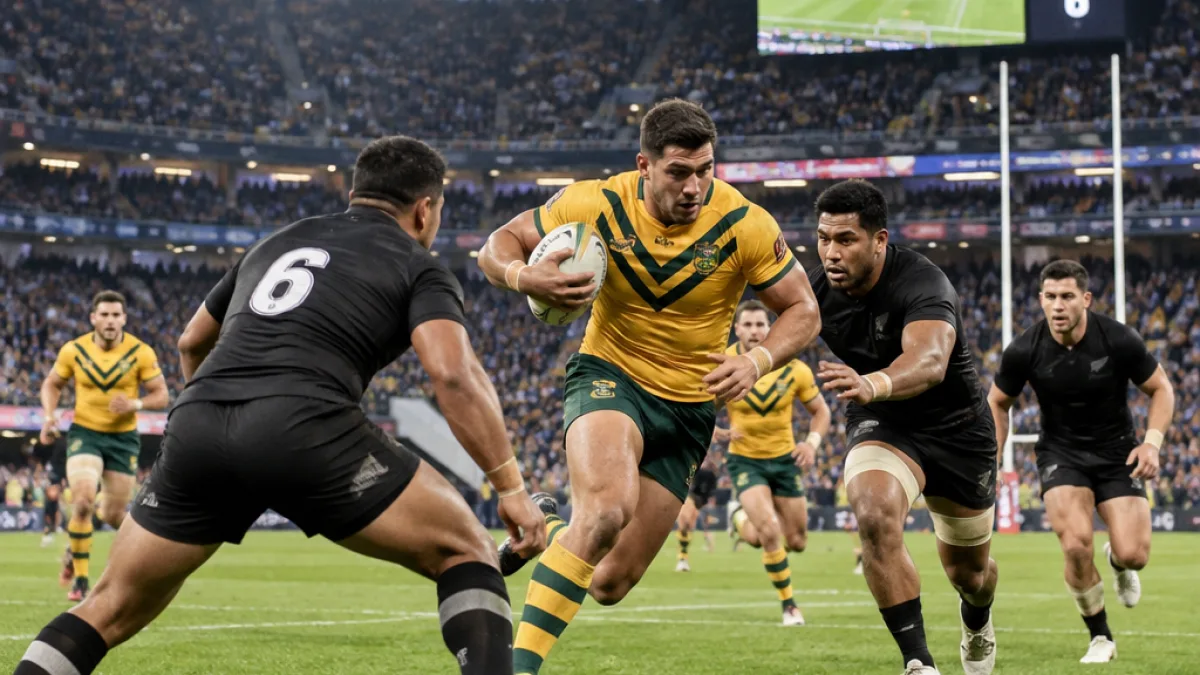
Australia established a substantial advantage over New Zealand in the Rugby League World Cup final, leading 28-6 during the latest live reporting from the match. The Kangaroos’ performance was built around an exceptionally fast opening score and sustained pressure which left New Zealand struggling to construct a response.
Liam Martin crossed after only 85 seconds, producing what was reported as the fastest try in the history of a Rugby League World Cup final. New Zealand responded through Casey McLean, who brought the teams level, but that parity was short-lived. Jack Bostock restored Australia’s lead before Bradman Best and Martin added further scores.
The sequence gave Australia the initiative in a contest that had been expected to carry particular weight after the two sides’ earlier meeting in the tournament. Australia won that opening encounter 24-22 on 15 October, in a match described in the live coverage as an epic. The final therefore offered New Zealand an opportunity to reverse that result, but Australia’s control during the reported stages suggested that the rematch was developing in a very different direction.
Second-half pressure increases
Australia extended its advantage shortly after the interval when Tom Trbojevic scored a fifth Australian try. New Zealand’s difficulties were not confined to defence: Jamayne Isaako dropped an attacking kick as the side attempted to generate momentum, while Bostock came close to gathering another kick near the left side of the goal area.
The live account portrayed Australia as repeatedly forcing errors and maintaining pressure through the restart sets. New Zealand did produce moments of resistance, including a strong tackle by Xavier Willison close to the line, but that effort was followed by a dropped ball from Willison. The contrasting pattern was clear: Australia were creating repeated opportunities, whilst New Zealand were finding it difficult to turn possession into sustained attacking phases.
| Match detail | Reported position |
|---|---|
| Score during live coverage | Australia 28-6 New Zealand |
| Fastest final try | Liam Martin, after 85 seconds |
| Previous meeting | Australia won 24-22 on 15 October |
| New Zealand injury update | Casey McLean failed a head injury assessment |
New Zealand face injury setback
McLean, who had scored for New Zealand and had been described as impressive early in the match, failed a head injury assessment after suffering a blow. The live report said he would not return to the contest. His absence removed one of New Zealand’s more effective contributors at a point when the side already needed to overcome a wide deficit.
Kalyn Ponga was involved in a promising New Zealand attack, but the move did not alter the broader balance of the match. Australia’s defensive and attacking pressure continued to define the contest, with the scoreline described as comparable to the most one-sided group-stage matches. That assessment reflects the live position rather than a completed result, and the final remained in progress at the time of reporting.
The match was being carried with live text updates and commentary on BBC Radio 5 Sports Extra. Discussion around the final also reflected the wider debate over competitive balance in international rugby league. One audience contribution argued:
“One team does have to set the bar for the rest.”
For New Zealand, the immediate task was to limit further damage and find a route back into the game. Australia, meanwhile, had already set the terms of the final through its speed from the opening whistle, its ability to punish mistakes and its repeated penetration of the New Zealand defence. Any final assessment must await the conclusion, but the live evidence pointed to a strongly one-sided contest in Australia’s favour.