
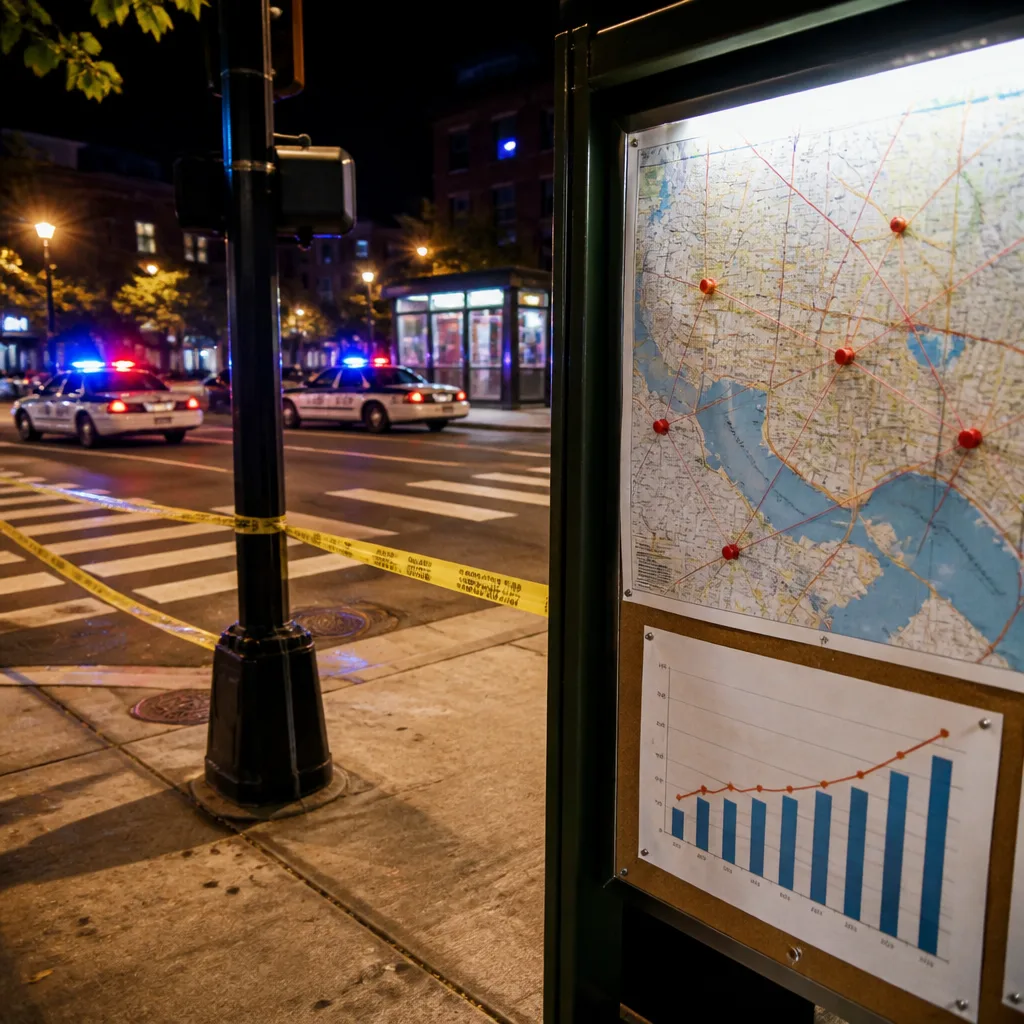
Washington, D.C. has seen a marked rise in assaults with a dangerous weapon this year, with police data showing 768 such incidents compared with 548 at the same point last year — an increase of roughly 40% — even as other categories of recorded crime continue to fall.
Numbers and context
The Metropolitan Police Department’s figures indicate a mixed picture: overall recorded crime is down by about 20% compared with the same period last year, with homicides down 33% and robberies down 14%. Yet the increase in assaults with a dangerous weapon has pushed recorded violent crime up by about 4% year‑to‑date.
| Crime category | Change year‑on‑year |
|---|---|
| Assaults with a dangerous weapon | 768 vs 548 (+40%) |
| Overall recorded crime | −20% |
| Homicides | −33% |
| Robberies | −14% |
| Violent crime (aggregate) | +4% |
The rise in weapon assaults is not evenly distributed across the city. Police say the increase has been concentrated in mid‑city neighbourhoods such as Columbia Heights and areas east of the Anacostia River, though department data provides the primary basis for that assessment rather than an independent analysis.
Classification and scrutiny of police data
The increase has come amid heightened scrutiny of the Metropolitan Police Department’s crime reporting practices. Inspectors general and independent auditors have previously flagged lapses in how the force records and classifies incidents, and officials say some of the apparent change could stem from modifications in classification rather than a pure rise in offending.
MPD has said it created an Office of Data Integrity and Analytics to bolster the accuracy of crime records and has run a virtual training session on crime classification for officers in March, with in‑person sessions scheduled to follow.
"Our expectation is that all MPD members classify crime accurately and consistently, and in accordance with the law," MPD spokesperson Darran Todd told Axios.
Police have also suggested that a significant proportion of the rise relates to domestic violence cases being recorded under the assault‑with‑a‑dangerous‑weapon category. The extent to which reclassification versus genuine increases in incidents explains the figures remains unclear.
Political claims and public perception
The trends come against a backdrop of high‑profile political attention to crime in the capital. Last year, the deployment of the National Guard and a series of policing measures formed part of a federal response to crime in the city. Former President Donald Trump has cited the recent reductions in some crime categories as evidence of success for those actions.
"D.C. went from High Crime to NO CRIME," Mr Trump said, a characterisation that police data and independent reviewers have disputed as an exaggeration.
Officials and analysts caution that short‑term shifts in recorded crime can be influenced by policing strategy, public reporting, classification changes and seasonal factors, and that politicised interpretations risk obscuring underlying dynamics.
Implications
- Persistently higher levels of assaults with weapons, if borne out beyond classification effects, could require targeted enforcement and prevention efforts in identified neighbourhoods.
- Improvements in data integrity and consistent classification are central to public confidence and to guiding resource deployment.
- Policymakers and commentators should be cautious about attributing changes in crime rates solely to short‑term interventions without robust, independently verified analysis.
For now, the Metropolitan Police Department says training and data‑integrity work are intended to ensure that statistics better reflect the reality officers encounter on the streets, and that future releases will allow more precise assessment of whether the increase in assaults with a dangerous weapon signals a sustained trend or a change in recording practice.














