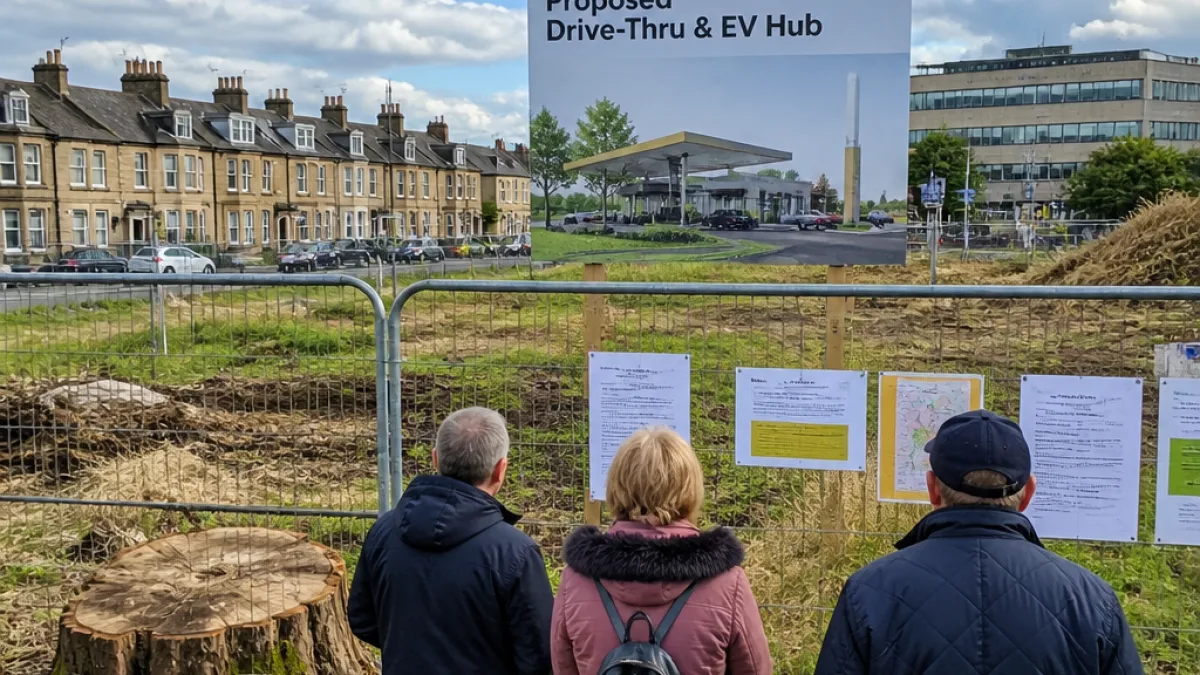
The planning battle over a vacant site north of St James Avenue in Paisley has moved to the next stage after developers challenged Renfrewshire Council's decision to refuse permission for a commercial scheme that would have included a McDonald’s drive‑thru and an electric vehicle charging hub.
Chargemaster, trading as BP Pulse, lodged an appeal after councillors on the planning and climate change policy board accepted council planners’ recommendation to refuse consent in May. The authority said the proposal would result in the loss of open space and trees and would harm the character and residential amenity of the surrounding area.
Appeal process and timetable
The Scottish Government’s planning and environmental appeals division has confirmed that the planning authority’s response to the appeal has been received and that the case is ready to be allocated to a reporter. A decision is expected by the start of October, according to the case update.
| Item | Detail |
|---|---|
| Developer | Chargemaster (trading as BP Pulse) |
| Proposal | McDonald’s drive‑thru, petrol & EV charging hub (commercial development) |
| Council decision | Refused by planning and climate change policy board (May) |
| Jobs claimed by applicant | Up to 120 |
| Appeal decision due | By start of October |
Arguments from both sides
The council’s planning report argued that the scheme would remove open space and mature trees and would have an unacceptable effect on the area's character and the amenity of nearby homes. Members of the planning and climate change policy board accepted that recommendation when they refused the application earlier this year.
On behalf of BP Pulse, planning consultants Gravis Planning set out the grounds for appeal. They described the site as unallocated ‘white land’ within the Renfrewshire Local Development Plan and said it is previously developed, currently vacant and overgrown with shrubs and mature trees.
"The site is not considered to be a high‑quality useable open space for amenity or recreation purposes and has no particular civic value," Gravis Planning said, adding that "the proposals would retain a significant proportion of the open area within the site and include the addition of high‑quality landscaping and planting."
They also argued the design and landscaping would ensure impacts on residents’ amenity were minimal.
Local implications and outstanding matters
For Paisley residents, the case raises familiar tensions between economic development and protections for local green space and neighbourhood character. The applicant highlighted potential employment benefits, claiming the development could create as many as 120 jobs. The council prioritised the protection of urban open space and trees and cited the effect on nearby homes.
The local authority has also pointed to separate, nearby proposals for a petrol station, kiosk, electric vehicle charging and a drive‑thru café, underscoring broader questions about the cumulative impact of commercial roadside developments in the area.
Once the appeal is allocated to a reporter, they will review the case documents and consider whether further evidence or hearings are required before reaching a determination. The reporter's remit will include weighing the planning authority’s concerns about open space, tree cover and residential amenity against the developer’s case that the site is brownfield ‘white land’ suitable for redevelopment and capable of delivering local employment.
Residents and interested parties in Paisley who wish to follow the case should expect the Scottish Government to publish the reporter’s decision once the appeal has been determined. The window for that outcome is now set for the coming weeks, with a decision expected by the start of October.