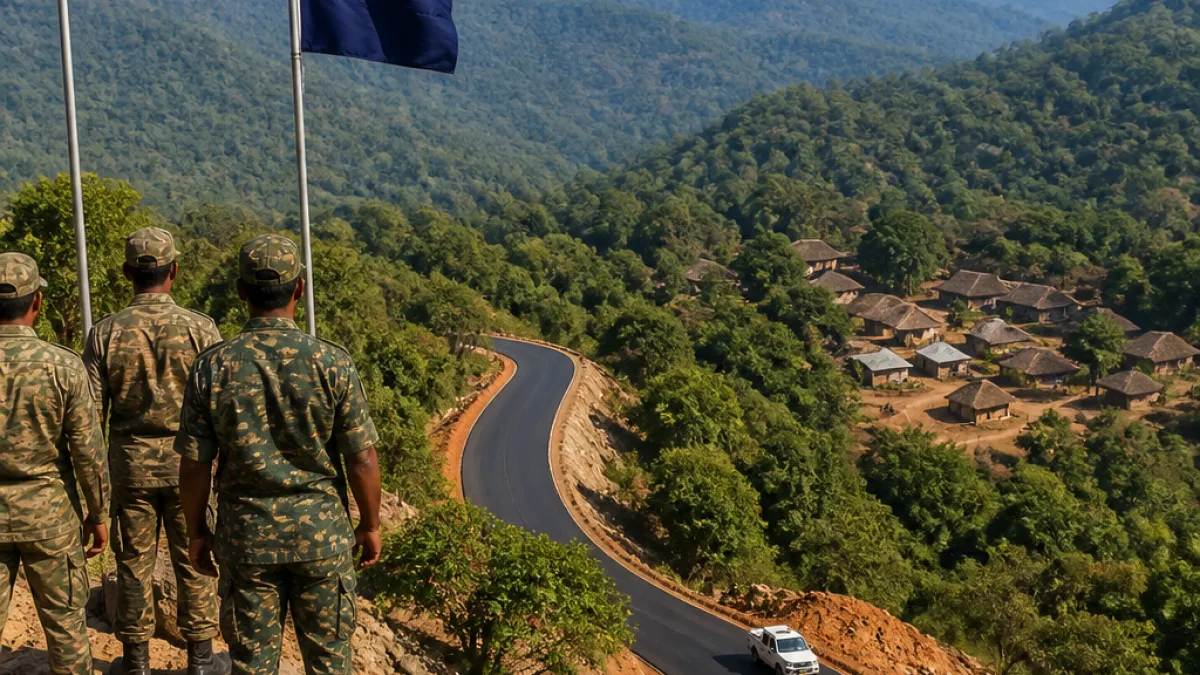
MULUGU: Telangana Director General of Police CV Anand on Monday formally flagged off a phase of post-operation consolidation at Doli Gutta in the Karregutta hills, saying the area — long regarded as a Maoist bastion — has been cleared and will be opened up for development.
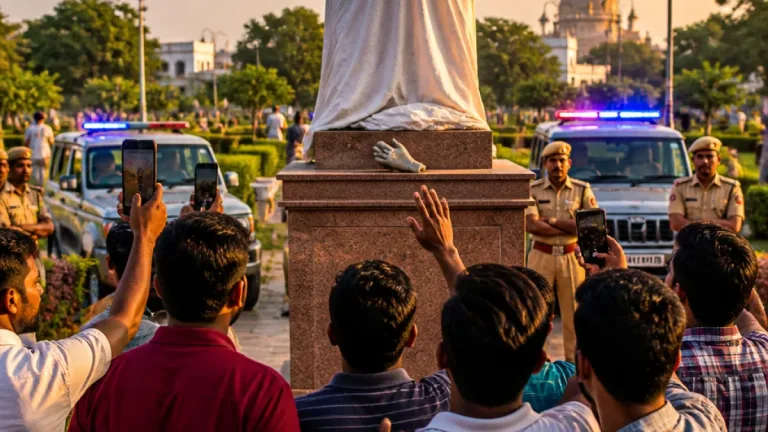
Anand hoisted the Indian national flag and the police flag at Doli Gutta, located about 650 feet above ground, and inspected road works in the neighbourhood. He said security forces can now move freely in the reserve forest areas of Karregutta after sustained operations by the state police in coordination with specialised units.
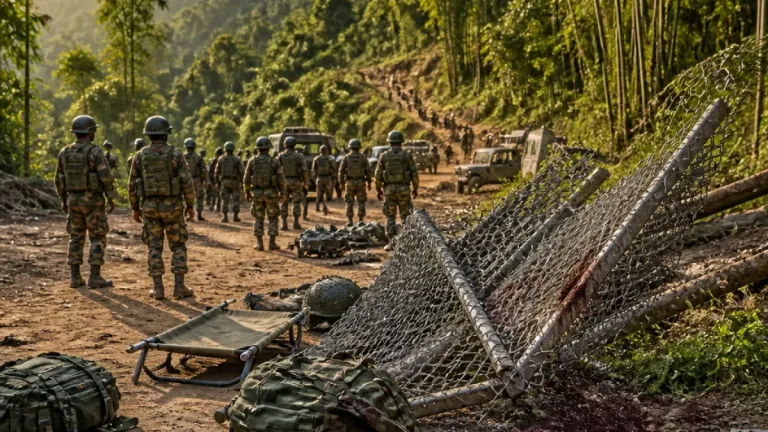
“During Operation Kagar, Telangana police worked strategically with the Greyhounds and CoBRA forces. The operation continued for six months under the guidance of the Union government, and we drove the Maoists out of the Karregutta hills,” Anand said.
Operation details and aftermath
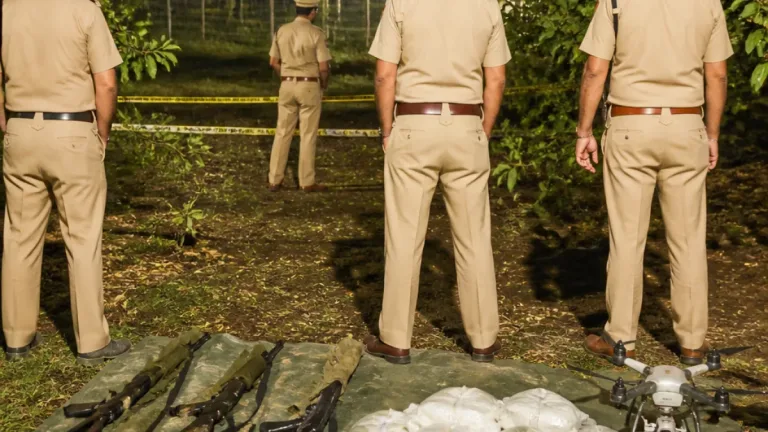
According to the DGP, the campaign saw a mix of surrenders and encounters. He reported that nearly 700 Maoists surrendered during the operation, while several senior cadres were killed in encounters and others have opted to return to mainstream life. He added that security agencies are monitoring those who surrendered to guard against any attempt to rejoin insurgent ranks.
Anand also said that only 17 Maoists remained underground across the country and that many of them were attempting to surrender but were finding it difficult to access proper channels for laying down arms.
Infrastructure and local outreach plans
With the security situation considerably improved, the focus is shifting to development. The DGP said the state government intends to push for tourism and basic infrastructure in the Karregutta area while improving public services for tribal communities living nearby.
On the ground, Anand inspected a recently completed road project and indicated further works were planned:
- 29-km tar road from Pamuru to Chalamadava: completed, he said.
- BT road works: to be taken up shortly in the Karreguttalu area of Mulugu district, according to the DGP.
- Other basic amenities proposed: water supply, mobile phone connectivity and essential facilities in reserve forest areas.
| Item | Detail |
|---|---|
| Peak where flag was hoisted | Doli Gutta, Karregutta hills — 650 feet |
| Road completed | 29-km tar road (Pamuru–Chalamadava) |
| Tribal outreach | Interaction with 14 tribal families; essential supplies given to 7 families |
| Security operation duration | Six months (Operation Kagar) |
| Maoist cadres surrendered | Nearly 700 |
| Reported underground cadres remaining | 17 (national figure) |
Tribal engagement and welfare
At the 39th CRPF Base Camp in Pamunuru village, Anand met members of the local tribal population. The DGP said he interacted with 14 tribal families and distributed essential commodities to seven families as part of an initiative to bolster community ties and encourage displaced persons to avail themselves of welfare schemes.
He urged villagers to approach police and revenue officials for help in accessing government welfare programmes and other assistance, signalling a push to integrate security gains with social and administrative outreach.
Security posture and monitoring
While the DGP characterised the Karregutta hills as cleared of active Maoist presence, he emphasised continuous vigilance. He said police and forest officials are now able to move into areas that had earlier been inaccessible due to insurgent activity. The statement stressed monitoring of surrendered cadres to ensure reintegration and to prevent recidivism.
Officials present at the site underlined that development measures — improved roads, telecom connectivity and water supply — are expected to reduce local grievances that often fuel insurgency, even as law-enforcement agencies maintain operational readiness.
The declaration at Karregutta follows months of coordinated action by the state police, Greyhounds and CoBRA units, conducted with what the DGP described as guidance from the Union government. Authorities have framed the next phase as one of reconstruction and service outreach, aimed at consolidating peace in Mulugu district and adjoining areas.
Impact on Mulugu: The shift from active counter-insurgency to development and welfare could accelerate local infrastructure projects and support tribal communities long affected by conflict. Officials will need to ensure that promised works — from BT roads to mobile connectivity — are executed in consultation with local residents to sustain the security gains.