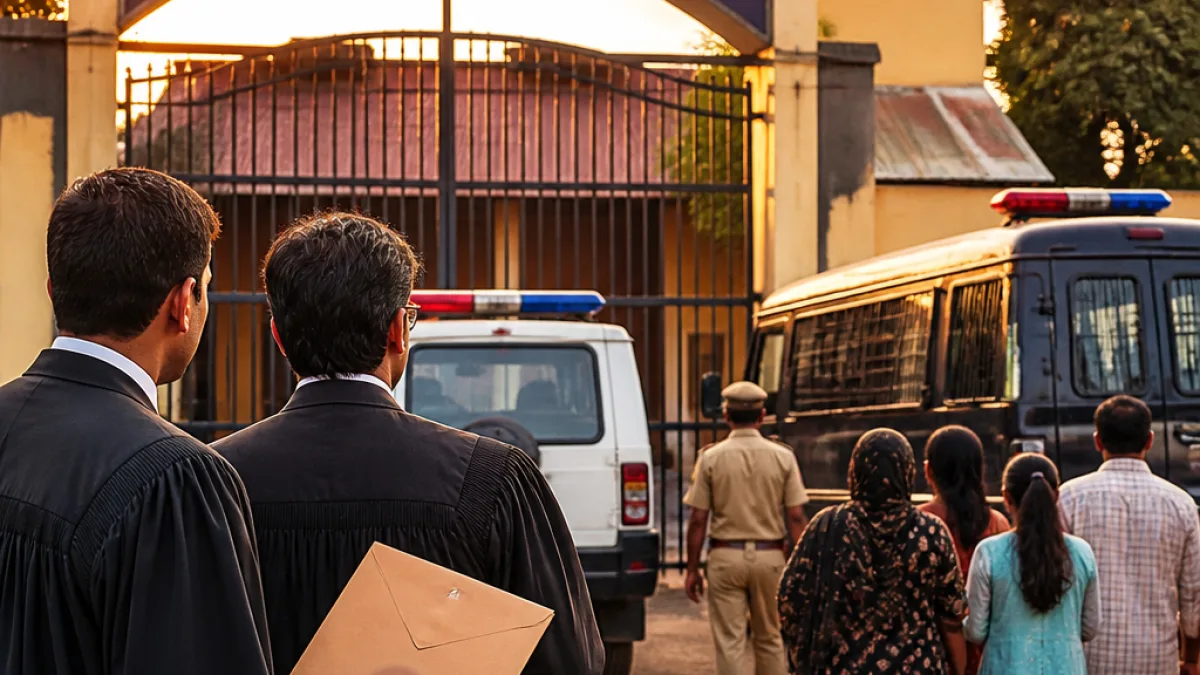
A three-judge Bench of the Supreme Court has directed the Central Bureau of Investigation (CBI) to register a regular criminal case and investigate the custodial death of Shravan Suryavanshi, who died after being held at the Central Jail, Bilaspur. The court also instructed the State government to pay ₹25 lakh as interim compensation to his legal heirs.
Bench reprimands State for inaction
The order was delivered on August 12, 2026, by a Bench comprising Justice Vikram Nath and Justice Sandeep Mehta, while hearing Special Leave Petition (Criminal) No. 728 of 2026. The Supreme Court noted that although a judicial inquiry under Section 176 of the Code of Criminal Procedure had been completed and the findings placed on record, no criminal investigation followed at the State level.
The court found the explanation offered by senior Chhattisgarh officials — including the Director General of Police appearing virtually — inadequate. State authorities had told the court that no First Information Report (FIR) was lodged because the judicial inquiry report had not been received by the police. The Bench expressed scepticism about that position, observing the inquiry report was submitted in July 2024 and was part of the High Court record.
Medical findings and judicial inquiry
Suryavanshi was arrested on January 18, 2024, in connection with an alleged offence under Section 34(2) of the Chhattisgarh Excise Act and lodged in Central Jail, Bilaspur. His health reportedly worsened and he was moved to CIMS Hospital, where he died on January 22, 2024.
The post-mortem listed multiple external injuries, including a scalp laceration and contusions at various sites. The medical report attributed cause of death to
"cardio-respiratory arrest arising from complications caused by a head injury from a hard and blunt object". A separate judicial inquiry also concluded the death appeared to have resulted from complications related to the head injury.
High Court award deemed insufficient
Prior to the Supreme Court hearing, the Chhattisgarh High Court had awarded compensation of ₹1 lakh to the family but did not direct registration of an FIR or order a criminal probe into the circumstances of the death. The Supreme Court found that award inadequate and concluded that monetary relief alone did not answer the larger questions about possible custodial violence and accountability.
The apex court's direction for a CBI probe effectively overrides the State's failure to initiate criminal proceedings and moves the investigation to a central investigative agency.
What the court order means
- The CBI is to register a regular criminal case and carry out an independent investigation into the circumstances of Suryavanshi's death.
- The State government must deposit ₹25 lakh as interim compensation with the legal heirs of the deceased.
- The Supreme Court has publicly criticised the State police for not acting on the judicial inquiry report submitted in mid-2024.
Timeline
| Date / Period | Event |
|---|---|
| 18 January 2024 | Suryavanshi arrested and lodged in Central Jail, Bilaspur |
| 22 January 2024 | Shifted to CIMS Hospital; death pronouncement |
| July 2024 | Judicial inquiry report submitted |
| High Court stage | ₹1 lakh compensation awarded; no FIR ordered |
| 12 August 2026 | Supreme Court directs CBI probe and interim compensation of ₹25 lakh |
Implications for police accountability
The Supreme Court's intervention underscores judicial sensitivity to custodial deaths and scrutiny of investigative lapses by State agencies. Ordering a central probe in cases where the State is perceived to have stalled or inadequately investigated custodial violence is consistent with earlier precedents that aim to ensure impartiality and public confidence.
For the family of the deceased, the CBI registration offers the prospect of a more comprehensive inquiry into whether criminal acts occurred in custody and who might be responsible. For the Chhattisgarh police administration, the order represents a rebuke and could trigger internal reviews of procedure for handling judicial inquiry reports and custodial care protocols.
Next steps
The CBI will now be required to formally register the case and proceed with investigation steps that may include recording statements, forensic examination of medical and jail records, and questioning of custodial staff and medical personnel involved in Suryavanshi's treatment. The State will also have to comply with the interim compensation order while the proceedings continue.
The case will be monitored for further judicial directions and the CBI's progress in establishing the sequence of events that led to the death in custody.