University revives decade-old shuttle idea with electric vehicles
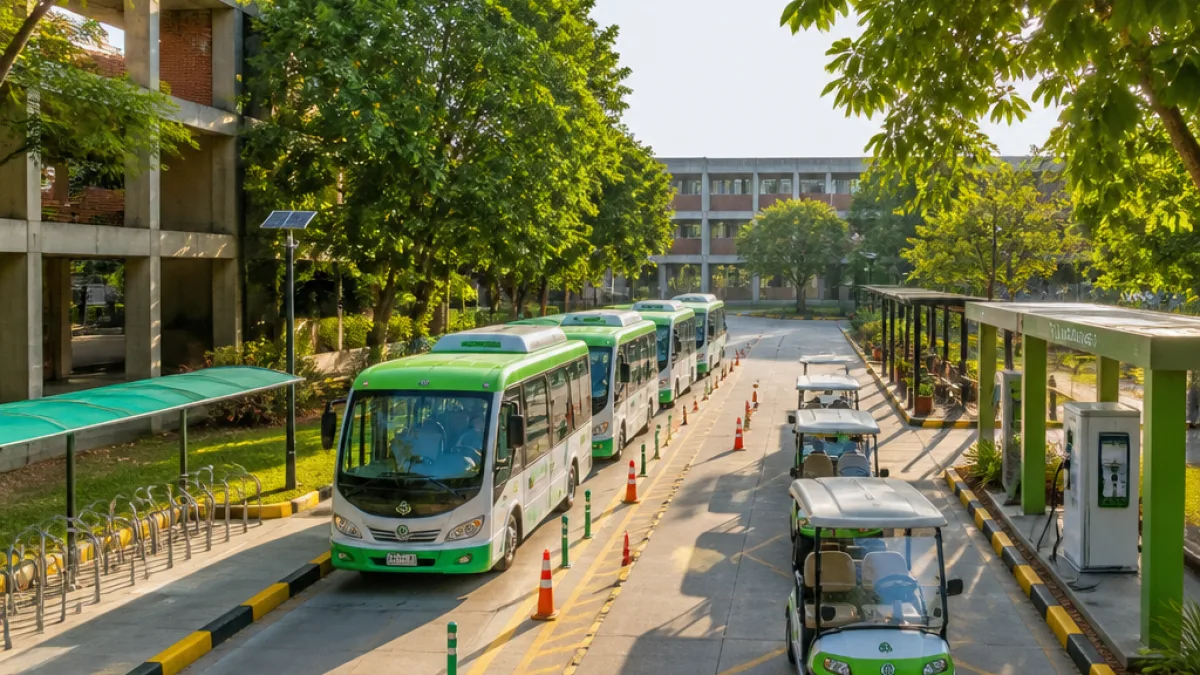
Panjab University has revived a long-awaited intra-campus shuttle plan, this time proposing an electric mobility network that would include 20 electric buses and 10 e-carts (golf carts) along with on-campus charging infrastructure. The university has sought funding under corporate social responsibility (CSR) schemes and Member of Parliament Local Area Development (MP LAD) funds, officials said.
The proposal, intended to link the north and south campuses and improve short-distance travel within the campus, is projected to benefit more than 16,000 students — including about 8,000 on the north campus and 7,098 on the south campus — as well as faculty, staff and visitors who commute between departments daily.
"We have sent a proposal under CSR and MP grants for procuring 20 e-buses and 10 e-carts. The proposal also includes setting up charging infrastructure on campus. The aim is to provide an environmentally friendly and efficient transport system for students, staff, and visitors," said Registrar Yajvender Pal Verma.
Background: why the scheme is back
More than a decade ago, Panjab University had announced plans for a shuttle bus service but the scheme did not materialise. Officials attributed that failure largely to a shortage of drivers — the university does not have regular driver posts and relies on contractual drivers already assigned to existing buses — and to the recurring costs of fuel and maintenance for conventional buses, which made the earlier model financially unviable.
The new proposal replaces internal-combustion buses with electric vehicles to cut operating costs and emissions, and intends to tackle the persistent problem of congested movement inside the sprawling campus. Authorities say e-carts will be deployed for short-haul movement within each campus, while e-buses will operate on routes linking the two major campuses.
Key components of the proposal
- Procurement of 20 electric buses for inter-campus services.
- Procurement of 10 e-carts for intra-campus short-distance travel.
- Installation of charging infrastructure across the campus.
- Regulation of vehicle movement and discussions on a new parking management system.
- Funding sought from CSR initiatives and MP Local Area Development funds.
Expected benefits and campus impact
University officials expect multiple benefits if the plan is cleared and funded. These include:
- Reduced dependence on autorickshaws and privately owned vehicles for intra-campus travel.
- Lower operational expenditure over time compared with diesel buses, due to reduced fuel costs and potentially lower maintenance needs for electric vehicles.
- Improved accessibility for students and staff moving between departments located across the north and south campuses.
- Environmental benefits from lower tailpipe emissions and an overall smaller carbon footprint for campus transport.
Operational and financial challenges
While the proposal addresses some earlier hurdles, several operational and financial questions remain to be resolved. The university has not indicated timelines for procurement, commissioning or the scale of CSR/MP funding that may be available. Officials pointed out the absence of regular driver posts — most drivers are engaged on a contractual basis — which could complicate staffing for the new fleet unless permanent or renewed contractual arrangements are made.
Charging infrastructure will require initial capital outlay and planning for load management. The proposal will also need to consider peak-hour demand, route scheduling, maintenance facilities for electric vehicles and training for staff and drivers to handle EV operations safely.
Next steps
Registrar Yajvender Pal Verma said the proposal will be placed before stakeholders in upcoming meetings for further discussion. The move to regulate vehicle movement inside the campus and discussions on a new parking management system are already underway, according to university officials. Details such as procurement timelines, operational costs, fare policy (if any) and driver recruitment/engagement are expected to be debated at those consultations.
| Item | Quantity/Detail |
|---|---|
| Electric buses proposed | 20 |
| E-carts (golf carts) proposed | 10 |
| Students expected to benefit | 16,000+ (8,000 north; 7,098 south) |
| Funding sources sought | CSR and MP LAD funds |
What students and staff should know
At present the proposal is at the funding-seeking stage and will be discussed with campus stakeholders. Users of campus transport should look out for official updates on:
- When procurement approvals are finalised and vehicles expected to be operational.
- Route maps, schedules and any token or app-based booking system for e-buses/e-carts.
- Changes to parking regulations and any new fees or restrictions as vehicle movement is regulated.
The revived plan reflects a shift towards sustainable campus mobility, but its success will depend on confirmed funding, clear operational arrangements and measures to address staffing and charging needs.