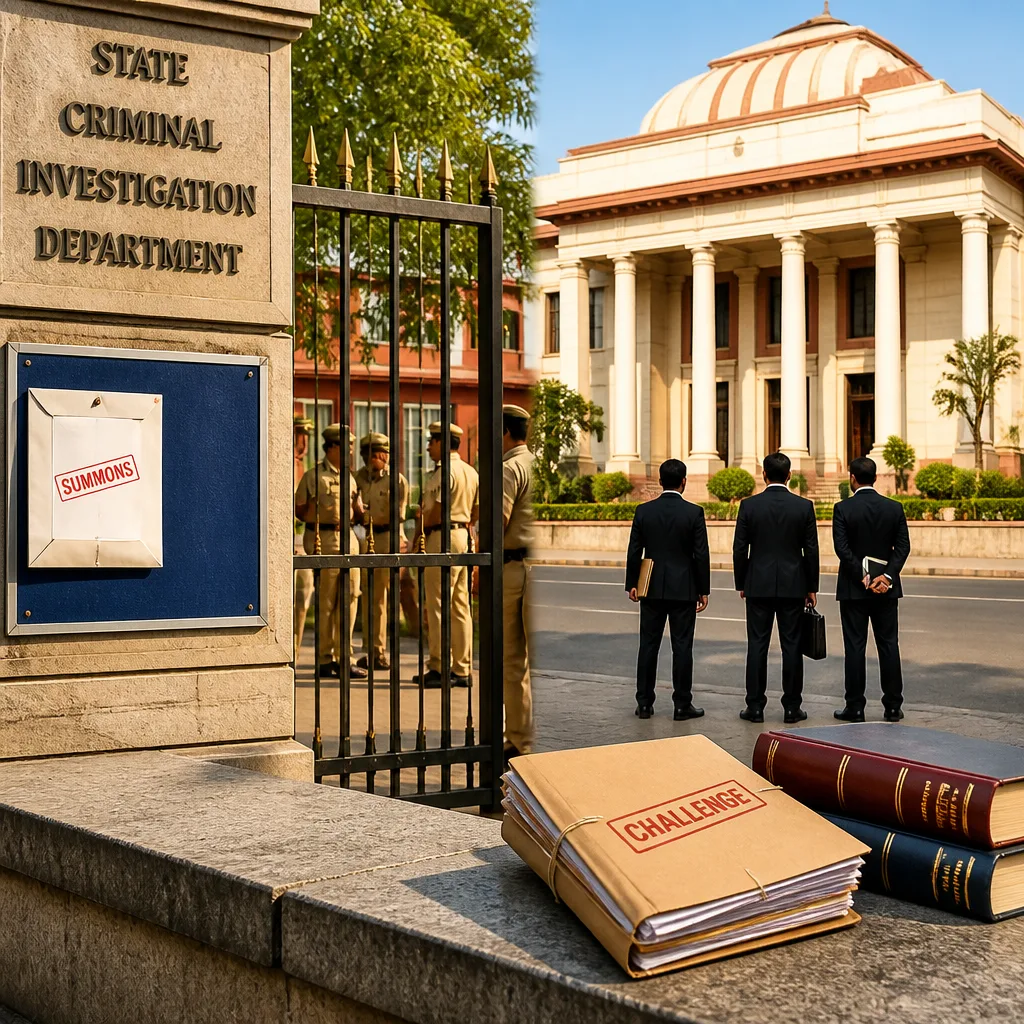
Thiruvananthapuram: The Kerala Public Service Commission (PSC) has taken a firm stand against the State Crime Branch by refusing to send its members to the agency's headquarters for questioning in a probe into alleged irregularities in appointments to the State Planning Board, and is preparing to challenge the summons in court.
Venue dispute deepens probe
The decision was taken at a PSC meeting on Monday, where members reiterated that they were willing to give statements but only at the PSC headquarters. The Commission's position reflects a strong view within the body that its members are being made scapegoats for lapses in the disputed appointments process.
The Crime Branch, however, has maintained that the choice of venue for questioning falls within the discretion of the investigating officer and that there is no legal bar to summoning PSC members to its offices. Four PSC members have been served notices directing them to appear before the investigating team from Tuesday.
| Item | Details |
|---|---|
| Notices issued | Four members of the PSC |
| Interview board composition | Three of the notified members were part of the interview board for the contentious post; M.R. Baiju, the Chairman, was also on the panel but has not been summoned |
| Earlier findings | Crime Branch had identified lapses by two PSC officials; one of them has since retired |
Officials said the Crime Branch is considering informing the PSC that it will not shift the questioning to the Commission's headquarters, a move that could deepen the current stand-off and lead to a legal contest on the appropriate procedure for questioning members of a constitutional body.
Significance for the investigation
The questioning of the four members is regarded by investigators as material to deciding on further action against the two PSC officials already found to have erred in the selection process for two appointments to the Planning Board. The Crime Branch has been examining whether the role of other officials and members extended beyond the lapses previously identified.
Of the four members summoned, three were part of the interview board for the disputed appointment along with PSC Chairman M.R. Baiju. The Chairman has not received a summons so far. The investigating team considers the statements of the summoned members significant before deciding on any next steps.
- PSC position: Members will give statements only at PSC headquarters and will approach the court to contest the Crime Branch notice.
- Crime Branch position: Investigating officer may choose the venue for questioning; no legal bar to summoning PSC members to its headquarters.
- Investigation status: Probe into alleged irregularities in selection for two Planning Board posts; lapses identified for two officials earlier.
The dispute touches on procedural and constitutional issues — chiefly, the extent of an investigating agency's powers when dealing with members of a statutory and constitutional institution. Legal experts say questions about venue and procedure frequently arise when officials of constitutional bodies are summoned, but any authoritative resolution would depend on judicial interpretation of relevant statutes and precedents.
At this stage, both sides appear to be preparing for litigation. The PSC's decision to move court signals an impending legal battle that will test how investigative agencies engage with constitutional bodies in corruption and administrative-lapse probes. The Crime Branch has indicated it will proceed in keeping with its view of investigatory discretion.
The outcome of the legal contest will have implications beyond this case: it may clarify the procedural rights and obligations of members of statutory bodies when faced with law-enforcement inquiries, and outline limits — if any — on the location and conduct of questioning by police agencies.
Investigators continue to examine documentary and testimonial evidence related to the two Planning Board appointments, and further developments are expected once the PSC's legal filing and the Crime Branch's response are formalised.