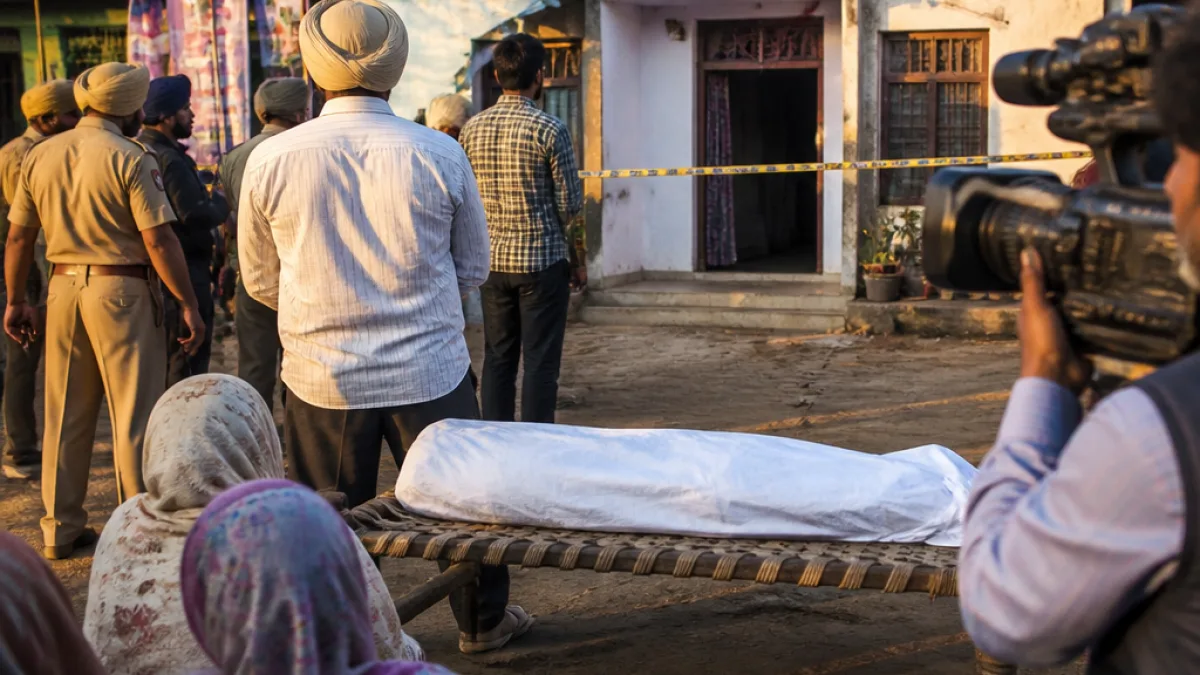
The reported suicide of a 47-year-old Dalit daily-wage worker, identified as Gulzar Singh, in Sangrur district has escalated into a major political controversy in Punjab, with senior opposition leaders demanding action and the state government denying culpability while ordering investigations.
Events and reactions
Gulzar died on Monday night after allegedly consuming poison, according to family members. The family has alleged that he was humiliated and subjected to casteist abuse after he questioned Finance Minister Harpal Singh Cheema at a public event on September 6 about the continued availability of 'chitta' (heroin) in his area and the impact on his family.
Congress leader Rahul Gandhi reacted strongly on social media, saying the incident was part of a "dangerous pattern" and calling for the immediate dismissal of Minister Cheema and an independent probe with the minister's name included in the FIR. In a post on X, Gandhi said the government should answer to the people instead of "crushing those who ask questions" and urged that Gulzar's family be given swift justice.
"The government's job is to answer to the people, not to crush those who ask questions. May Gulzar Singh ji's family get justice as soon as possible. The Chief Minister should immediately demand the Finance Minister's resignation and ensure an independent and impartial investigation, with his name registered in the FIR,"
Chief Minister Bhagwant Mann responded sharply, advising Rahul Gandhi not to "do politics over dead bodies" and asserting that the drug problem in Punjab had deep roots dating back to previous Congress and Akali Dal-BJP administrations. Mann criticised the opposition for politicising the death and defended his government's record on law-and-order.
Investigations and institutional responses
An SIT probe has been ordered into the circumstances surrounding Gulzar's death, while the National Human Rights Commission (NHRC) has reportedly taken notice of the case. The precise scope and timeline of the SIT inquiry have not been made public yet.
No official confirmation has been issued about FIR details available in the public domain that name the minister. Local police have started preliminary inquiries, consistent with standard procedure in suspected suicide cases, and the matter has drawn the attention of civil society and opposition parties.
- Allegations: Family alleges casteist abuse and pressure to apologise after questioning the minister about drugs.
- Political demand: Rahul Gandhi seeks resignation of Finance Minister Harpal Singh Cheema and registration of his name in the FIR.
- State response: Chief Minister Bhagwant Mann has asked the opposition not to politicise the death; SIT probe ordered and NHRC notice reported.
Local context and ramifications
The episode has sharpened the political debate in Punjab over two intertwined issues: the persistence of drug trafficking and abuse in rural areas, and caste-sensitive allegations of humiliation and intimidation. Both issues resonate strongly in agrarian and small-town Punjab, where drug addiction and social grievances have featured in recent public discourse.
Leaders of national parties have seized on the case to press broader narratives. For the opposition, the incident is cited as evidence of alleged insensitivity and failure by the state government; for the ruling Aam Aadmi Party, the episode is being framed as an attempt by rivals to exploit a personal tragedy for political gains.
What is known and what remains unclear
Available reports confirm the identity and age of the deceased, the timing of the questioning at a public event on September 6, the family's allegation of caste abuse and the subsequent death by alleged poisoning. What remains to be established through formal investigation are:
| Issue | Current status |
|---|---|
| Presence of minister's name in FIR | Unclear in public records; opposition demands inclusion |
| Cause and motive | Subject to SIT investigation and police inquiry |
| Caste-abuse allegations | Alleged by family; to be examined during probe |
Wider implications for governance
The case is likely to influence political discourse in Punjab in the near term, including debates over drug control measures, minority and Dalit rights, and the conduct of elected officials during public interactions. It also puts pressure on investigative agencies and the state administration to conduct a transparent, timely inquiry to address both legal and social questions arising from the incident.
As investigations proceed, authorities will be expected to clarify procedural steps taken, produce findings that address the family's allegations and indicate any administrative or criminal action contemplated against public functionaries, if warranted by evidence.
The unfolding of the SIT probe and any subsequent judicial or administrative action will determine how the state navigates the immediate political fallout and whether this episode prompts policy or procedural changes in public engagements by elected representatives.
Reporting note: Details in this report are drawn from contemporaneous accounts of the incident, public statements by political leaders and reports of formal inquiries initiated in its aftermath.