
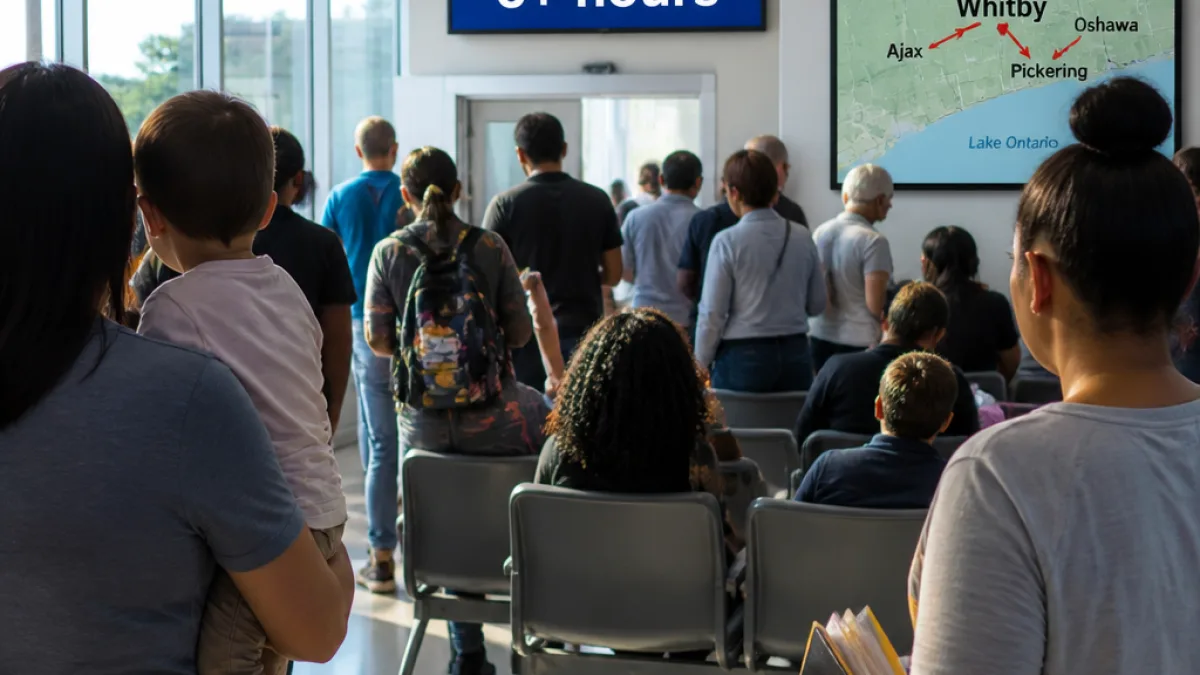
Patients pushed to travel or use walk-ins as regular care becomes scarce
Whitby residents are feeling the strain of a widening shortage of family physicians in Durham Region, with some going years without a regular doctor and others forced to seek care outside the community. The region told local media that about 65,000 people in Durham do not have a family doctor and a further 100,000 are attached to physicians who practise outside the area.
One Whitby patient described the practical impact of that gap.
“I don’t have a family doctor here, and if I need urgent treatment, I have to go to another city and then wait for hours and hours there too,”the patient told Wesal TV.
The experience underscores the difference between episodic care at walk-in clinics or urgent-care centres and the continuity offered by a family physician. Family doctors maintain longitudinal knowledge of a patient's medical history, help manage chronic conditions, arrange investigations and co-ordinate specialist referrals — services that are difficult to replicate when patients rely solely on episodic encounters.
Local effects: longer travel, longer waits
In Whitby, patients report travelling to neighbouring cities such as Oshawa and Scarborough to see a physician. That has practical consequences beyond inconvenience: travelling for care can delay diagnosis and treatment, disrupt follow-up, and add costs for those who must take time off work or arrange transportation.
Local walk-in clinics and urgent-care centres remain important access points for immediate problems, but clinicians there cannot provide the same continuity. Emergency departments can be a backstop for acute issues, yet they are not designed for ongoing primary care and can become overwhelmed when patients lack alternatives.
Why the shortfall exists
Durham Region attributed the shortage to several factors in an email response to local media. Rapid population growth has increased demand for primary care while the supply of family physicians has not kept pace. In addition, an ageing physician workforce and retirements are adding pressure to the system.
Responsibility for funding and planning of physician services rests primarily with the provincial government, which sets payment models, incentives and broader health workforce planning. The region's comments highlight how provincial policy, local demographics and physician workforce trends intersect to shape access.
Numbers at a glance
| Measure | Durham Region figure |
|---|---|
| Residents without a family doctor | 65,000 |
| Residents attached to doctors practising outside Durham | 100,000 |
What this means for Whitby
- Continuity of care is disrupted for many residents, complicating management of chronic illness and preventive care.
- Demand for walk-in clinics and emergency departments may rise, increasing wait times across the system.
- Patients may travel outside Whitby for primary care, imposing time and financial burdens on families.
The shortage also has broader implications for local public health planning. Primary care practitioners are crucial for preventive services, immunizations, chronic-disease management and early detection of illness — all of which influence hospital admissions and overall system costs.
For patients without a regular physician, there are immediate practical steps: use local walk-in clinics and urgent-care centres for pressing concerns, register with Health Care Connect or similar provincial attachment services where available, and consider virtual-care options when appropriate. However, those are workarounds rather than substitutes for a sustained doctor–patient relationship.
As Whitby continues to grow, the availability of family physicians will remain a critical issue for residents and policymakers alike. The figures provided by Durham Region illustrate the scale of the problem, but solutions will depend on coordinated action across municipal, regional and provincial levels to ensure primary-care capacity keeps pace with population and demographic change.
Local officials and health administrators face decisions about how to attract and retain family physicians, deploy team-based care models, and adapt primary-care delivery so that Whitby residents can access the ongoing care that a family doctor provides.















