
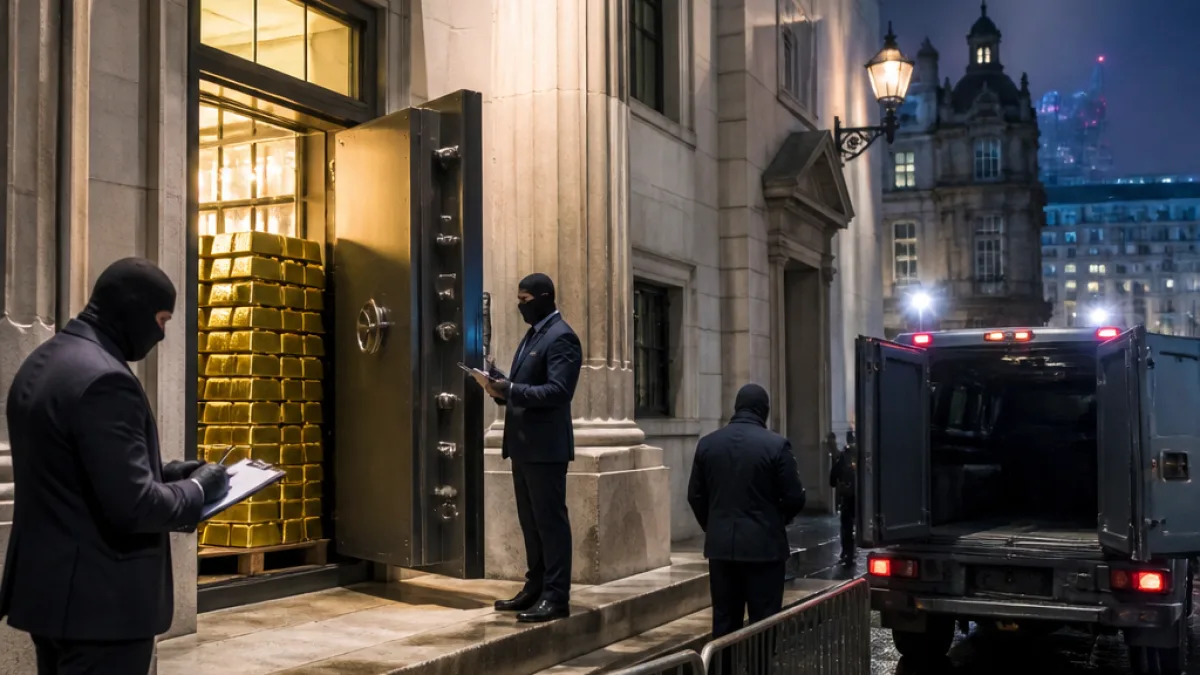
Standoff at the vaults
After years of legal deadlock over bullion held beneath the streets of London, Venezuela’s government and a negotiating faction of the opposition are inching closer to an agreement that could shift roughly 31 tonnes of gold — about US$4 billion at current valuations — out of the Bank of England’s vaults and into U.S. custody.
The proposed arrangement, reported by Reuters and summarised by industry press, would give the administration led by Acting President Delcy Rodríguez legal control of the assets while imposing limits on their sale or direct use. Instead, the gold could be used as collateral to raise funds for specified purposes, including reconstruction efforts following June’s earthquakes in Venezuela.
What custody would look like
Options under discussion reportedly include transferring the bullion to the Federal Reserve Bank of New York, though the U.S. Treasury remains an alternative. Opposition negotiators are seeking strict U.S. oversight and a project-by-project approval mechanism for any use of the assets, according to the reporting.
"The proposed transfer forms part of wider U.S.-backed negotiations covering Venezuela’s political and economic transition," the reporting said.
- Amount: 31 tonnes of gold held in the Bank of England’s vaults
- Estimated value: about US$4 billion
- Potential custodians: Federal Reserve Bank of New York or U.S. Treasury
Part of a broader diplomatic and economic push
The gold proposal is embedded in wider U.S.-backed negotiations encompassing Venezuela’s political transition, oil arrangements and debt restructuring. The talks build on an August agreement in which representatives of the government and opposition agreed to jointly pursue the recovery of the bullion.
Washington has separately eased certain restrictions on Venezuelan economic activity this year. The U.S. Treasury issued and amended licences that allow specific transactions involving Venezuelan oil, banking and minerals, including gold. The most recent minerals licence was amended on Sept. 2; records from the Office of Foreign Assets Control (OFAC) indicate these measures also permit negotiations for some new investment in Venezuela’s minerals sector.
International financial institutions re-engage
The International Monetary Fund resumed dealings with Venezuela in April after a pause since March 2019 over recognition issues. The IMF now deals with the administration headed by Rodríguez and has restored channels of communication that had been dormant for years. That re-engagement forms part of the diplomatic backdrop to the discussions over the bullion.
| Item | Detail |
|---|---|
| Gold held | 31 tonnes |
| Approximate value | US$4 billion |
| Current vault location | Bank of England vaults, London |
| Potential new custodian | Federal Reserve Bank of New York or U.S. Treasury |
Unresolved legal and technical hurdles
While negotiators report progress, the agreement had not been final at the time of the reporting. Several legal and technical issues remain outstanding. If finalised, the transfer would end a years-long dispute over who controls the bullion and how it may be used, but the reported restrictions indicate the assets would not represent a free-standing cash reserve for the Rodríguez administration.
Instead, the framework under discussion appears designed to balance competing goals: restoring Venezuela’s access to internationally held assets while ensuring oversight to limit the risk of misappropriation and to assure foreign partners that funds raised would be used for specified reconstruction and transitional purposes.
For London — home to the Bank of England’s famed underground vaults and a global financial hub — the story highlights the continuing role the city plays in housing assets at the centre of high-stakes international diplomacy. The outcome will be watched closely by governments, international institutions and creditors as it folds into broader efforts to normalise Venezuela’s economic relations with the world.











