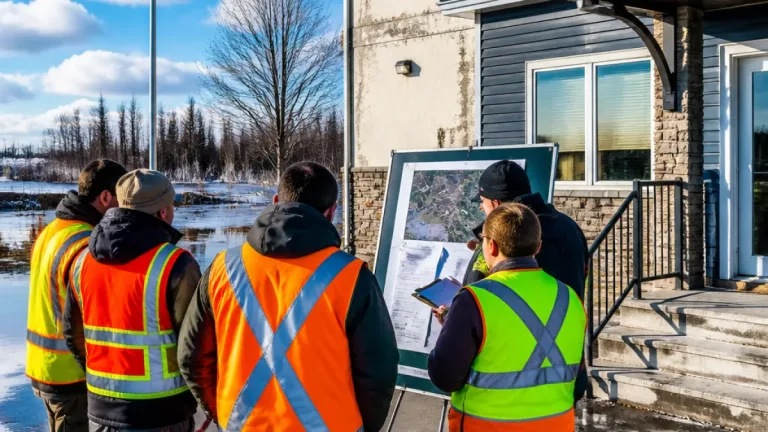
St. Catharines Mayor Mat Siscoe has instructed city staff to prepare a comprehensive, long-term action plan intended to prevent a repeat of the cascading failures and household devastation caused by multiple extreme rainfall events in late July and early August.
State of emergency and immediate needs
Siscoe declared a state of emergency after back-to-back storms on July 27 and 28 and again on Aug. 2 that, according to the city, dropped the equivalent of months of rainfall in just a few hours. The storms followed an earlier intense downpour on July 21. Thousands of homes across St. Catharines reported flooding, much of it contaminated with sewage, and residents described major damage and personal disruption.
In a mayoral statement issued Monday night, he said the city’s priority remains emergency response and recovery, but that officials must also prepare for future events.
"While emergency response and recovery remain our immediate priority, we also have a responsibility to ensure our community is better prepared for the future,"
The mayor added that residents expect officials to learn from the crisis, prepare accordingly and pursue the necessary investments to protect the community.
Direction to staff and areas of focus
Siscoe has used his mayoral powers to require staff to return with recommendations across seven key areas. Public materials and media reporting indicate those areas include an independent flood resilience review, identification of priority neighbourhoods for mitigation, enhancements to homeowner flood-protection programming, and a review of stormwater maintenance practices. The direction also calls for improved public reporting and monitoring systems and expanded public education on preparedness.
- Independent Flood Resilience Review — a working group of engineers, infrastructure and environmental professionals and community leaders to investigate the events and build a business case for senior government funding;
- Priority Flood Mitigation Areas — transparent criteria to identify neighbourhoods most in need and recommend short- and long-term projects;
- Flood Alleviation Program (FLAP) — review and potential expansion of homeowner flood-protection supports, informed by lessons from other cities;
- Stormwater Maintenance — examine inspection, maintenance and replacement practices for catch basins, ditches, culverts and watercourses;
- Public Reporting & Monitoring — better methods for residents to report blocked waterways and drainage issues;
- Public Education & Preparedness — broaden outreach so residents can better protect homes and families;
- Funding Strategy — develop approaches to secure provincial and federal capital for recommended works.
Inspections found no clear infrastructure failure
City and regional officials say inspections to date have not found blockages or isolated infrastructure weaknesses that would fully explain the scale of flooding. The widespread nature of the damage — which also affected other communities in Niagara, including Niagara-on-the-Lake, Niagara Falls and the Town of Lincoln — suggests the storms themselves overwhelmed existing systems.
That distinction matters for recovery and repair: if the primary problem is climate-driven volume rather than single-point infrastructure failure, solutions will likely need to be larger in scope and cost, and reliant on multi-level government funding and coordination.
Human toll and local consequences
Beyond municipal planning, residents are confronting immediate personal losses. The home of 93-year-old Mary Winning in St. Catharines was reported to have flooded twice in five days, causing extensive damage to a house that had not experienced flooding in the 66 years her family lived there. Her daughter described the unprecedented shock of successive claims and ruined possessions.
For many homeowners, contaminated water entering basements and living spaces carries health risks and raises difficult questions about insurance coverage. The mayor’s direction seeks, in part, to expand and better target homeowner assistance programs while building a stronger case for senior-level funding that could underwrite larger infrastructure projects.
Next steps and what residents should expect
City staff have been ordered to report back to council with concrete recommendations. Residents can expect proposals that range from immediate, neighbourhood-level interventions to long-term capital projects and enhanced maintenance regimes. The independent review envisioned by the mayor is likely to inform both the technical understanding of what happened and the economic case for federal and provincial investment.
| Issue | Focus |
|---|---|
| Flood causes | Independent technical review |
| Household impacts | Enhanced homeowner program & prioritization |
| System resilience | Stormwater maintenance & capital projects |
As recovery continues, city officials say the aim is not to promise control over the weather but to ensure St. Catharines is better prepared, better resourced and more resilient the next time extreme rainfall strikes.