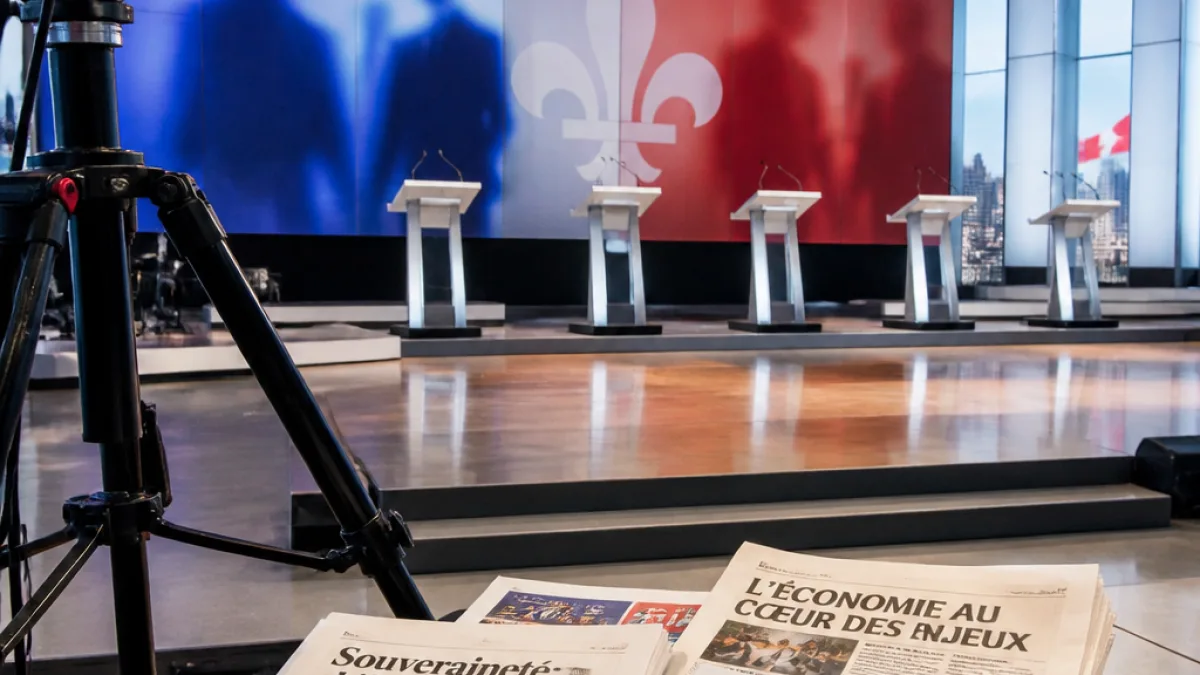
The first two high-profile debates of Quebec’s election campaign clarified where the campaign is likely to be fought: a mix of constitutional questions and old grievances about governance along with persistent economic concerns that matter to undecided voters.
Referendum talk moves to centre stage
What began as a campaign dominated by costs of living, immigration and language policy shifted during the second debate when the prospect of another sovereignty referendum re-emerged as a repeated theme. Coalition Avenir Québec (CAQ) leader Christine Fréchette repeatedly steered exchanges back to the possibility of a vote on independence, even on topics where that linkage was unexpected.
That tactic drew forceful responses from her opponents. Parti Québécois leader Paul St-Pierre Plamondon and Liberal leader Charles Milliard pressed Fréchette over how she would vote should a referendum be held — a question she declined to answer directly — creating a narrative that framed the election as a binary choice about sovereignty.
Accountability for past CAQ missteps
Although Fréchette has tried to distance herself from the outgoing government led by François Legault, other party leaders used the debates to tie her to controversies that dogged the CAQ in recent years. They highlighted cost overruns at the auto insurance board and the province’s investment in an electric battery plant that ultimately failed, portraying the party as fiscally wasteful and prone to poor decision-making.
The sustained focus on these scandals suggests the opposition will continue to make governance and stewardship a central line of attack in the weeks before the Oct. 5 election.
Persistent economic and trade anxieties
Beyond sovereignty and accountability, candidates continued to debate issues that have been climbing the list of voter priorities: the rising cost of living and the province’s economic relationship with the rest of Canada and the United States. The ongoing trade tensions with the U.S. featured in both debates as leaders sought to reassure voters about jobs, export markets and supply chains.
These themes, together with immigration and language policy, are likely to remain front and centre as the campaign advances toward the next scheduled debate on Sept. 23 and election day on Oct. 5.
What undecided voters heard
For electors who have yet to pick a party, the debates offered contrasts between broad strategic visions and tactical manoeuvring. Some messages were aimed squarely at persuading those voters:
- Fréchette emphasised sovereignty as an existential choice for Quebec’s future.
- Opponents returned repeatedly to past CAQ errors to question competence.
- Economic and trade issues were framed as immediate concerns with concrete consequences for households and businesses.
How these competing lines resonate will depend on whether voters prioritise constitutional questions or day-to-day economic pressures.
| Issue | How it featured in debates |
|---|---|
| Sovereignty | Raised repeatedly by CAQ leader as a campaign-defining choice |
| Governance | Opposition focused on CAQ-era scandals and spending failures |
| Economy & Trade | U.S. trade tensions and cost of living were central to voter concerns |
| Language & Immigration | Continued to shape party positioning across both debates |
What to watch next
With a third leaders’ debate scheduled for Sept. 23, expect the referendum question to persist as a wedge issue — particularly if Fréchette continues to link other policy areas to the constitutional future of Quebec. Opposition parties are likely to keep pressing her on the record of the past eight years, emphasising concrete examples of projects and programs that critics say went wrong.
For voters, the coming days are likely to offer clearer contrasts: whether the campaign settles on debates about identity and sovereignty or whether bread-and-butter topics such as housing, inflation and jobs overtake constitutional questions as the decisive factors.
As the campaign advances, Quebecers will be watching not only the policy proposals but also whether leaders provide specific, verifiable plans for the problems they highlight — and whether they can persuade the undecided voters who may determine the outcome on Oct. 5.
Geneviève Tremblay is the Quebec correspondent for WE NEWS, reporting from Montreal.