
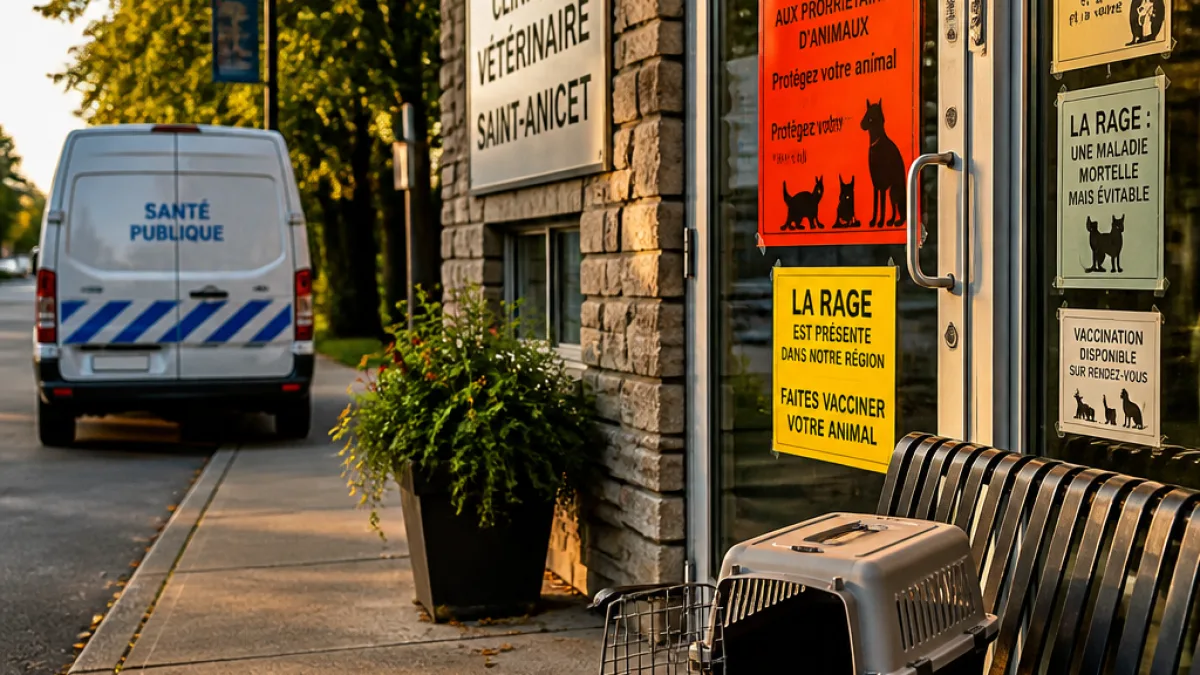
ST-ANICET, Que. — Quebec health authorities have confirmed a second cat infected with rabies in the Montérégie region, detected July 31 in St-Anicet, southwest of Montreal, as the province continues to grapple with an expanding rabies outbreak among raccoons.
Cases and immediate response
The provincial public-health agency reported that three people who had contact with the infected cat received preventive rabies treatment. The new feline case follows the detection of a first cat with rabies last week in Godmanchester, also in Montérégie.
Since the beginning of 2026, Quebec has recorded 139 known raccoon rabies cases, authorities say. Rabies is uniformly fatal in animals and humans once clinical symptoms appear, but timely post-exposure prophylaxis can prevent the disease from developing in people who have been exposed.
Regional implications
The confirmation of a second domestic animal case underscores the risk of spillover from wild reservoirs — in this outbreak, raccoons — to pets and potentially to humans. Public-health officials have emphasised vigilance among residents, particularly in rural and semi-rural communities where people, pets and wildlife are more likely to come into contact.
Officials did not provide additional details about the infected cat’s ownership status or how the exposures occurred. The limited public information so far indicates that public-health teams are tracing contacts and delivering preventive treatment to people deemed at risk.
What residents should know
Health authorities routinely recommend a series of precautions for regions affected by wildlife rabies outbreaks. Key guidance includes:
- Ensure pets are up to date on rabies vaccinations and keep them under close supervision outdoors.
- Avoid contact with wild animals and any domestic animal acting strangely, notably nocturnal behaviour, disorientation or aggression.
- Report bites, scratches or any direct contact with an animal to local public-health services immediately to assess need for post-exposure prophylaxis.
- Secure attractants that draw wildlife near homes, such as accessible garbage, pet food, and compost.
Timeline of recent confirmed animal cases
| Date detected | Location | Species | Immediate action |
|---|---|---|---|
| July 24–31, 2026 | Godmanchester / St-Anicet (Montérégie) | Cat (two separate cases) | Contact tracing; three people received preventive treatment for the St-Anicet case |
| Jan.–Aug. 2026 | Montérégie (regional) | Raccoons | 139 known raccoon cases reported provincewide |
Public-health context
Rabies control efforts during wildlife outbreaks often combine surveillance, public education and, where applicable, targeted vaccination campaigns for domestic animals. In the current Montérégie situation, the rise in confirmed raccoon cases has heightened concern about transmission to pets and people — particularly when animals become ill or approach humans.
Local clinics and public-health units typically assess exposure risk on a case-by-case basis and administer post-exposure prophylaxis to individuals who have been bitten, scratched or otherwise had contact that could permit virus transmission. The treatment is effective if given promptly, before symptoms develop.
What to do if you suspect rabies exposure
If you or your pet has been bitten or otherwise exposed to a wild animal or an animal acting abnormally, contact local public-health authorities or your veterinarian immediately for assessment and advice. Timely reporting enables health teams to determine whether preventive treatment is recommended.
The confirmation of a second cat case in Montérégie serves as a reminder that the regional outbreak remains active. Residents are being urged to take practical steps to protect themselves and their animals while health authorities continue tracing and responding to confirmed cases.
— Geneviève Tremblay, WE NEWS, Montérégie