New archival research has resulted in a significant revision to the historical record about Oscar Levis, the celebrated pitcher of the Negro Leagues and the Cuban Winter League. Scholars and genealogists say they have now established that Levis was the son of a Jewish Jamaican father, a finding that clarifies a complex intersection of race, religion and Caribbean identity in early 20th-century baseball.
How the discovery unfolded
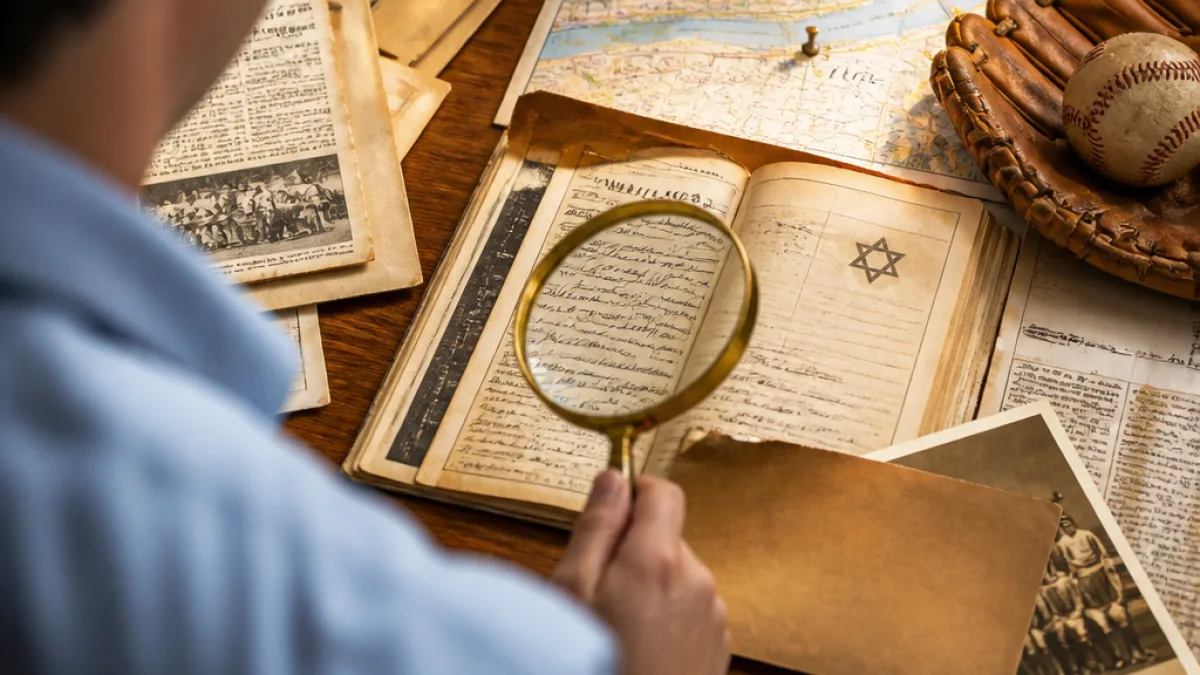
The identification followed months of methodical work by researchers who combined digitized newspapers, civil and church archives, specialist consultation and family recollections. The trail of evidence gained fresh momentum after a 2018 statistical study noted Levis’s Jamaican birth — an observation that prompted readers to contribute additional personal and local knowledge.
- 2018: A statistical account highlighted Levis’s birthplace in Jamaica, prompting renewed interest.
- 2018–2026: Researchers pursued archival searches across Jamaican records and Caribbean Jewish history sources.
- Result: Independent documents and family testimony consistently named Amos DaCosta Levy as Levis’s father and identified him with Jamaica’s Jewish community.
Heritage and social context
Researchers emphasise that Levis’s background reflects particular historical dynamics of the Caribbean Sephardic milieu, where marriages between Jewish men and women of colour were part of the social fabric. In this context, patrilineal recognition carried social weight, and Levis’s family say he maintained pride in that lineage.
"Levis was proud of his Jewish heritage throughout his life," family members confirmed to researchers.
Those findings illuminate how identity in the Caribbean could differ from North American assumptions. Historians note that prevailing narratives in the United States often treated Black and Jewish identities as largely separate — an assumption that contributed to Levis’s absence from earlier lists of Jewish athletes.
Why the omission persisted
Two broader historical factors help explain why Levis’s Jewish background was not previously recognised in mainstream baseball histories. First, the Negro Leagues were not widely accepted as major professional leagues until 2020, a reclassification that prompted re-evaluation of records but also left many players’ life stories incompletely documented. Second, long-standing assumptions about the rarity of Black–Jewish overlap obscured the kinds of Caribbean family formations that produced Levis’s mixed heritage.
As scholars reconstructed Levis’s biography, they drew on a range of sources: digitised Jamaican newspapers, civil and ecclesiastical registration, and consultation with experts on Jewish life in the Caribbean. Together these lines of evidence pointed to Amos DaCosta Levy’s standing as a merchant and civic figure within Jamaica’s Jewish community and to his marriage to Theodosia Foreman, a Black Jamaican woman.
| Aspect | What researchers found |
|---|---|
| Birthplace | Jamaica (noted in 2018 statistical research) |
| Father | Amos DaCosta Levy — identified in civil and community records as Jewish |
| Community context | Sephardic Jewish life in the Caribbean; common patrilineal recognition |
Implications for baseball history
The confirmation that Oscar Levis had Jewish ancestry prompts historians to reconsider how identity categories were recorded and interpreted, particularly for players who moved between Caribbean and North American circuits. Levis’s career in the Negro Leagues and Cuban Winter League had already marked him as a pitching benchmark; the new findings add a layer to how his life will be contextualised by researchers and by communities tracing sporting and cultural heritage.
For scholars of sports history and for those studying Jewish and Caribbean histories, the case of Oscar Levis is a reminder of the unevenness of archival records and of how family testimony and local sources can reshape widely held assumptions. The research also underscores the continuing work required to integrate the biographies of players from neglected or under-documented leagues into the broader narrative of the game.
As museums, historians and statistical projects continue to re-evaluate early 20th-century baseball figures in light of new evidence and reclassification of leagues, the life of Oscar Levis stands as an example of the layered identities that characterised the sport’s transnational past.