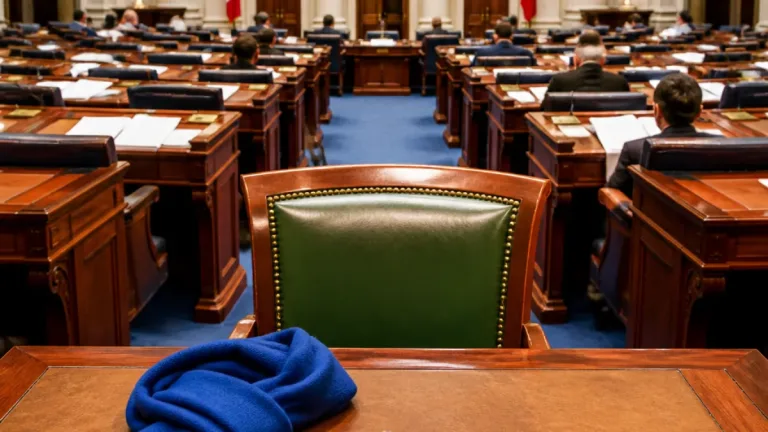
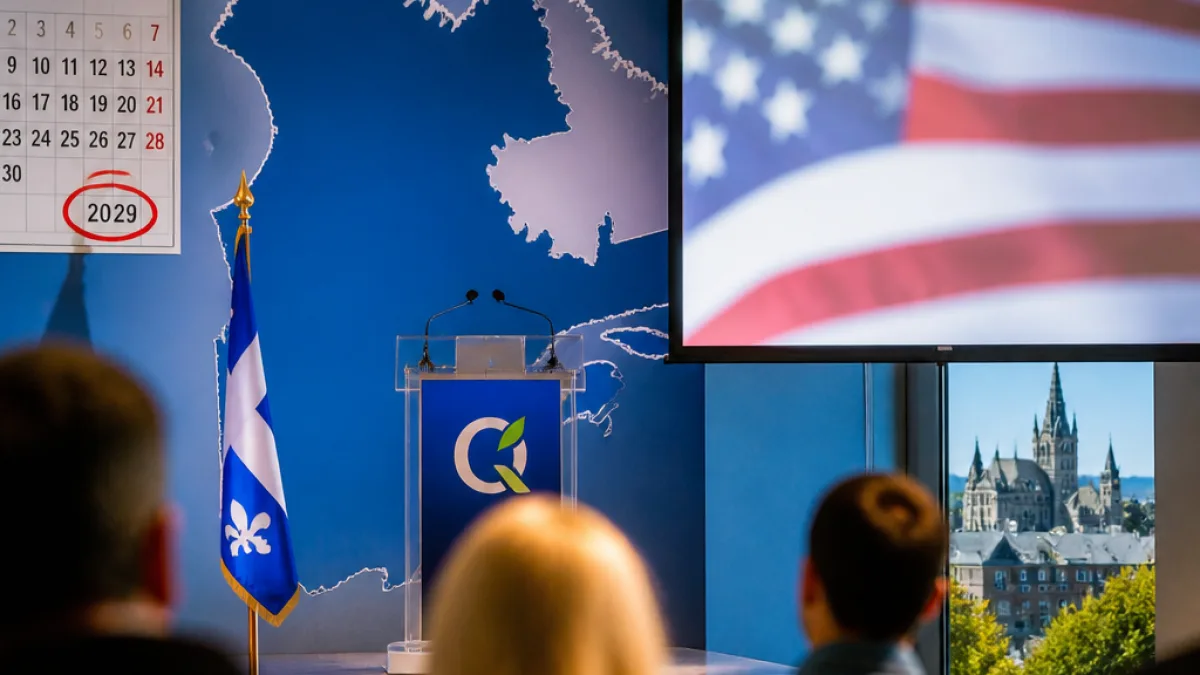
The Parti Québécois has pledged not to hold a referendum on Quebec sovereignty while U.S. President Donald Trump occupies the White House, saying the international political climate would undermine a calm, orderly debate on the province’s future.
PQ Leader Paul St‑Pierre Plamondon made the commitment on Tuesday as Quebec parties prepare for an election campaign expected to begin before the end of August. He said a PQ government would postpone any referendum until at least 2029, though he insisted the party still intends to put the sovereignty question to Quebecers during its first mandate if elected.
Why the delay, says the PQ
St‑Pierre Plamondon framed the decision as a safeguard for the democratic process. He argued an issue as consequential as independence requires a "clear and serene" public conversation that would be disrupted by unpredictable developments from the United States.
"An issue as crucial as the future of Quebec requires a clear and serene debate, which should not be disrupted by American politics or surprise announcements coming from the U.S. president."
He also warned the volatility of the Trump administration could damage both the mechanics of a referendum and the overall quality of debate about Quebec’s future — concerns that influenced his timeline for any ballot question.
Opposition reaction and political context
The announcement drew swift criticism from other parties. The governing Coalition Avenir Québec and the Quebec Liberals cautioned that the PQ’s vow would add to political and economic uncertainty.
Quebec Premier Christine Fréchette, speaking to reporters in Montreal, said a referendum at the end of a mandate would be "worse" and questioned the timing implied by the PQ's promise. She said that if a referendum were held early in a mandate, after a year or two the public would have clarity on the result — implying that delaying or hastening the vote carried different risks for stability.
"If you organize a referendum at the beginning of a PQ mandate, at least after a year or two, you're set, you know if it's a yes or a no," she said.
Fréchette added Quebec is already experiencing economic and political pressure amid trade tensions with the United States, and that a referendum would add a "thick layer" of unpredictability. She said her campaign will instead focus on the cost of living.
Quebec Liberal Leader Charles Milliard also weighed in, issuing a statement that the PQ pledge would contribute to uncertainty in the province and the economy. The Liberals and CAQ have used the spectre of a referendum to argue against a separatist government in the context of volatile international markets.
What the pledge means practically
St‑Pierre Plamondon’s decision to link a referendum timeline to the U.S. presidency is unusual in Quebec politics. By tying the question to an external actor, the PQ signals concern that international events could skew domestic debate or interfere with referendum administration.
Key practical implications include:
- Defusing an immediate electoral argument that a separatist government would move quickly to hold a referendum while global instability persists.
- Keeping the sovereignty question on the agenda as a medium‑term priority for the PQ, rather than an immediate campaign promise to be executed in the first months of a mandate.
- Shifting some voter attention to economic and day‑to‑day issues, as opposition parties emphasise cost of living and stability concerns.
Timeline and parties’ positions
The pledge sets a clear public date — 2029 — as the earliest the PQ would consider a referendum if Trump remains president. It also leaves open the possibility of a referendum within the PQ’s first mandate once the party deems international conditions suitable.
| Party | Position on referendum timing |
|---|---|
| Parti Québécois | Would not call a referendum while Donald Trump is president; intends to hold one during its first mandate, but not before 2029 |
| Coalition Avenir Québec | Criticised PQ pledge as adding uncertainty (response reported) |
| Quebec Liberals | Also warned the promise will increase political and economic uncertainty (response reported) |
The development is likely to figure prominently in the coming election campaign, shaping how parties frame both sovereignty and immediate voter concerns such as the economy. By publicly linking referendum timing to the U.S. presidency, the PQ has introduced an international element to a deeply domestic debate.
As Quebecers prepare for a campaign expected to begin before August’s end, parties will have to reconcile competing messages: whether to emphasise long‑term constitutional questions or the short‑term pressures on households and businesses.
Photo credit in coverage: The Canadian Press/Christinne Muschi (Paul St‑Pierre Plamondon, Saint‑Hyacinthe, Jan. 23, 2026).