
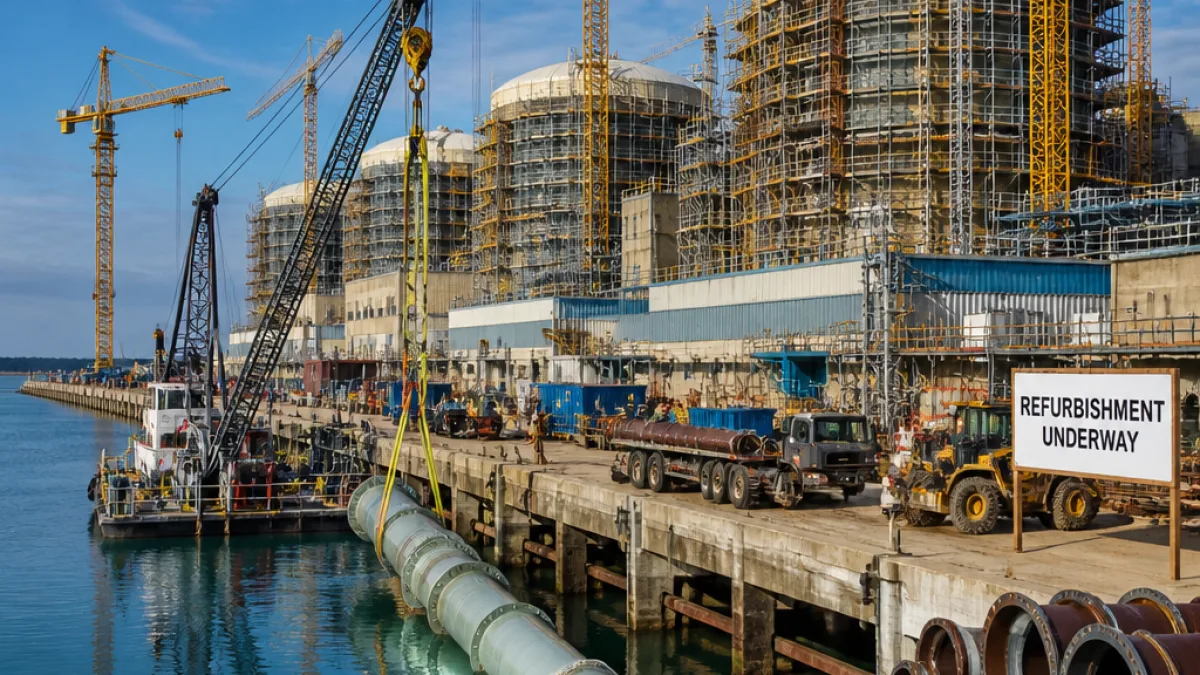
Work has begun on a major refurbishment of the Pickering Nuclear Generating Station that the provincial government says will keep the station operating for decades and bolster Ontario’s electricity supply.
Scope and timeline
The Ontario government announced the start of construction this week for a $26.8‑billion project to refurbish four CANDU reactors at Pickering. The ministry of energy and mines says the overhaul will include the replacement of 1,520 fuel channels and 48 boilers, plus construction of a 1.5‑kilometre deep‑water intake. The four units are being taken offline this month, with substantial refurbishment work scheduled to begin in January 2027 subject to regulatory approvals. The refurbished units are expected back in service in the mid‑2030s.
Jobs, local procurement and economic claims
Provincial officials have framed the refurbishment as both an energy and economic initiative. The ministry projects the construction phase will generate about 30,500 jobs. Energy Minister Stephen Lecce, speaking at a news conference, said the project will "strengthen Ontario’s energy supply" and keep more than 90 per cent of spending within Ontario and Canada.
- Estimated cost: $26.8 billion
- Projected jobs during construction: 30,500
- Fuel channels to be replaced: 1,520
- Boilers to be replaced: 48
- Planned deep‑water intake: 1.5 km
“Today, we are marking a national achievement as we begin work on Canada’s largest clean energy infrastructure project and strengthen our made‑in‑Ontario nuclear supply chain,” the minister said.
What it means for Pickering residents
For Pickering, the project brings immediate and long‑term implications. During construction there will be an influx of workers, subcontractors and supply‑chain activity that could affect local traffic, housing demand and municipal services. Longer term, the province says the refurbishment will extend plant life by up to 38 years and eventually supply enough electricity to power about 2.2 million homes.
Those claims come as Ontario plans significant investments in new reactors and small modular reactors as part of a broader electricity strategy. The government projects its nuclear expansion could support up to 150,000 jobs across the province and contribute substantially to the provincial economy.
Critics and concerns
But not everyone shares the government’s optimism. Critics have questioned the overall cost of the Ford government’s nuclear agenda and have raised concerns about growing dependence on nuclear baseload power. Independent analysts and industry groups have also warned that taking Pickering’s units offline for refurbishment — as is now beginning — will mean other forms of generation, notably gas‑fired plants, will need to provide more electricity in the intervening years. That shift has fuelled worries about higher wholesale electricity prices for large industrial users while the refurbished units are out of service.
Context: demand and planning
Ontario’s energy planners point to rising electricity demand over coming decades driven by population growth, new housing, increased electrification, advanced manufacturing and efforts to expand critical minerals supply chains. The ministry has said demand could increase by as much as 90 per cent by 2050, a context officials cite to justify large investments in generation and refurbishment.
| Item | Figure |
|---|---|
| Project cost | $26.8 billion |
| Jobs during construction | 30,500 |
| Expected life extension | Up to 38 years |
| Homes powered (eventual) | About 2.2 million |
As work ramps up at the lakeshore site east of downtown Toronto, Pickering residents will be watching for changes in local traffic patterns, housing pressures from incoming workers and any immediate effects on rates and supply. Provincial officials stress the long‑term benefits in reliability and jobs; opponents point to near‑term costs and market impacts while reactors are offline.











