
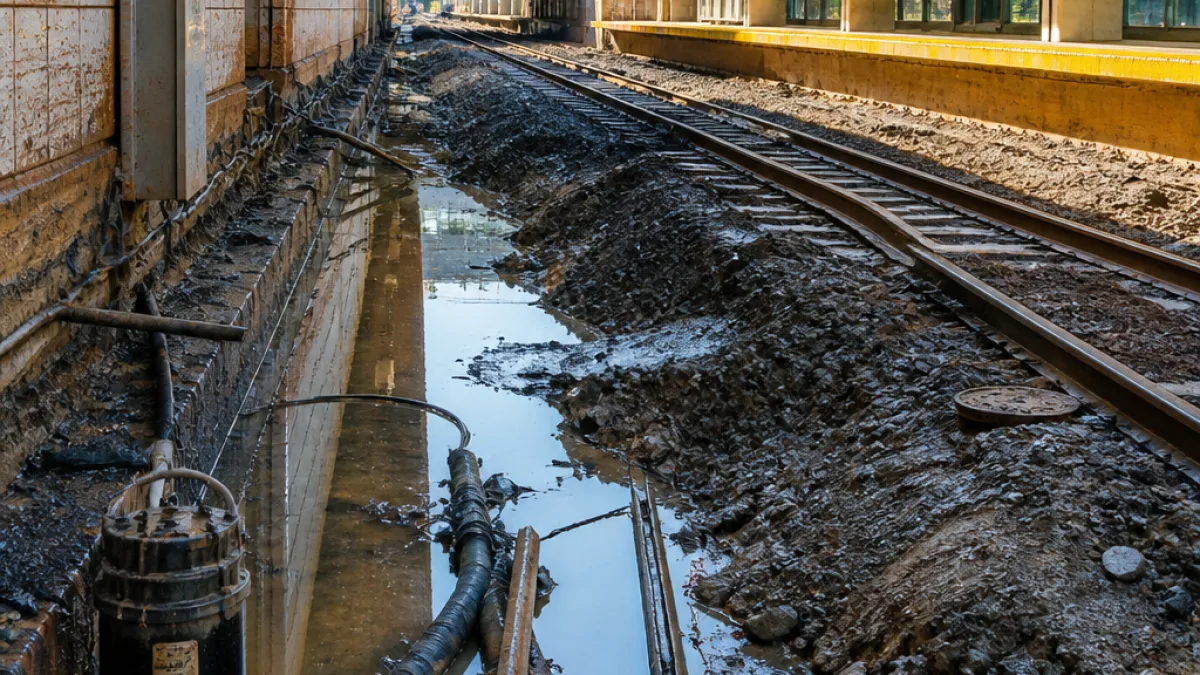
Damage visible and worrying, councillors say
Two west-end city councillors said an Aug. 10 tour of Moodie Station left them shocked by the scope of the damage caused by the heavy rains on July 1. College Coun. Laine Johnson and Bay Coun. Theresa Kavanagh walked the site with city and transit officials and later described a scene of large-scale damage to station surfaces and infrastructure.
Both councillors noted that water had carved clear pathways through the station and surrounding lands, moving stone and debris with such force that it left a visible band on the wall above head height in places. The damage is not only cosmetic: OC Transpo general manager Rick Leary told council that the storm harmed "a significant amount of the electrical systems and equipment, ballast sections of the track, as well as troughs and cabling" — items that will need repair before construction can proceed.
"What I saw, and what I heard, shocked me. It's truly a disaster. We are all anxiously awaiting the assessment to know what the impact will be," one councillor wrote after the tour.
Design features overwhelmed
Johnson and Kavanagh pointed out that the station had been built with flood-mitigation measures, including an underground holding tank and pumping infrastructure designed to divert water away from sensitive equipment and the track. According to their accounts, those systems were unable to handle the sheer volume of water that arrived during the storm.
"It's amazing the pathway that the water carved, the stone it moved and displaced, the strength of the water," Johnson said in an interview. Kavanagh echoed that sentiment in her social-media comments, saying the visit underscored how intense the storm was and how much water passed through the station in a short period.
What this means for the LRT west extension
The Moodie Station damage has renewed concern about the timeline for the LRT west extension, currently anticipated to open in summer 2027. That project includes 11 new O-Train stations west of Tunney's Pasture, an extension of Line 1 to Algonquin Station and a new Line 3 running to Moodie. City council and transit officials will be relying on engineering assessments to determine the scope of repairs and how they affect the construction schedule.
Leary's July 17 update to council — issued soon after the storm — listed affected components that are fundamental to both ongoing construction and future operations: electrical systems and equipment, track ballast, troughs and cabling. Repair needs in those areas can be complex, involve subcontractors and suppliers, and require coordination with other construction phases.
Local impacts and broader implications
For Ottawa residents, the immediate concerns are practical: potential delays to improved transit service for growing west-end neighbourhoods, disruption to construction timelines and uncertain costs. There are also broader questions about climate resilience and how infrastructure designed to handle typical flood events will perform under increasingly intense weather.
- Immediate repairs: electrical systems, track ballast, troughs and cabling.
- Design limits: holding tank and pumps were in place but overwhelmed.
- Project timing: the summer 2027 opening of the west extension is now in doubt pending assessments.
The station sits adjacent to the Stillwater Creek wetland and Corkstown Yard, areas councillors say were inundated when the creek was overwhelmed. Water backing up into the yard and station also washed out a section of the Queensway, illustrating the storm's reach across transportation corridors.
| Reported issue | Potential consequence |
|---|---|
| Electrical systems and equipment damage | Extended repair timelines; specialised parts and contractors required |
| Ballast and track sections damaged | Track rebuilding or stabilizing; delayed testing and commissioning |
| Troughs and cabling harmed | Extensive rewiring; safety inspections before service |
Councillors said they are awaiting a formal assessment to clarify the full extent of the damage and the likely schedule for repairs. That assessment will be closely watched by residents who have followed the long and costly rollout of Ottawa's light-rail system and who stand to benefit from expanded service to the city's suburbs and campuses.
As Ottawa continues to expand its transit network into suburban and semi-rural areas, the Moodie Station flooding raises questions about how future design and construction will incorporate lessons from extreme-weather events — especially in zones adjacent to wetlands and watercourses. The balance between urban growth and the protection of natural floodplains is a local issue with immediate consequences for how and when new transit capacity will come online.
City officials have not yet released a timeline for the damage assessment or a revised opening date for the west extension. In the meantime, residents and councillors are pressing for clear answers about repair costs, timelines and what steps will be taken to reduce vulnerability to similar events in future.















