EDMONTON — A young organiser leading protests against artificial intelligence data centres says Alberta government officials can expect heavy public opposition at an upcoming town hall in Sturgeon County.
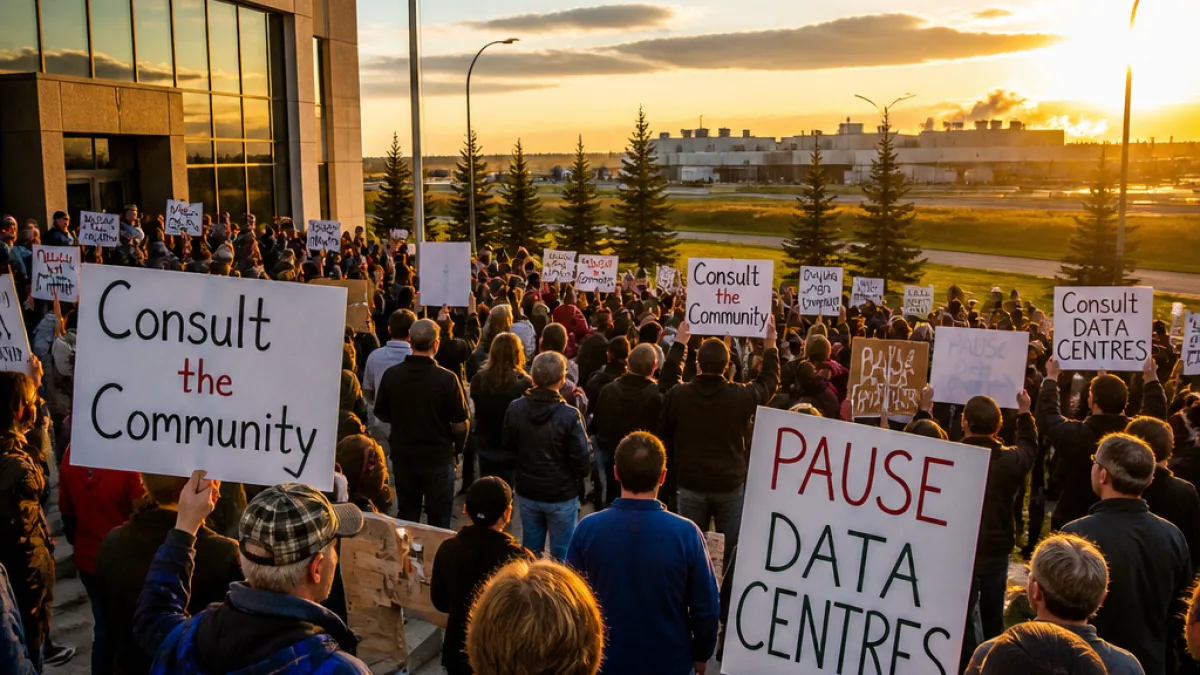
Ben Baril, a 20-year-old University of Alberta business student who has emerged as a visible critic of large-scale data-centre projects, told WE NEWS he and other demonstrators plan to attend a scheduled Aug. 20 hearing to press the provincial government over what they describe as inadequate consultation.
Protest plans and public consultation concerns
Baril said opponents will use any open-mic opportunities at the town hall to voice objections and to demand that future approvals be paused until community concerns are addressed. He characterised the current process as backwards — with decisions effectively made before the public was asked for input.
"If there's an open mic portion at these halls, we're gonna try to flood it as much as possible,"
Data centres are specialised facilities housing servers and networking equipment that support cloud computing and AI applications. Their construction has accelerated across Canada, and recent academic research has identified Alberta as a centre of that expansion.
Meta project puts spotlight on Sturgeon County
The provincial government announced in July that Meta plans to build a large artificial-intelligence-focused data centre in Sturgeon County, north of Edmonton. The company’s facility is described as a one-gigawatt project and is expected to be operating within two to three years.
The announcement has triggered debate in the region about land use, electricity demand, environmental impacts and the extent to which nearby communities can shape outcomes. While proponents argue data centres bring investment and jobs, opponents worry about local infrastructure strains and the pace of approvals.
What protesters want
Organisers are calling for what they frame as a genuine pause and broader engagement:
- Halt further approvals for major AI data-centre projects until stronger public consultation measures are in place.
- Transparent release of environmental and infrastructure assessments for proposed facilities.
- Meaningful municipal input into siting and servicing decisions affecting rural and small-town communities.
Baril’s mobilisation reflects a wider public debate over how municipalities, the province and multinational tech companies interact when deploying large energy- and land-intensive infrastructure.
Economic and policy context
Alberta has actively courted tech investment in recent years, framing large data-centre projects as economic opportunities that diversify a resource-driven economy. Studies have shown the province is becoming a hub for data centres partly because of available land, favourable power pricing and proximity to fibre networks.
At the same time, critics say economic benefits can be uneven and that rapid approvals leave communities with little leverage to negotiate for local benefits or to ensure environmental protections are adequate.
Details at a glance
| Project | Location | Capacity | Expected online |
|---|---|---|---|
| Meta data centre | Sturgeon County (north of Edmonton) | One-gigawatt | Two to three years |
Local impact and what to watch for
The Aug. 20 town hall will be a focal point for both proponents and opponents. While comments at the hearing are expected to be vocal, municipal and provincial decision-making timelines, environmental review processes and any follow-up consultations will determine whether opposition influences project design or timing.
For nearby residents, practical issues include potential increases in local electricity demand and the need for upgrades to roads and utilities to support construction and operations. For regional planners and elected officials, the challenge will be balancing investment opportunities with negotiated community benefits.
As proposals for other AI data centres reportedly advance in the province, the Sturgeon County hearing could set a tone for how Albertans engage with large tech infrastructure projects going forward.
Observers say the exchange could also prompt clearer provincial guidance on consultation expectations, or at least a public accounting of what consultations have already taken place.
Whether the protesters’ plan to "flood" the open mic changes the conversation remains to be seen. What is certain is that the arrival of high-capacity data centres places new pressure on local governance and forces a debate about how Alberta manages rapid industrial change.