
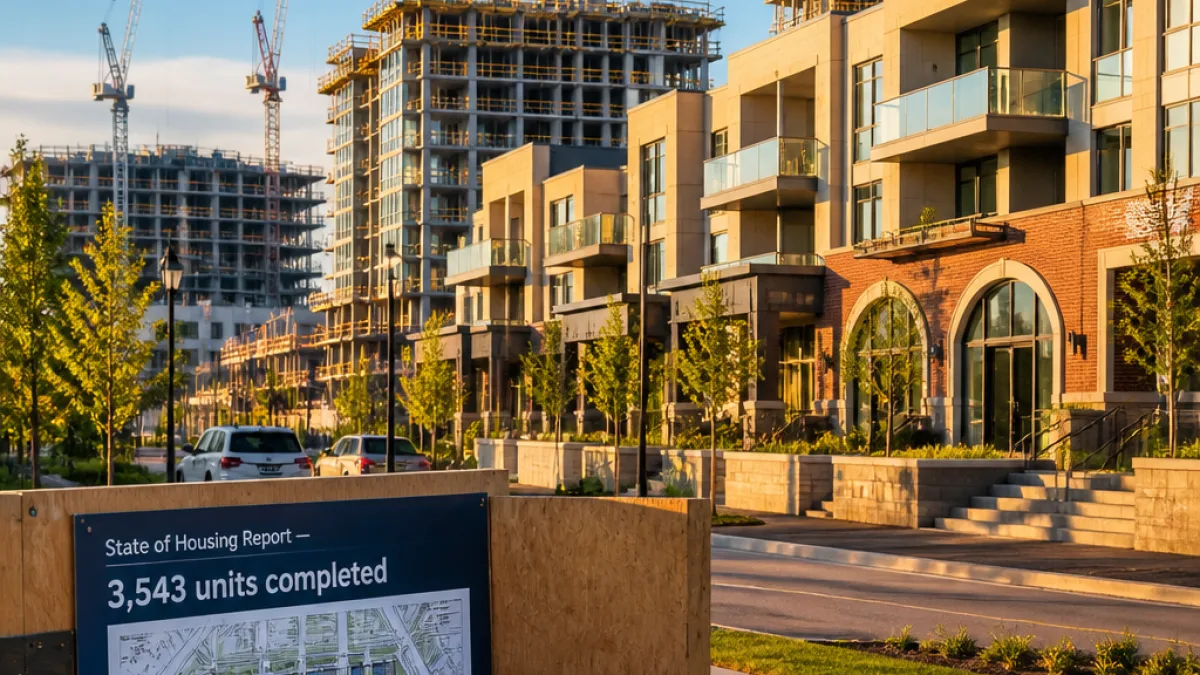
Town releases State of Housing report showing strong construction but lingering affordability concerns
Oakville completed 3,543 housing units in 2025, according to the town’s State of Housing Report presented to council on Sept. 8, 2026, as the municipality continues to work toward the provincial target of 33,000 new homes by 2031. The report outlines recent construction activity, development approvals, rental supply changes and the broader pipeline of proposed housing in the town.
Officials stress that while output climbed last year, affordability remains a major concern for residents and planners. The town’s report notes that the timing of when planned units reach construction depends on market conditions and private-sector decisions by property owners and developers.
"Housing affordability remains a challenge."
The State of Housing Report provides a snapshot of activity at the end of 2025 and points to a substantial volume of future projects under review. Key figures from the report include:
- 3,543 housing units completed in 2025
- 2,104 units started construction in 2025
- 1,994 units under construction at year‑end
- 45,443 units under review
- 3,560 units with draft approval
- 13,831 units with approval
Town staff emphasise that many of those figures reflect the role of Oakville in the planning and development approval process; approvals do not equate to immediate construction. Market forces and developer decisions drive when projects proceed.
| Category | Number of units |
|---|---|
| Completed (2025) | 3,543 |
| Started construction (2025) | 2,104 |
| Under construction (end 2025) | 1,994 |
| Under review | 45,443 |
| Draft approval | 3,560 |
| Approved | 13,831 |
Rental and supportive housing
Rental housing supply has risen but remains modest relative to demand. Between 2022 and 2025 the town recorded the addition of about 620 private rental apartment units, bringing Oakville’s private rental inventory to 5,540 units as of December 2025. The report also identifies seven assisted and supportive housing projects led by Halton Region, representing 242 units in total, of which 161 have been completed.
Those supportive projects are led by Halton Region rather than the town, highlighting the multi‑jurisdictional nature of social and assisted housing delivery in the area.
Policy groundwork and next steps
Oakville adopted a Housing Strategy and Action Plan in December 2024, setting measures intended to broaden housing options across the community. Council also received a Housing Needs Assessment in August 2025 examining housing needs and affordability, and in April and May 2026 approved updated Official Plan housing policies.
Among those policy updates are provisions that could enable inclusionary zoning in the future — a tool municipalities can use to require or encourage affordable units as part of new developments. The town says such mechanisms remain subject to further study, provincial rules and council direction.
At the regional level, Halton Regional Council received updated growth and housing reports in June 2026 that examine the connections between housing growth, regional infrastructure and assisted housing delivery. Oakville has also launched a public Housing Data Hub to provide ongoing transparency on housing activity, development trends and progress toward the 2031 provincial target.
Implications for Oakville residents
The numbers show Oakville is producing housing units at a higher rate than in some recent years, but municipal leaders and planners caution that supply alone will not resolve affordability pressures. The large pipeline of proposals indicates potential capacity to add tens of thousands of units, yet the pace at which those projects translate into completed homes will depend on market cycles, construction costs and developer decisions.
For residents, the immediate effect has been incremental increases to rental inventory and continued approvals for a range of housing types. For policy‑makers, the challenge remains aligning approvals, infrastructure planning and affordability measures so gains in housing supply translate into more accessible homes for households across Oakville.
The town’s Housing Data Hub contains further breakdowns and will be the central source for tracking progress toward the 2031 target.















