NEW GLASGOW, P.E.I. — An Islander is urging neighbours to be vigilant after two coyotes repeatedly entered her property and came perilously close to her dogs this month.
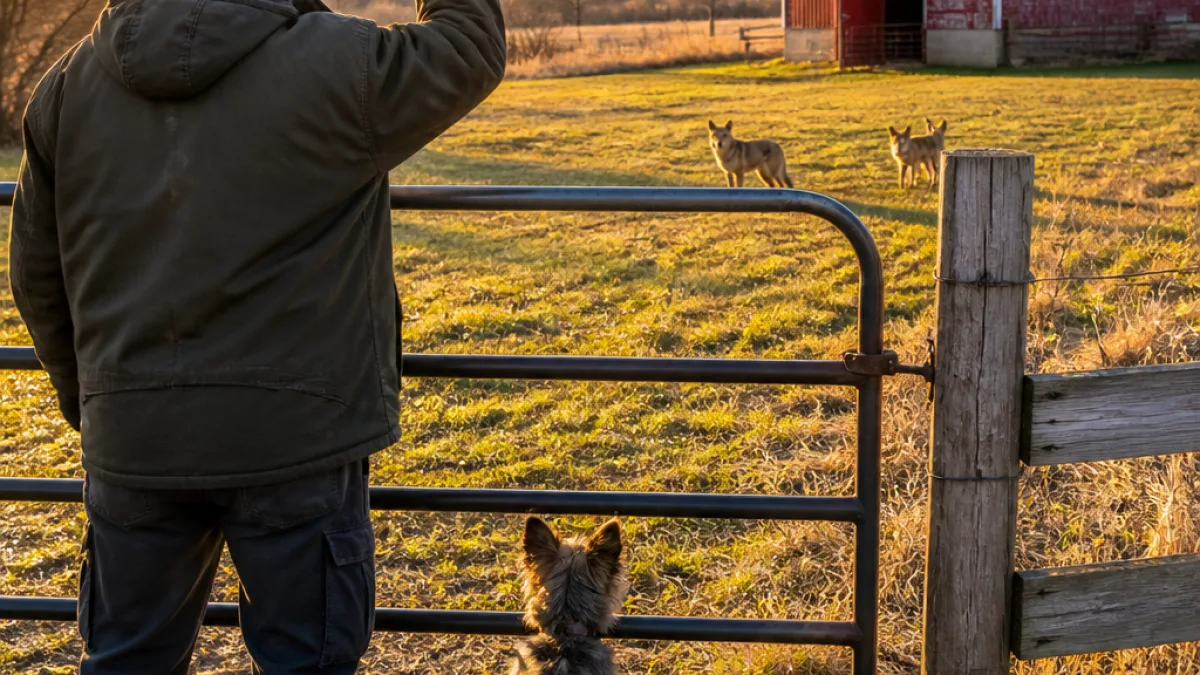
Sarah Barron, who lives on a farm in New Glasgow, described several tense encounters in which the animals lingered near her barn and chased one of her dogs within a few feet. Barron said the coyotes were reluctant to leave even when she made loud noises to scare them away.
In one recent incident Barron said her Jack Russell terrier, Isla, ran toward her with a coyote “maybe three feet behind her.” She banged on a metal gate, screamed and made noise to try to drive the animal off.
“I saw her coming towards me with a coyote about… maybe three feet behind her,” Barron said on CBC's Island Morning, describing the moment she ran to the fence and began banging on the gate.
Barron said the coyote initially moved to the neighbouring field, but returned. When she attempted to pick up Isla the coyote approached again, and the small dog ran toward it a second time. Barron then charged at the animal, retrieved Isla and her collie, and placed them inside a fenced dog yard at the front of the house, though she said the coyote stayed in the vicinity.
Seasonal behaviour explained
Wildlife ecologist Maureen Murray told CBC that such close encounters become more likely as the seasons change. She explained that coyotes give birth in the spring and that by late summer and into fall the young begin dispersing from their family groups and looking for territory of their own.
“Some coyotes might not know how to act around people, so you might see coyotes that are coming closer to people than you might expect,” Murray said, noting the timing of Barron’s incidents is consistent with that dispersal period.
What happened at the property
Below is a concise timeline of the events Barron described:
| Event | Description |
|---|---|
| Initial sightings | Two coyotes repeatedly entered Barron’s property and remained nearby. |
| Close encounter | Jack Russell terrier Isla ran with a coyote about three feet behind her. |
| Response | Barron banged on a metal gate, screamed and tried to scare the coyote away; it briefly moved but returned. |
| Securing pets | Barron retrieved both dogs and placed them in a fenced dog yard; the coyote remained in the area. |
What this means for Islanders
The incidents have prompted Barron to warn other Islanders, particularly those with small pets, to stay alert. While experts say dispersing juveniles are often inexperienced around people, these encounters can still be unnerving and pose a risk to unsupervised animals.
Practical steps Islanders commonly take when coyotes are reported in residential or rural areas include keeping pets closely supervised, securing small animals at night, and making noise or appearing large to encourage a coyote to move on. Provincial wildlife authorities and local conservation organisations often provide additional guidance when public reports increase.
- Supervise small pets outdoors, especially during dawn and dusk when coyotes are often most active.
- Secure animals in fenced areas or bring them indoors if coyotes have been seen nearby.
- Use deterrence — loud noises or making oneself appear large can encourage coyotes to leave (Barron reported success initially using noise).
Barron’s accounts add to a pattern Islanders sometimes see in late summer and fall, when young coyotes are exploring new territory. The encounters on her property underline how local residents and pet owners may need to adjust routines during these months.
Provincial officials were not quoted in Barron’s account, and no reports of injury to people were included in the information provided. Barron’s experience, and the explanation from Murray, serve as a reminder that wildlife behaviour shifts with the seasons and that awareness can reduce risky interactions.
Islanders who see aggressive or concerning coyote activity are advised to contact local wildlife authorities or municipal offices for direction on reporting and response.
Erin Callaghan is the Prince Edward Island correspondent for WE NEWS.