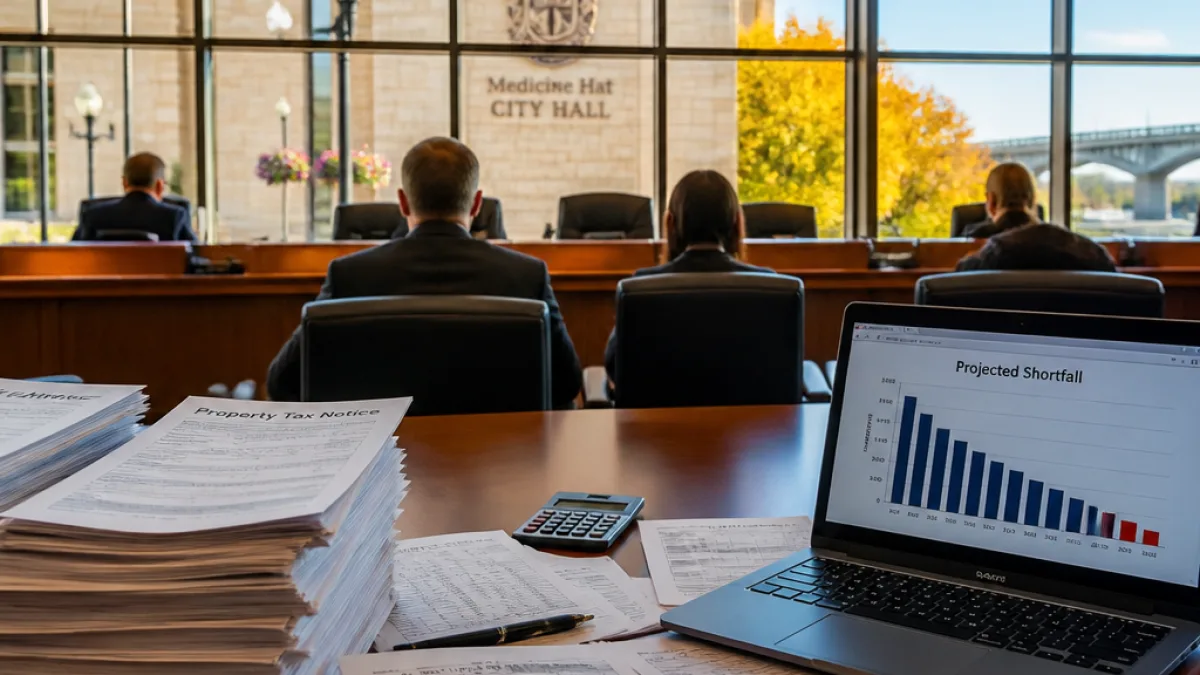
Medicine Hat city staff have delivered a blunt message as the first public round of budget discussions opened for the 2027–2028 two‑year cycle: unless property taxes rise substantially, the city will face multi‑million‑dollar gaps and shrinking reserves.
Finance office outlines shortfalls and options
The city’s director of finance, Lola Barta, told members of the budget committee earlier this week that a proposed 4.65 per cent property tax increase for 2027 — the level council has expressed interest in — would leave the municipality with a projected municipal gap of $7.5 million in 2027 and $6.8 million in 2028.
“It is council’s decision as to where they feel they want to set the tax rate at, at that point in time,” Barta said, noting the finance department had budgeted at a certain revenue rate and any deviation creates a funding shortfall.
“In order to have a balanced budget by 2028, we would need about an 8 per cent tax increase in each year in 2027 and 2028.”
That 8 per cent figure was presented as the recommended approach to avoid drawing down reserves to cover operating deficits. Finance staff warned that lower increases would require the city to use reserve funds to bridge the gap, which is not a sustainable long‑term strategy.
What’s driving the pressure on the levy
Committee members were given a list of cost pressures and changing revenue assumptions that are pinching the municipal bottom line. Among the items flagged by city staff were:
- Lower fine revenue from speeding tickets due to provincial latitude on photo radar;
- Loss of WestJet’s passenger air service — a hit to airport‑related revenue and local connectivity;
- Reduced policing grants;
- Discounted carbon‑credit revenues;
- Rising employee benefit costs projected to add nearly $10 million over the two‑year cycle despite no new full‑time hires.
City staff emphasised that while council can set whatever tax rate it prefers, doing less than the revenue assumptions baked into budgets will require compensating measures.
Numbers at a glance
| Item | 2027 projection | 2028 projection |
|---|---|---|
| Projected municipal gap (if tax increase = 4.65%) | $7.5 million | $6.8 million |
| Suggested tax increase to balance budget | About 8% each year | |
| Projected increase in employee benefits (two‑year cycle) | Nearly $10 million | |
Those are significant figures for a city that has tried in recent years to balance service levels with affordability for taxpayers. The finance presentation makes plain that choices are coming: raise taxes, spend down reserves, or find expense reductions and alternative revenues.
Next steps and what residents should expect
Budget deliberations are scheduled to begin in November. The public will have an opportunity to follow those meetings as council decides where to set the tax rate and whether to adjust service levels or tap reserves.
For a city that relies on stable municipal revenues to maintain roads, recreation, transit and public safety, the coming choices will matter. Rising benefit costs and external revenue pressures are not unique to Medicine Hat, but the scale of the projected gaps means council will face hard trade‑offs this fall.
Residents who pay close attention to municipal finances should watch the November deliberations and expect more detailed staff reports as administrators fine‑tune revenues and expense forecasts leading to final decisions on the 2027–28 budget cycle.
Municipal budgets are where economic policy meets everyday life on the Prairies. The choices council makes this autumn will shape service levels and property tax bills for the next two years.