EDMONTON — Two former Alberta premiers who once stood on opposite sides of the political divide have agreed to lead a business-driven campaign against province-wide separation.
Unlikely alliance aims to calm economic uncertainty
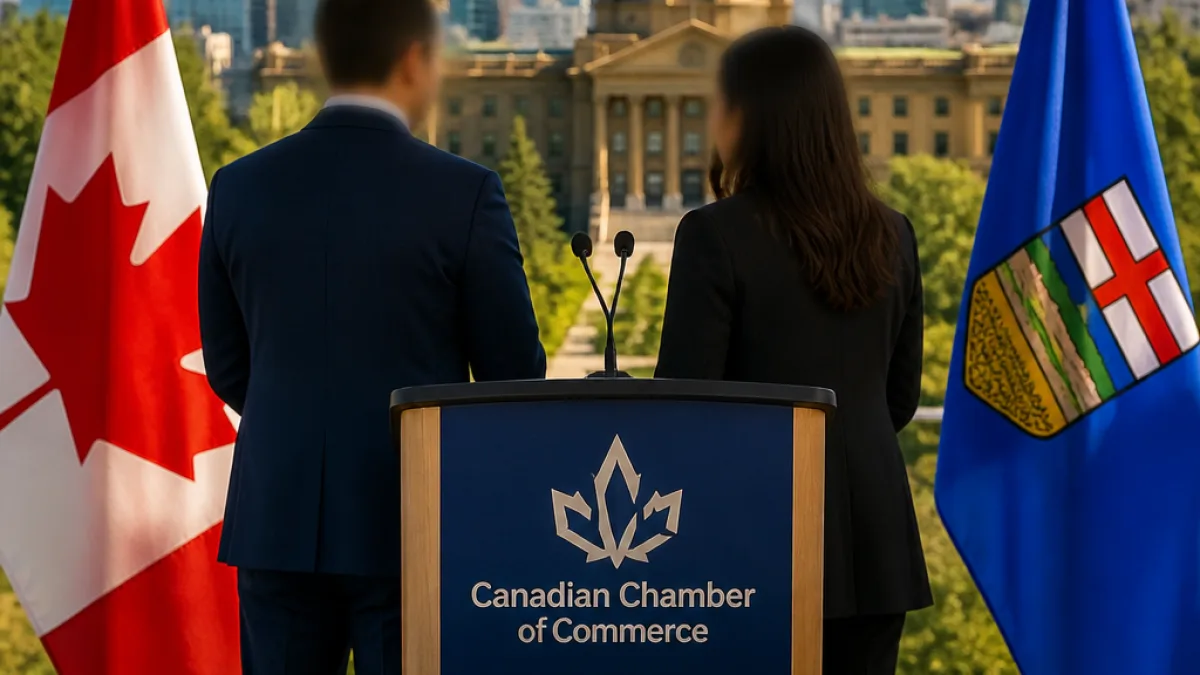
The Canadian Chamber of Commerce announced Monday that Jason Kenney and Rachel Notley will co-chair its effort to make the case for Alberta remaining part of Canada. The campaign is intended to show that a prosperous Alberta is compatible with continued membership in the federation.
Kenney, who led the United Conservative Party to victory in 2019, and Notley, the NDP premier he defeated, framed their cooperation as a necessary step to counter what both describe as a risk to business confidence and provincial stability.
“We’ll no doubt be standing shoulder to shoulder on this up until we can put it to bed once and for all,” Notley said, adding that the goal is to return to normal political debate afterward.
Campaign structure and timing
The chamber says details of the campaign are still being finalised and that it will be driven by discussions between the co-chairs and business members. The announcement comes as Albertans prepare to vote on an Oct. 19 referendum that asks whether the province should remain in Canada or hold a second, binding vote on quitting the country.
Chamber president Candace Laing framed the initiative as a response to shifting global markets, arguing that Canada benefits from stronger economic co‑operation rather than fragmentation.
Economic and political context
Both Kenney and Notley have been publicly critical of the separatist push promoted by some within the United Conservative Party under Premier Danielle Smith. Kenney has spent much of the summer condemning the separatist movement as a fringe phenomenon that risks undermining processes for resolving federal–provincial disputes.
Notley has accused the current UCP government of imposing what she calls a separatist agenda on Albertans. In her statement to the press she noted she and Kenney remain in disagreement on many policy matters but share a common belief that the referendum threatens business interests and comes at poor timing amid a trade war with the United States.
What the campaign will and will not yet do
The chamber says the co-chair arrangement will centre on outreach that demonstrates the economic case for staying in Canada. Specific tactics, messaging and the campaign’s budget were not disclosed in the announcement. The chamber indicated the approach will be shaped by the conversations between the two co-chairs and the business community.
- Co-chairs: Jason Kenney and Rachel Notley
- Organiser: Canadian Chamber of Commerce
- Key date: Oct. 19 referendum on Alberta’s future in Canada
Immediate reactions and implications
The pairing of two former premiers from opposing parties signals the seriousness with which parts of Alberta’s business community view the referendum. For many investors and firms, the prospect of separation raises questions about market access, interprovincial trade, capital flows and the legal uncertainties that would follow a decision to secede.
By aligning a centre-right former premier with a centre-left counterpart, the chamber is aiming to present a cross‑partisan front that underscores economic stability over partisan advantage. The move may also be intended to reassure markets that mainstream political leaders are committed to preserving national ties.
Quick reference
| Item | Details |
|---|---|
| Co-chairs | Jason Kenney; Rachel Notley |
| Referendum date | Oct. 19 |
The campaign’s next steps and how visible the co-chairs will be in the coming weeks remain to be seen. What is clear is that the business lobby has moved from commentary into organised action, and has enlisted two of the province’s best-known political figures to lead the charge against separation.
As details of the campaign are finalised, Albertans will head to the polls on Oct. 19 to decide whether they want to keep the province within Canada or pursue a binding referendum on leaving. The co-chairs’ collaboration aims to influence that decision by emphasising economic arguments and signalling broad political opposition to secession among mainstream leaders.