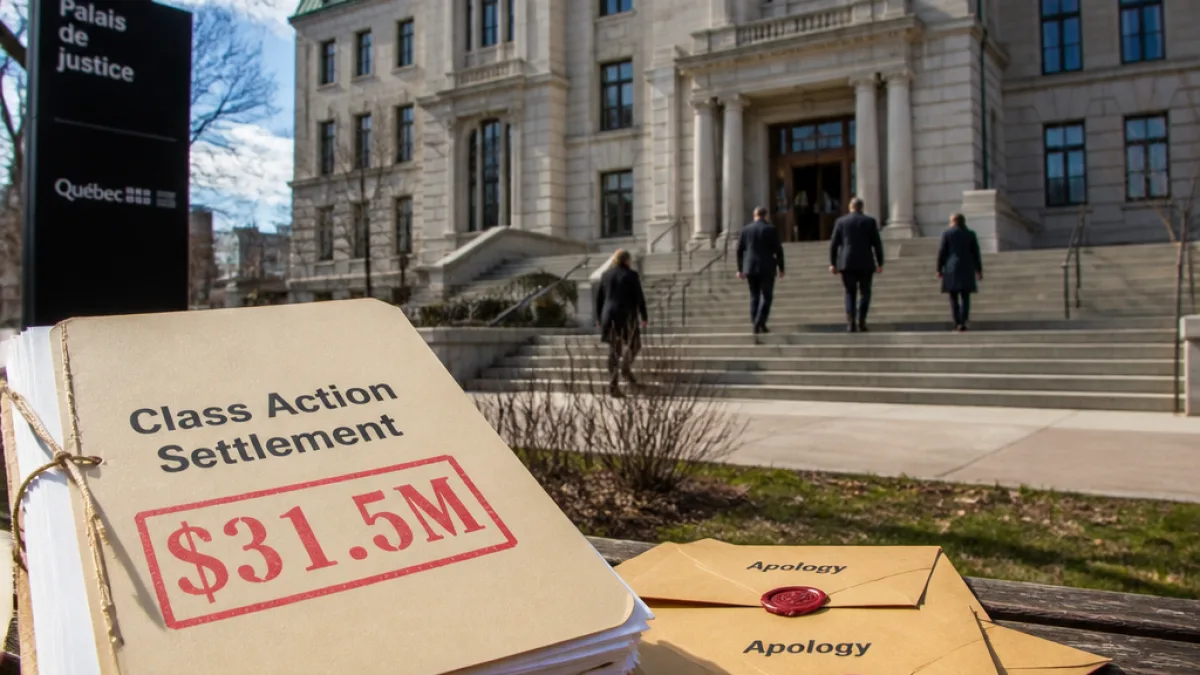
A Quebec Superior Court judge has approved a historic $31.5-million settlement in a class-action lawsuit accusing the Quebec City archdiocese and affiliated institutions of sexual assault spanning decades.
Legal milestone and scope
The agreement, signed off by Judge Danye Daigle, ends years of litigation brought by claimants who say they were abused by priests and laypeople in positions of authority dating back to 1940. The case is notable for being the first class action in the province to target an entire diocese for alleged sexual assaults by clergy members.
Lead plaintiffs Gaétan Bégin and Pierre Bolduc were among those who advanced the class action. They say they were sexually assaulted by parish priests beginning in the 1950s and 1960s when they were 14 and 12, respectively. Dozens of other alleged victims — men and women — have indicated they will participate in the settlement process.
How compensation and apologies will be handled
Under the terms presented in court, victims will have three months to submit a claim describing the alleged abuse and how it affected their lives, the law firm Dufresne Wee said. The amount each claimant will receive will be determined by a pair of retired judges appointed to assess individual files.
The archdiocese has committed to issuing a letter of apology to each claimant whose file is accepted for compensation, according to lawyer Justin Wee. The settlement also names other defendants, including the Seminary of Quebec, François-de-Laval College and the AMFQ.
“Faced with the suffering you endure, there is little that my words can alleviate or heal. However, something must be said. On behalf of the Catholic Church of Quebec, I wish to offer you our sincerest apologies,”
The words were spoken in court by Bishop Jean Tailleur, the archdiocese’s vicar general, during testimony presented to Judge Daigle on July 30. That day included emotional accounts from victims describing long-term effects of their alleged traumas.
Reactions from the archdiocese and legal representatives
In a statement reacting to the judge’s approval, church officials said they welcomed the decision and viewed the settlement as a step toward reparation and the “journey toward peace and healing” for survivors.
The Dufresne Wee law firm, which acted for the class, confirmed the timetable and described the next steps for claimants. The firm said the retired judges will determine individual awards based on the claims submitted.
What victims need to know
- Victims have three months from the date of the judge’s approval to file a claim detailing the alleged abuse and its effects.
- Two retired judges will assess submitted claims and decide individual compensation amounts.
- The archdiocese will send a letter of apology to each claimant whose claim is accepted.
Legal counsel for claimants has advised potential claimants to follow the instructions provided by the law firm handling the class action to ensure their files are submitted within the deadline and contain the necessary supporting information.
Regional implications and historical context
The Quebec City archdiocese covers the provincial capital and surrounding areas, including the Charlevoix and Chaudière-Appalaches regions. The settlement therefore potentially affects survivors across a broad swath of the province. The case adds to a growing catalogue of legal and public reckonings with sexual abuse by clergy in Quebec and elsewhere, reflecting shifting public attitudes and accountability mechanisms over recent decades.
| Item | Details |
|---|---|
| Settlement amount | $31.5 million |
| Who may claim | People who allege sexual abuse by clergy or laypeople associated with the archdiocese since 1940 |
| Claim period | Three months from the judge's approval |
| Decision on awards | Two retired judges will assess and determine individual amounts |
The approval marks a significant legal resolution for plaintiffs who have sought collective redress. While the monetary figure quantifies part of the reparation, survivors and advocates have emphasised that recognition, apology and institutional change are also central to healing and prevention.
The archdiocese and its named co-defendants now move into the implementation phase of the settlement. For survivors considering whether to participate, the coming weeks will be crucial for gathering documentation and deciding whether to submit a claim under the court-approved process.
Further details on how to file a claim are being managed by the Dufresne Wee law firm, which represented the class. Interested parties should contact the firm directly to obtain the forms and instructions necessary to proceed within the timeline set by the court.
(This report was compiled from material presented in court and statements issued by the law firm and the archdiocese.)