
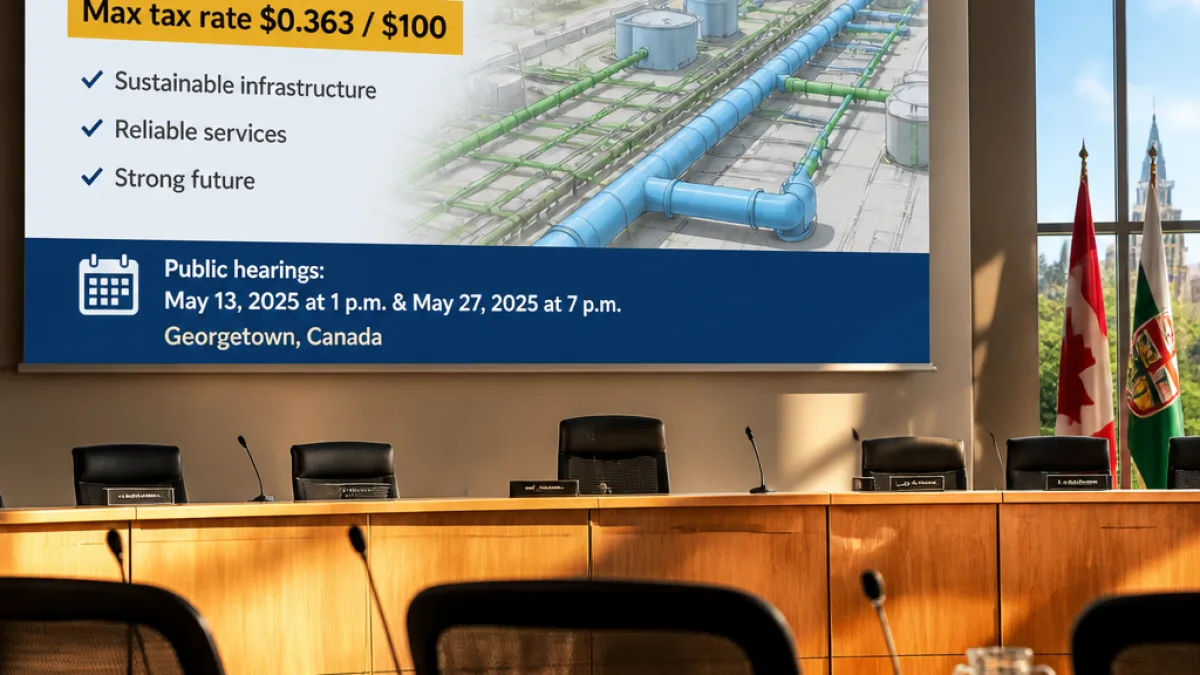
Georgetown city staff presented an updated fiscal plan Aug. 11 that would keep average homeowner bills steady while shifting the municipality's financing mix and prioritizing large water and wastewater projects.
Budget overview and tax implications
City Manager David Morgan tabled the latest details of a proposed $1.6 billion budget at a council workshop, ahead of public hearings on Aug. 26 and Sept. 8 and the start of the new fiscal year on Oct. 1. With certified property values now available, the city recorded a decline in overall assessed valuation and adjusted its tax-rate proposal accordingly.
The report shows a 1.8% drop in total certified property valuations across Georgetown and a 2.8% decrease in the average taxable home value. To cover debt obligations without triggering a municipal election, the city is proposing a maximum tax rate of $0.363 per $100 of assessed value — an increase from the current rate of $0.353. City staff say the decline in average assessment means the typical homeowner should not see an increase in their property tax bill this year compared with the current fiscal period.
Where the money will go
Over half of the proposed spending — $903 million — is earmarked for capital projects. More than $700 million of that capital allocation is targeted to water and wastewater infrastructure, including the East Georgetown groundwater initiative and the construction of two new wastewater treatment plants.
- Overall budget: $1.6 billion
- Capital projects: $903 million
- Water and wastewater: $700 million+
- Proposed maximum tax rate: $0.363 per $100
Officials are also relying on a mix of funding sources. Developer impact fees are expected to cover roughly 8 per cent of water and wastewater capital improvements, and the city anticipates approximately $251 million in developer contributions.
Debt strategy and cash use
One significant change from earlier iterations of the plan is a reduced reliance on new borrowing for the Georgetown Regional Water Initiative Project. Morgan proposed using more cash on hand for water capital work and issuing $21 million less in debt this fall for that project.
“We're seeing that we're growing in reliance in the general fund less on property tax and more on more volatile revenue sources like sales tax as well as pilot revenue and franchise fees,” Morgan said.
The comment underscores a shift the city is watching carefully: as growth slows from a previous period of rapid expansion, the revenue mix and debt profile are changing. Council and staff must balance long-term infrastructure needs with short-term operating pressures and less predictable revenue streams.
Local consequences and next steps
For Georgetown residents, the presentation carries immediate and longer-term implications. In the short term, staff expect the average property tax bill for a typical homeowner to remain level because of the fall in taxable values, despite the higher per-$100 tax rate. Over the longer term, investing heavily in water and wastewater — much of it tied to growth-related requirements — aims to address capacity and environmental standards as the city manages development pressures that followed a decade of rapid population increase.
Council will hear public submissions on the proposed budget and tax rate at hearings set for Aug. 26 and Sept. 8. After public input and further committee review, council will consider final approval before the new fiscal year begins Oct. 1.
Quick reference
| Item | Amount / change |
|---|---|
| Total proposed budget | $1.6 billion |
| Capital budget | $903 million |
| Water & wastewater | $700 million+ |
| Developer contributions (anticipated) | $251 million |
| Proposed maximum tax rate | $0.363 per $100 (current: $0.353) |
| Certified property valuation change | -1.8% |
| Average home taxable value change | -2.8% |
As council and residents weigh the plan, the debate will centre on how to fund major infrastructure without unduly shifting costs to taxpayers or compromising service levels amid a changing growth profile. Public hearings will provide the first opportunity for residents to question the numbers and the priorities behind them.















