Delta Air Lines is poised to reconfigure its Boeing 767-400ER fleet to favour higher-priced cabins, a move that could reduce the number of standard economy seats on long-haul routes and reshape passenger options on flights that serve transatlantic and extended domestic markets.
What the change would do
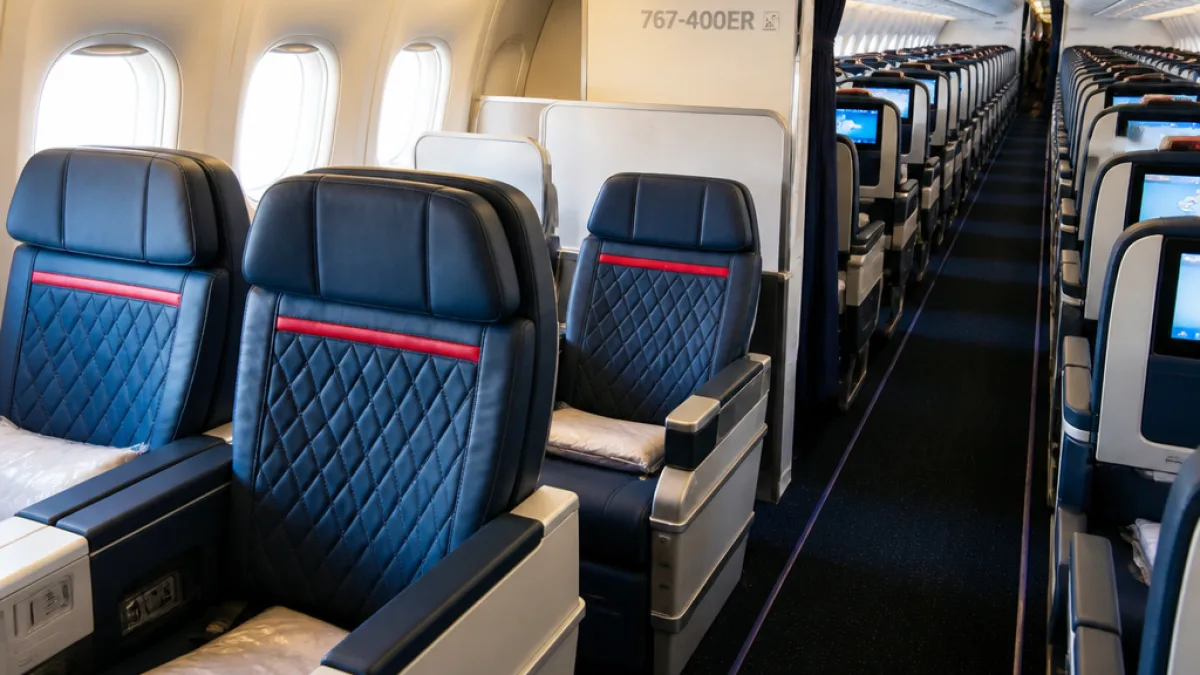
According to details circulating within the aviation industry, the US carrier plans to increase the number of Premium Select seats on its 767-400ERs from 20 to 26, and to expand Comfort+ from 28 to 42. The current layout of these aircraft is reported as 34 Delta One suites, 20 Premium Select, 28 Comfort+, and 156 Main Cabin seats. Delta operates 21 of the 767-400ER type, whose average age is said to be about 25 years.
| Cabin | Current seats | Proposed seats |
|---|---|---|
| Delta One | 34 | 34 |
| Premium Select | 20 | 26 |
| Comfort+ | 28 | 42 |
| Main Cabin | 156 | Reduced (not specified) |
Operational footprint and routes
The aircraft are described as fully owned by the airline and profitable despite their age, filling what Delta sees as a capacity niche between narrowbodies and larger widebodies. The 767-400ERs are used on longer assignments, including transatlantic services and extended domestic routes. Examples cited include Atlanta–Zurich and New York–Honolulu. Delta has indicated it intends to keep the fleet in service for several more years.
Passenger effects and market signal
By increasing the count of premium seats within the same airframe, the airline would necessarily carve away some standard economy capacity. That reduction matters because it could:
- push some leisure travellers who previously relied on free or lower-cost economy inventory toward paid upgrades,
- tighten supply in the lowest fare brackets and thereby place upward pressure on fares for economy travellers on affected routes, and
- change how families and budget-conscious passengers plan for long-haul travel if fewer standard seats are available on popular flights.
The intended roll-out is expected to be gradual and aligned with cabin refurbishment schedules, but exact retrofit timing has not been confirmed. Delta has said the changes would enhance passenger choice without altering the aircraft’s operational footprint or route structure.
Context for West Coast travellers
For travellers in the Greater Vancouver and Lower Mainland region, shifts in cabin mix on carriers that operate long-haul metal can reverberate quickly: leisure demand and premium-seeking customers have grown in recent years, and airlines are recalibrating seat maps to chase higher-margin segments. While this announcement does not list Canadian gateways explicitly, the broader trend of reconfiguring older widebodies to add premium inventory is one to watch for anyone planning transatlantic or long-haul itineraries from Pacific and coastal airports.
Economic and industry considerations
Airlines often reconfigure aircraft to capture more revenue per flight when demand supports premium product sales. The 767-400ERs are positioned as workhorses that bridge capacity gaps; keeping them in service is a cost decision as much as a capacity choice. That the type is fully owned and still profitable helps explain Delta’s apparent appetite for investing in cabin changes rather than retiring the frames.
Delta travellers should expect the following in the coming months:
- gradual seat map changes on select 767-400ER services as retrofits occur;
- possible fewer unreserved economy seats on high-demand long-haul flights; and
- an increased premium product footprint that could influence fare structures.
Until Delta provides a schedule for the retrofit programme, exact impacts on specific flights and markets remain uncertain. For passengers, the change underscores how airlines are reshaping cabins to balance consumer choice against profitability — a dynamic that will continue to affect travel planning along the West Coast and beyond.