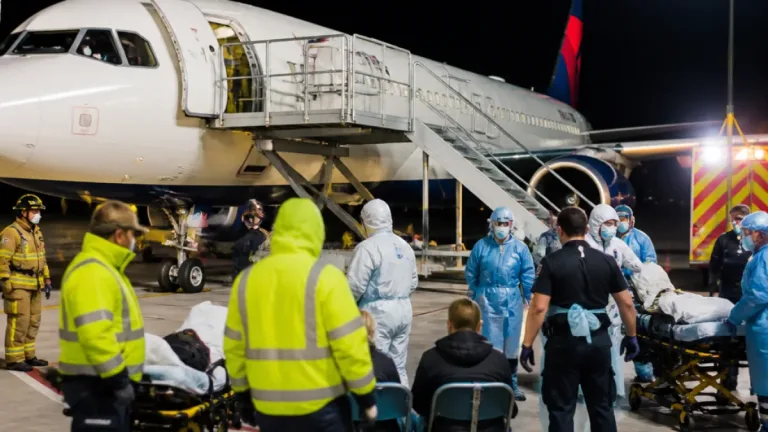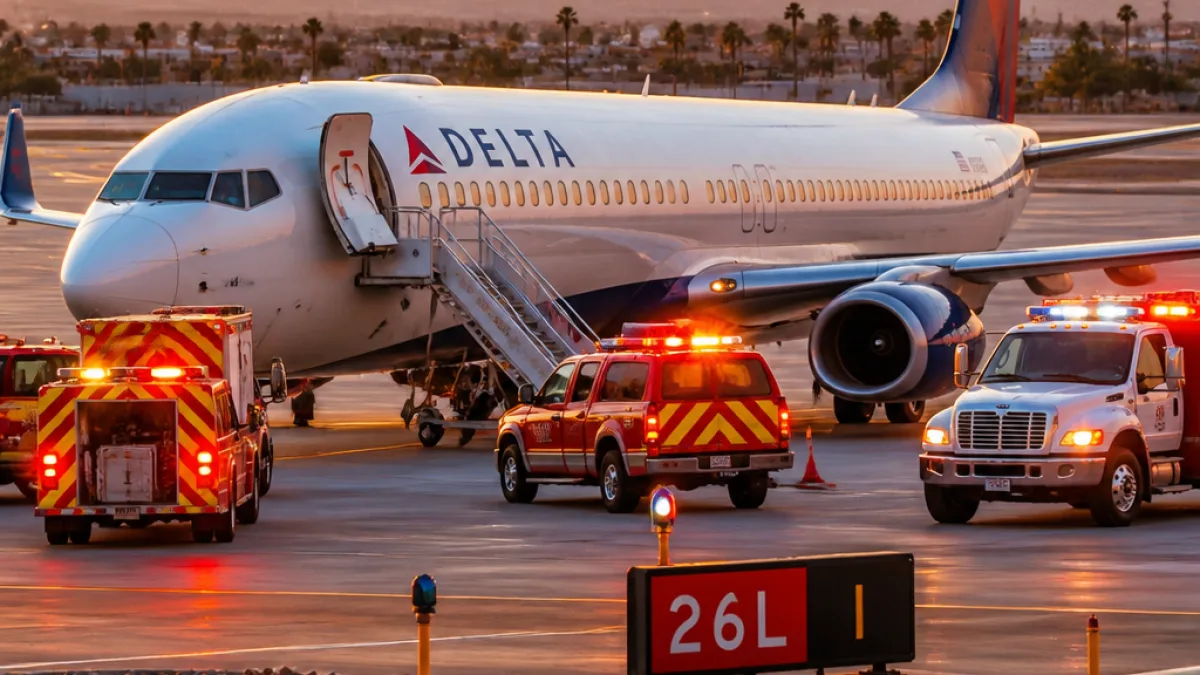
A Delta Air Lines flight bound for Salt Lake City suffered a cabin depressurisation last week and made a rapid emergency descent before diverting to Las Vegas, according to airline and air traffic recordings. The aircraft landed safely at Harry Reid International Airport after oxygen masks released in the cabin.
Fast descent after masks deploy
The Boeing 737–900 ER, operating as Delta Flight 2311, had departed Los Angeles International Airport and was cruising at approximately 35,000 feet when crew reported a loss of cabin pressure over the Mojave Desert. The aircraft descended roughly 8.2 kilometres (27,000 feet) in about 10 minutes, with pilots declaring an emergency and requesting to level at 9,000 feet.
On air traffic control audio published with the incident, the flight crew can be heard telling controllers: “Delta 2311 currently rapid descent. We’d like to get down to 9,000 and we’re direct Las Vegas.” Controllers cleared the aircraft to that altitude and instructed the crew toward Harry Reid International Airport, advising the crew to expect Runway 26L.
“Affirmative,” the pilot answered when asked whether passenger oxygen masks had dropped, according to the recording.
Passengers, crew and response
The flight was carrying 174 passengers and six crew members. Inside the cockpit, both pilots donned airtight oxygen masks equipped with microphones and declared the emergency to Las Vegas air traffic control. Videos and accounts from passengers describe panic as the cabin masks deployed, a standard procedure intended to provide supplemental oxygen during sudden losses of cabin pressure.
- Aircraft: Boeing 737–900 ER
- Flight: Delta Air Lines Flight 2311
- Passengers and crew: 174 passengers, six crew
- Altitude at incident: ~35,000 feet; descent to 9,000 feet
- Landing: Harry Reid International Airport, Las Vegas (Runway 26L)
What caused the depressurisation remains under investigation
Incidents of this nature are rare. The source material notes that pressurisation failures can stem from malfunctioning systems, leaks or structural problems; however, no definitive cause has been released for this flight. Authorities and the airline will need to inspect the aircraft and sift through maintenance and flight data to determine what occurred.
| Item | Detail |
|---|---|
| Departure airport | Los Angeles International Airport (LAX) |
| Destination | Salt Lake City |
| Diverted to | Harry Reid International Airport, Las Vegas |
Local context for Delta-area travellers
For residents of Delta and the wider Metro Vancouver region who regularly fly through Vancouver International Airport — many of whom connect through Los Angeles and other U.S. hubs — the episode underlines the narrow window for crew and passengers to respond to sudden depressurisation. At typical cruise altitudes, the time of so-called “useful consciousness” without supplemental oxygen can be measured in seconds to a minute, which is why cabins are equipped with drop-down masks and crew train for rapid descent procedures.
While there is no indication that the incident involved Delta Air Lines operations in British Columbia, the event will likely figure in broader conversations about aircraft maintenance oversight, airline safety measures and passenger preparedness on transborder routes. Investigators’ findings could prompt carrier-level or regulatory responses affecting flight operations and inspections.
The aircraft’s safe landing at Las Vegas and the absence of reported fatalities are welcome outcomes, though the episode is a vivid reminder of the risks air travellers face and the layers of training and procedure designed to protect them when things go wrong.
Further details, including the official investigation report and any maintenance history tied to the aircraft, were not yet available in the initial reporting.