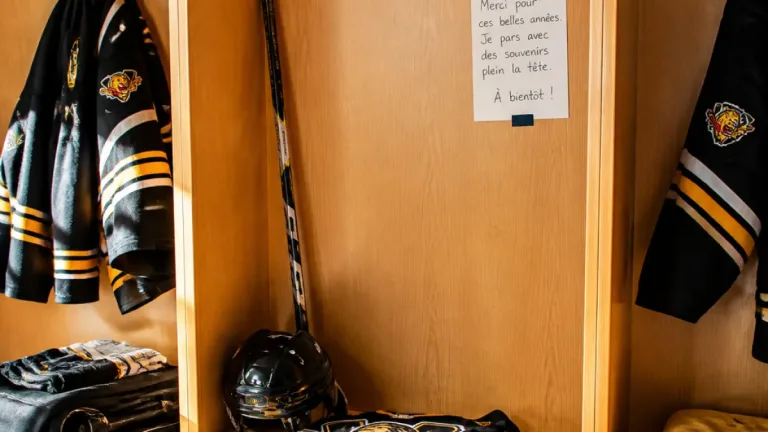
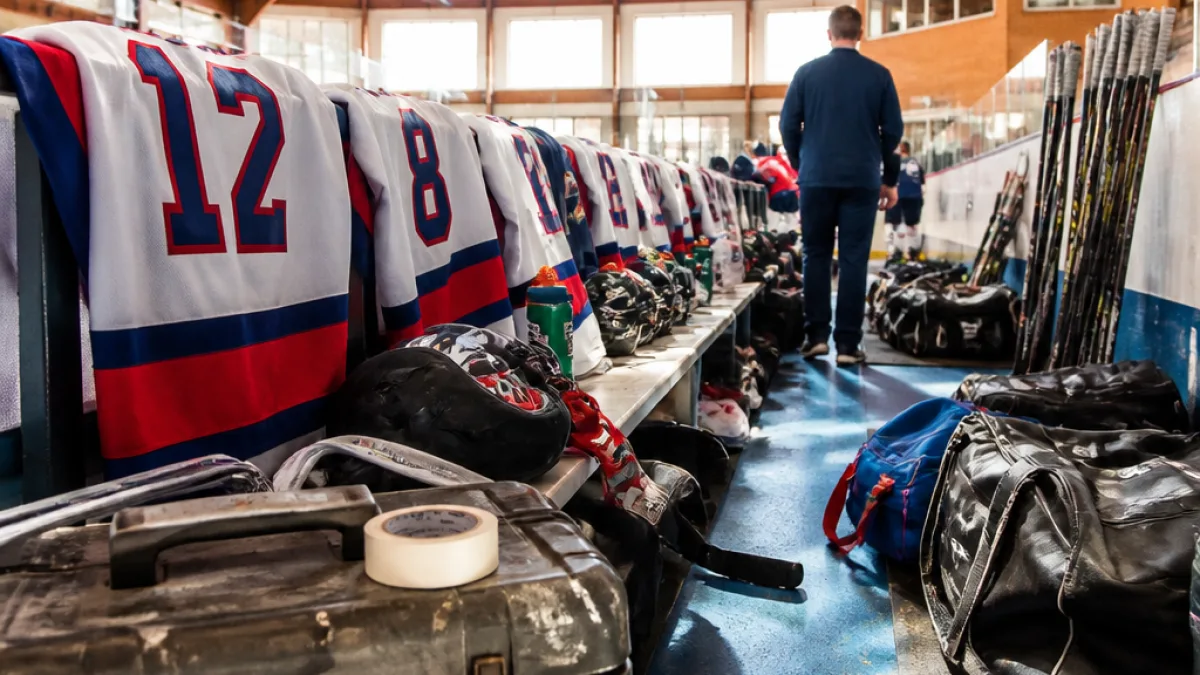
SUMMERSIDE — When the Newfoundland Regiment set up for the first five days of its training camp this week at Gerard (Turk) Gallant Arena, one of the faces quietly overseeing the pile of jerseys and bags belonged to a man from Prince Edward Island.
Tyler Jay of Charlottetown turned out at Credit Union Place in Summerside to keep equipment in order for the QMJHL squad during its short stay on the Island. Behind the visible shuffle of skates and sticks, his role is a steadying presence for players and coaches alike — the kind of work that rarely makes the headlines but is essential to a team’s daily operations.
What an equipment manager does
During training camps and across the regular season, an equipment manager handles a mix of practical, physical and organisational tasks. On any given day, responsibilities can include fitting and maintaining gear, organising uniforms and ensuring that travel equipment is ready when the team moves between arenas. For visiting clubs, the preparation also involves adapting to borrowed facilities and coordinating with host staff.
- Uniform and jersey management: making sure players have the correct sizes and that jerseys are laundered and available for practices and games.
- Equipment maintenance: sharpening skates, repairing pads, and tending to sticks and helmets so players are safe and game-ready.
- Logistics and inventory: tracking gear, packing for travel days and liaising with arena staff to accommodate the team’s needs.
That combination of hands-on work and coordination was on display as the Regiment used Summerside as its first training-camp site. The short-term move gives teams a chance to bond, test line combinations, and let new players settle into the system — all of which depends on the behind-the-scenes work of staff such as equipment managers.
Local connections and community impact
Although the Regiment represents Newfoundland, its presence on P.E.I. for training highlights the provincial cross-connections that junior hockey often fosters. A local like Jay working with the visiting team helps smooth the transition to a different rink and provides continuity for players who need to focus on skating and drills rather than the practicalities of daily operations.
For Summerside and surrounding communities, hosting a QMJHL camp generates modest but meaningful activity. Ice bookings, arena staff hours and hospitality for visiting personnel all contribute to local routines. Having an Island resident on the visiting staff is a reminder of the human networks that underpin sporting events beyond the scoresheet.
Where the work happens
The Regiment’s initial sessions were held at two nearby facilities. The list below summarises the key locations involved in the camp:
| Role | Location |
|---|---|
| Training-camp sessions (first five days) | Gerard (Turk) Gallant Arena, Summerside |
| Jersey and dressing-room organisation | Credit Union Place, Summerside |
| Equipment manager | Tyler Jay, Charlottetown |
Those on the ice and in the dressing room saw the practical benefits of having a familiar face from P.E.I. ensuring that small but important details were handled so coaches could concentrate on on-ice evaluation.
Recognition for a quiet calling
Equipment managers rarely receive public recognition, yet their work is a vital component of team operations. From the moment players step onto the ice for the first session of camp, the reliability of their gear and the smooth running of logistics affect both performance and safety. In smaller hockey communities, those tasks often fall to people who carry them out as a labour of love rather than for spotlight or acclaim.
As junior hockey continues to weave communities together across provincial lines, the contributions of Islanders who pitch in with visiting clubs are part of the weekly fabric of the sport. For Summerside residents watching the Regiment’s training-camp open, the presence of an Island-based equipment manager was a subtle sign of those ongoing connections.
Local hockey fans can expect more activity around the arena throughout the camp as lineups are finalised and coaches make roster decisions. For now, the steady work in the dressing room — from sorting jerseys to keeping skates sharp — remains one of the quiet, indispensable threads in the larger story of junior hockey on Prince Edward Island.