Mayor warns trade talks must include autos as Brampton assembly faces uncertainty
BRAMPTON — The future of auto production in Brampton has become a focal point of Canada’s tense trade discussions with the United States, with the city’s mayor saying any agreement that excludes the automotive sector would be worse than no deal at all.
On Saturday, Brampton’s mayor told reporters he wants assurances that autos remain part of a renewed trade arrangement with the U.S., describing the potential exclusion of the sector as unacceptable for local workers and manufacturers.
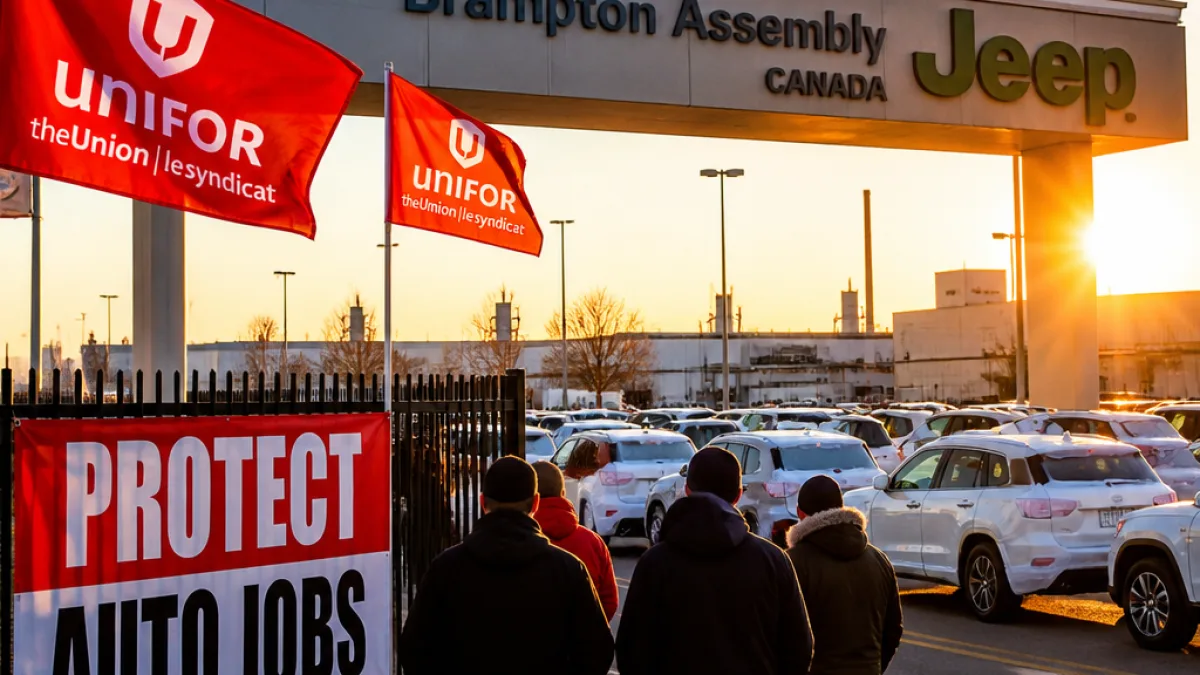
Stellantis, which operates the Brampton Assembly plant, has been at the centre of job-security concerns this week after union leaders said the company is strongly considering moving production of the Jeep Compass, previously slated for Brampton, to the United States.
"No deal is better than a bad deal," the mayor said, adding he hoped any continued agreement would "continue to have free trade on auto."
Unifor president Lana Payne told media the company had signalled it would move the future Jeep Compass production to the U.S., a move the union described as effectively "idling the plant indefinitely." At the same time, Unifor also noted Stellantis has reiterated its commitment to the Brampton workforce.
Local stakes and national negotiations
The Brampton Assembly facility sits at the intersection of local livelihoods and broader international trade policy. Changes to tariffs or the scope of a bilateral deal could materially affect where automakers choose to allocate production, and municipal leaders here are watching closely.
Sources familiar with the negotiations told national outlets the talks remain some distance from a final agreement, even as both sides review tariff lines in detail. One high-profile development in the talks is the proposed imposition of a 50 per cent U.S. tariff that is scheduled to take effect on Aug. 19 unless a deal is reached that alters those duties.
- Workers: Unifor has warned of production shifting away from Brampton.
- Company: Stellantis says negotiations with unions are upcoming and that the focus is on a sustainable manufacturing solution for Brampton Assembly.
- Government: Municipal leaders are urging federal negotiators to keep autos inside the scope of any Canada–U.S. trade deal.
What city residents should watch for
For Brampton residents, the immediate concerns are workplace stability and the broader implications for suppliers and the local economy. The plant supports a network of parts makers, logistics providers and service businesses in the region; any change in production plans would ripple through that ecosystem.
City hall’s public comments are aimed at amplifying that local economic perspective to negotiators in Ottawa and Washington. The mayor framed the issue bluntly: a trade deal that undercuts the auto sector could cost jobs and investment in Brampton.
Meanwhile, Stellantis has indicated it will enter talks with the workers’ union, portraying the upcoming negotiation as an opportunity to arrive at a sustainable path forward. Unifor’s statements, however, show the union is prepared for a worst-case scenario if production is moved elsewhere.
| Stakeholder | Position / Status |
|---|---|
| City of Brampton (Mayor) | Advocates inclusion of auto sector in trade deal; "no deal is better than a bad deal" |
| Stellantis | Has reiterated commitment to Brampton; entering negotiations with workers to find a sustainable solution |
| Unifor | Reported Stellantis may move Jeep Compass production to U.S.; warned plant could be idled |
| Negotiators (Canada–U.S.) | Reviewing tariff lines; sources say talks are constructive but not close to a final deal |
The coming days and weeks will likely determine whether a deal is reached that preserves current tariff arrangements and keeps automotive production plans in place. For Brampton residents, any outcome will have tangible consequences for employment, municipal revenues and the wider supply chain.
Municipal leaders and union representatives have signalled they will continue to press federal negotiators to ensure the auto industry is protected in any agreement with the United States. As discussions continue in Washington and Ottawa, Brampton remains watchful of both the political manoeuvring and its local economic fallout.