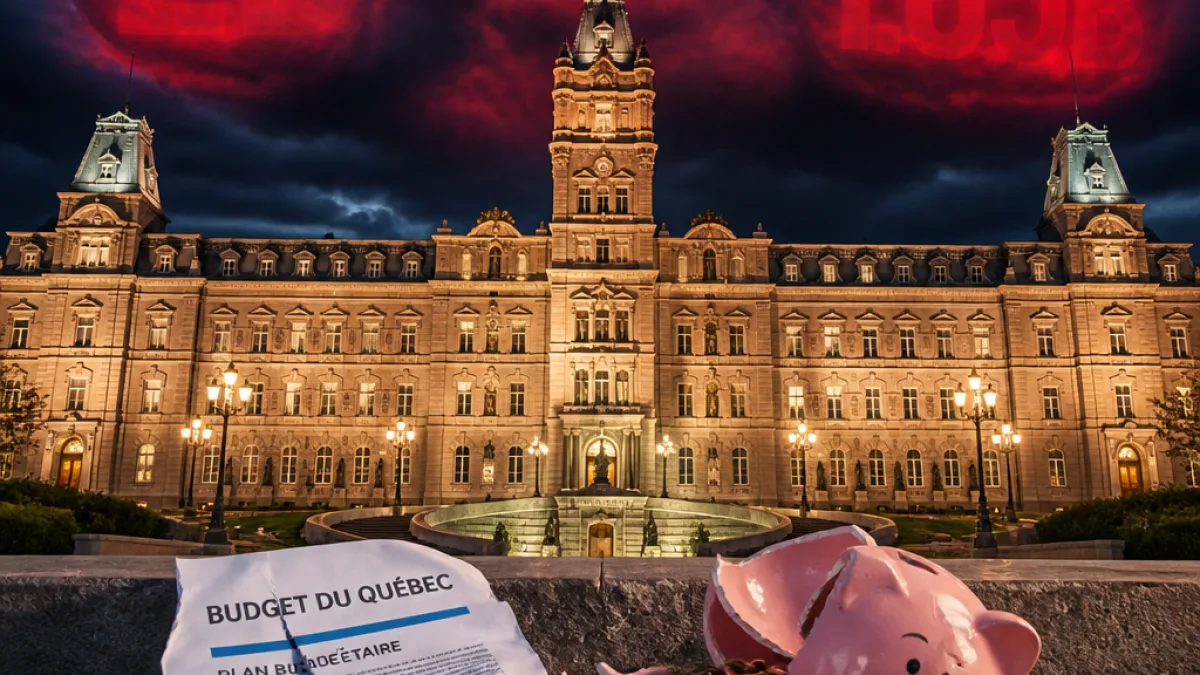
The Quebec auditor general says the province will have to begin making substantial spending or revenue changes as early as next year to meet obligations under the province's Balanced Budget Act and eliminate the deficit by 2029–30.
In a pre‑election report released on Monday, the auditor general's office set out a multi‑year fiscal picture that would require the next government to find at least $2 billion in measures starting next fiscal year. The report also flags a larger effort of $3 billion in 2028–29 and identifies a present shortfall of $1.85 billion that must be closed to stay on the path to a balanced budget.
"The government will have to tighten its belt for several years to comply with the Balanced Budget Act," the auditor general noted in the analysis.
What the numbers mean for Quebecers
The figures in the auditor general’s analysis are framed as the minimum fiscal effort required to meet a statutory target: eliminate the province’s deficit by 2029–30. That legal deadline narrows the policy options available to whatever party or coalition forms the next government after the fall election.
How the required effort is apportioned — between expenditure restraint, program reform, revenue increases or a combination — will determine which services are affected and how quickly. The auditor general’s role in this context is to assess the fiscal framework and warn of risks; it does not prescribe specific policy choices.
Timeline and fiscal targets
The auditor general’s report highlights key moments in the run‑up to the balanced‑budget deadline:
- Next fiscal year: at least $2 billion in measures needed.
- 2028–29: fiscal framework calls for a $3 billion effort.
- Immediate shortfall: a $1.85 billion gap that must be eliminated.
| Fiscal year / item | Amount |
|---|---|
| Starting next year (minimum) | $2.0 billion |
| 2028–29 fiscal effort | $3.0 billion |
| Existing shortfall | $1.85 billion |
Political and practical implications
The report arrives during an election period in which fiscal management is likely to be a central issue. Parties will be pressed to explain how they would meet the auditor general’s baseline figures without unduly disrupting programs such as health, education or municipal transfers.
For municipalities, health authorities and other public bodies that receive provincial transfers, the prospect of provincial restraint can translate into pressure on local budgets or service scaling. For households, the effects will depend on whether measures come from spending cuts, tax increases, or policy changes that affect eligibility or service delivery.
Officials in the auditor general’s office emphasised that achieving the government’s planned budget will be a challenge, pointing to both the size and timing of the adjustments needed. The analysis underscores uncertainty around economic assumptions and revenue forecasts that underpin provincial budgeting.
What to watch next
As the election campaign progresses, Québecers should look for:
- Party plans detailing where savings or new revenues would come from.
- Updated economic and revenue forecasts that could alter the size of the required adjustments.
- Statements from ministries and public agencies on potential service impacts.
The auditor general’s report provides a fiscal baseline against which campaign promises and post‑election budgets will be judged. With a statutory deadline to achieve balance, the incoming government will face constrained choices and a tight timetable to align spending and revenues with the law.
Reporting from Montreal.