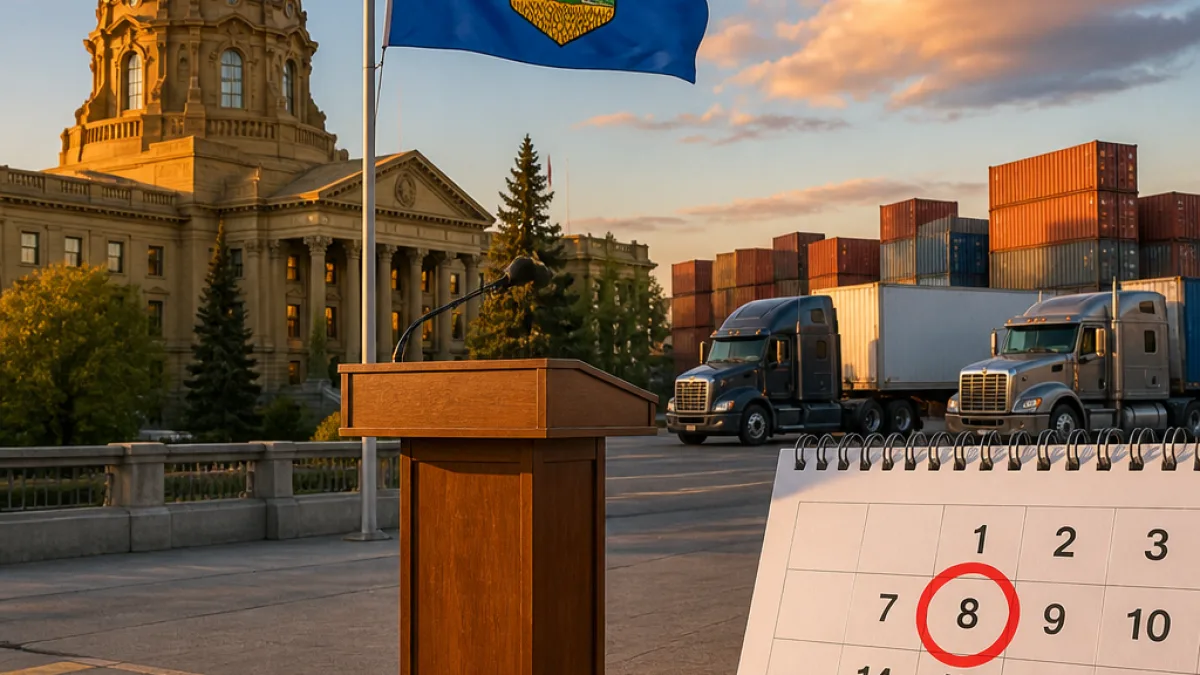
EDMONTON — Alberta’s premier is urging Ottawa to re‑engage with the United States to head off an escalation in the cross‑border tariff battle, saying there is still time to negotiate before retaliatory measures take effect on Sept. 8.
Pressure to halt escalation
In a statement posted Tuesday, Premier Danielle Smith said she supports federal efforts to shield Canadian businesses but warned that tariffs and counter‑tariffs “increase costs, disrupt supply chains, put pressure on businesses and workers, and ultimately risk escalation to even higher and broader tariffs that will impact even more Canadians.”
"There is still time before these counter‑tariffs take effect on Sept. 8, and I am urging the federal government to use that time to get back to the negotiating table with the United States."
Smith’s message places Alberta among the more cautious provincial voices in the unfolding trade dispute. She also noted her government is examining whether gaps in federal business aid will require provincial support to protect Alberta firms and workers.
Federal response and provincial concerns
The federal government announced plans Tuesday to impose retaliatory tariffs on a range of U.S. exports — from steel and aluminium to consumer goods such as smartphones and golf clubs — and simultaneously rolled out relief measures intended to help businesses weather the trade fight.
While the federal package is intended to blunt the immediate blow, Alberta’s political leadership is signalling a readiness to step in if Ottawa’s supports leave businesses exposed. Smith said she appreciates the federal measures and that her government will assess whether provincial assistance is necessary.
What’s at stake for Alberta
Alberta’s economy is heavily tied to cross‑border trade and integrated supply chains. Smith’s plea reflects concern that tit‑for‑tat duties could raise input costs for manufacturers, slow shipments for retailers and increase uncertainty for energy and agricultural sectors already managing other market pressures.
Smith has been among the more reserved premiers on counter‑tariff strategy; earlier reporting described her as a holdout among provincial and territorial leaders who have been asked to back the federal plan. Her office did not release additional details Tuesday about specific sectors Alberta might seek to protect or what provincial support could look like.
Timing and political context
The counter‑tariffs are scheduled to come into force in two weeks. That deadline frames Smith’s call for renewed negotiations as both a policy appeal and a political signal that Alberta expects Ottawa to pursue diplomacy before escalation.
The situation unfolds amid broader national debate about whether Canada should exclude energy exports from its response. Former Alberta premier Jason Kenney has publicly argued oil and gas should be on the table as leverage; Premier Smith and her government have publicly indicated they are not including oil and gas in measures to retaliate, consistent with her statement Tuesday.
Practical implications for businesses and workers
For Alberta businesses that rely on U.S. inputs or sell south of the border, the coming fortnight is likely to be a period of contingency planning. Some practical steps firms may take include:
- Reassessing supply chains and inventory positions to mitigate possible delays or higher input costs.
- Exploring eligibility for newly announced federal relief and monitoring for potential provincial assistance.
- Engaging industry associations to seek clarity on tariff exposure and to lobby for targeted support.
Smith’s government has not published details on what targeted provincial help might entail, only that officials will determine whether Alberta must supplement federal supports.
Data at a glance
| Key date | Measure |
|---|---|
| Sept. 8 | Planned start of federal retaliatory tariffs |
| Immediate | Federal relief and support measures announced alongside tariffs |
As the deadline approaches, Alberta’s entreaty to Ottawa underscores the provincial government’s focus on preventing additional economic pain across supply chains and workplaces. The next steps will hinge on whether federal negotiators reopen talks with U.S. counterparts and whether provincial officials decide to top up Ottawa’s package for sectors most exposed in Alberta.
From a prairie perspective, the calculation remains straightforward: minimize disruption, protect jobs and keep commerce flowing. The onus now falls on Ottawa and Washington to determine whether diplomacy can avert a broader hit to Canadian and Albertan economic interests.