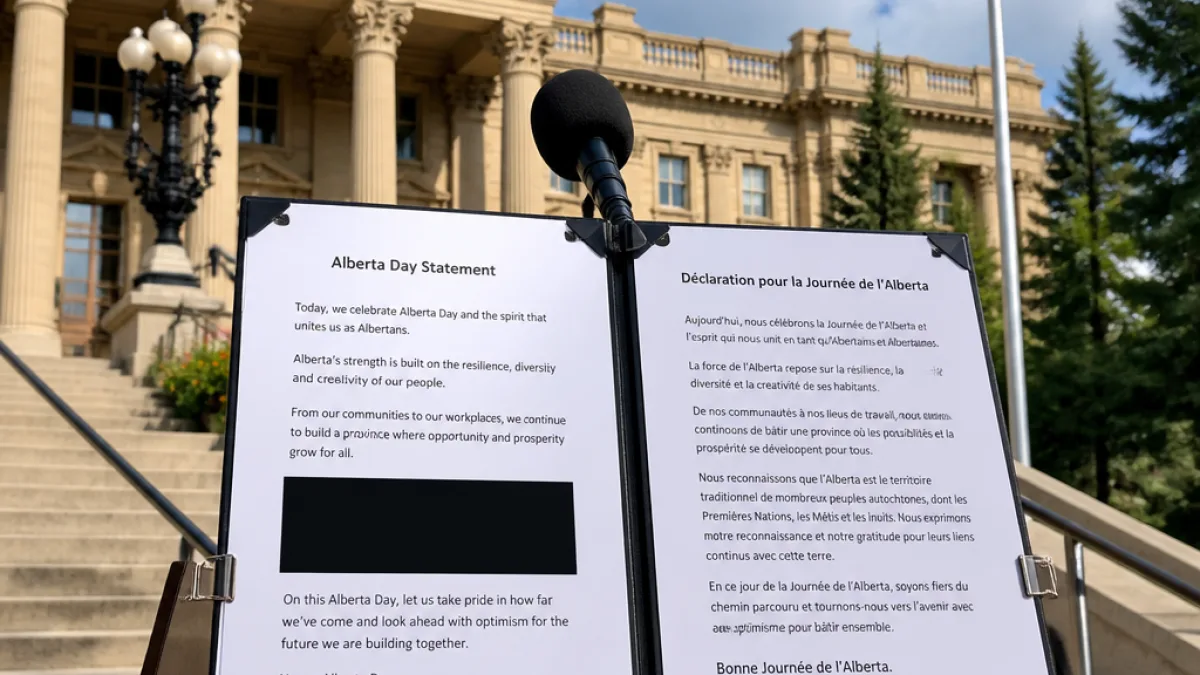
CALGARY — The Alberta government apologised on Tuesday after a revised version of Premier Danielle Smith’s Alberta Day statement was issued without a passage recognising Indigenous peoples.
What changed
About an hour after the government published the premier’s message marking the province’s 121st birthday, it released an updated English-language statement that removed the line acknowledging the Indigenous Peoples and their connection to the land. The French-language version of the revised statement retained the original reference.
“We recognize the Indigenous Peoples whose enduring connection to and stewardship of this land continues to shape Alberta.”
When the discrepancy was questioned, a provincial spokesperson, Yonathan Sumamo, told media the edited English release had been distributed "in error" and that the original statement — including the acknowledgement of Indigenous peoples — remained the government’s position. The office issued an apology for the mistake.
Premier calls it a ‘glitch’
At a separate press conference on education investments, Premier Smith described the removal as a "glitch" and said she was unsure how the update happened.
The episode comes amid strained relations between the provincial government and some First Nations over an upcoming referendum scheduled for Oct. 19. Several Indigenous leaders have said any vote on whether Alberta should separate from Canada would raise treaty-rights concerns.
Political and practical implications
Errors in public statements about Indigenous peoples can carry heavy political and symbolic weight, particularly at a time of heightened sensitivities. For governments, language that acknowledges Indigenous stewardship and connection to the land is part of broader reconciliation expectations and ongoing respectful relations.
- Original announcement included an explicit recognition of Indigenous peoples’ connection to the land.
- Updated English-language release omitted that recognition; the French update did not.
- Government says the omission was an error and apologised; the original statement "stands."
How officials framed the response
The government’s explanation framed the change as an inadvertent editorial error rather than an intentional policy shift. The swift apology sought to contain fallout by restoring the original text as the official position.
| Item | Detail |
|---|---|
| Original English release | Included recognition of Indigenous Peoples and stewardship of the land |
| Updated English release | Omitted reference to Indigenous Peoples |
| French release | Maintained original wording acknowledging Indigenous Peoples |
| Government response | Called revised release an error and apologised |
Observers will watch whether this is treated as a one-off technical mistake or the symptom of deeper communication issues inside the premier’s office. Given current tensions over the upcoming referendum and trust between government and some First Nations, even a brief omission can reverberate.
Context: timing matters
The timing of the error — on Alberta Day and as debate intensifies around provincial politics and Indigenous concerns tied to the referendum — adds to its salience. For Indigenous leaders and many observers, public acknowledgements of history and stewardship are not mere formalities.
Officials did not provide further detail about how the edited version came to be released or whether any internal review would follow. The government’s spokesperson reiterated the original statement — with the Indigenous recognition — was the intended message.
The incident underscores how carefully phrasing and distribution of official communications must be managed, especially on topics connected to reconciliation and treaty rights.
Local leaders and Indigenous communities will likely expect further clarification and assurance that such acknowledgements remain part of government practice going forward.