Ajax, Ont. — A security incident at global logistics firm CEVA Logistics that affected the Ajax football club’s webshop has put a spotlight on the vulnerability of third‑party supply chains and the personal information that can flow through them.
What happened
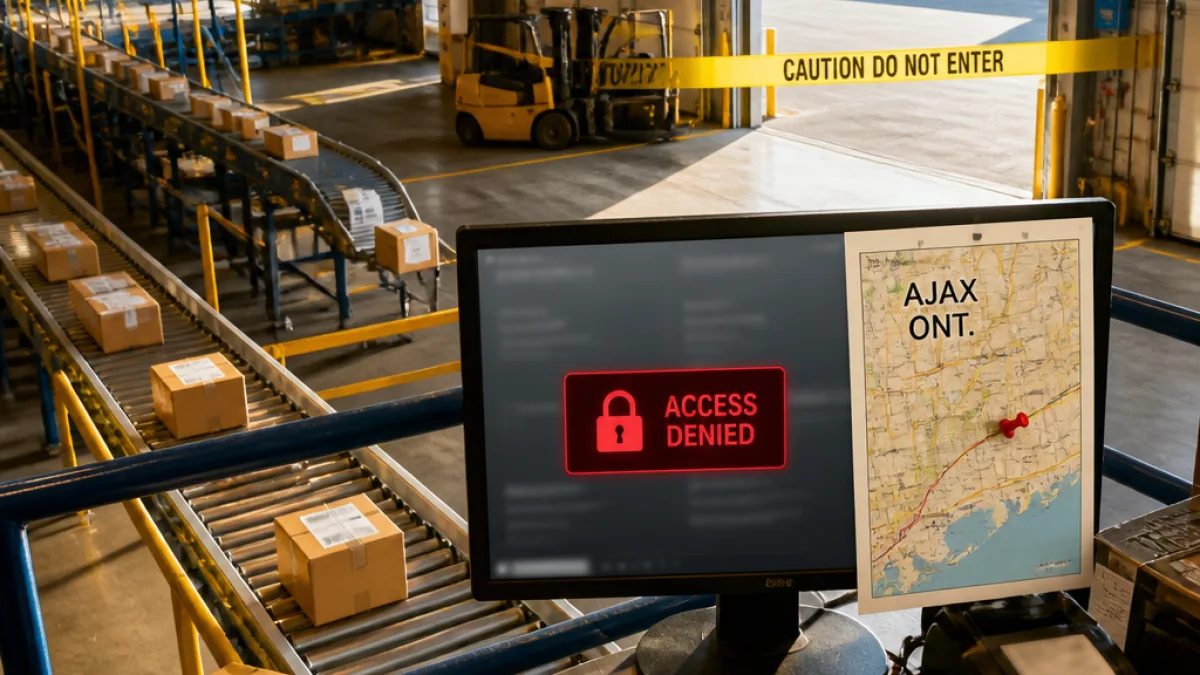
The Dutch club Ajax said it was notified last Monday that one or more “unauthorised individuals” gained access to parts of CEVA Logistics’ systems and data used for processing and shipping webshop orders. The club said its own systems were not affected and characterised the incident as limited to CEVA’s systems.
As a precaution, Ajax temporarily suspended all data transfers with CEVA until it can be established that information can be exchanged safely. The club also reported the incident to the Dutch data protection authority and launched an investigation together with CEVA.
Information at risk
Ajax and reporting on the incident identify the types of personal information that may have been accessed or exfiltrated. Those categories include names and contact details, and business‑related identifiers used by some customers.
- Potentially exposed data: names, postal addresses, email addresses, phone numbers.
- Transactional data: order histories, returns and fulfilment records.
- Business identifiers: some business customer names and VAT numbers.
Ajax has warned that orders and returns are taking longer than usual to process as a result of the incident.
Why it matters locally
Although the affected webshop is tied to the Amsterdam football club, the incident illustrates a common weakness in modern commerce: customer data often passes through third‑party logistics and fulfilment systems. Local merchants and organisations in Ajax, Ont., that rely on external logistics, payment processors, marketing platforms or cloud services exchange similar categories of customer information with partners.
That means a compromise at a vendor used by a local business can cause delayed deliveries and may expose customer information — even when the local organisation’s own systems remain secure. The Ajax–CEVA situation is a reminder that data stewardship extends beyond an organisation’s firewalls to the broader ecosystem of service providers.
What is known and what remains under investigation
CEVA and Ajax have confirmed an unauthorised access event and that parts of CEVA’s systems were affected. The club said it was notified and that it has suspended data flows while it and CEVA assess the situation. At the time of reporting, neither Ajax nor CEVA had provided a detailed breakdown of precisely which individuals’ records were accessed, nor a full technical account of how the attack occurred.
“Ajax takes this incident very seriously. As a precautionary measure, we have reported the incident to the Dutch data protection authority. Together with CEVA, we are closely monitoring developments,” the club said in a press release.
Investigations into the scope, cause and any exfiltrated data are ongoing. The CEVA Logistics breach has also been reported to have affected other retailers in the Netherlands, widening concern among companies that share logistics providers.
| Known fact | Status |
|---|---|
| CEVA Logistics systems compromised | Confirmed by Ajax |
| Ajax club systems affected | Not affected, per Ajax |
| Data types possibly exposed | Names, addresses, emails, phones, order histories, some VAT numbers |
| Data transfers between Ajax and CEVA | Temporarily suspended |
For residents in Ajax and across the Durham Region who shop online or do business with firms that outsource fulfilment, the incident underlines the need to monitor communications for notifications from vendors and to watch for unusual account activity. It also renews scrutiny on how well businesses vet and oversee the security practices of their logistics and technology partners.
Local small and medium‑sized enterprises, which commonly integrate third‑party services to scale operations, may face delayed shipments and customer questions while vendor investigations proceed. Municipal and consumer protection authorities typically advise affected organisations to inform customers promptly and to coordinate with data protection regulators where personal information may be involved.
The CEVA incident remains a developing story. Ajax and CEVA say they are investigating further and will resume data exchange only when they are satisfied it can be done securely.