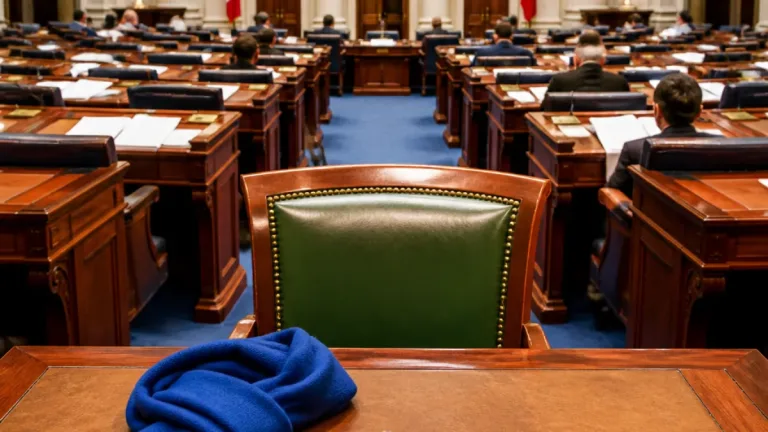

Halifax — The sergeant-at-arms at Province House has issued temporary bans to 36 people, barring them from the Nova Scotia legislature after a protest in March that interrupted a budget vote, officials confirmed this week.
Action taken after gallery disruption
The bans stem from a demonstration on March 24 in which protesters sang and shouted from the public gallery during the spring sitting, an event that briefly halted the House of Assembly’s business and closed Province House to the public for a week.
James Charlton, the House’s chief clerk, said the measures were intended to hold individuals accountable for disrupting proceedings. He said the Speaker of the House, Danielle Barkhouse, decided that temporary bans would be a proportionate response.
| Type of conduct | Typical ban length |
|---|---|
| Refusing to leave gallery when asked (not involved in demonstration) | 3 months |
| Participating in demonstration | 6 months |
| Participating and verbally abusive toward MLAs | 12 months |
Community leaders among those banned
Among those who received letters last week were Christine Saulnier, Nova Scotia director of the Canadian Centre for Policy Alternatives, and Nina Newington, president of Save Our Old Forests. Both said they were astonished to receive the bans.
“Banning people from the legislature for singing when this government has shown the kind of disregard for democratic process that it has, that seems astonishing to me,” Newington said.
Saulnier received a ban described in her letter as lasting six months, starting Sept. 1 and ending March 1, 2026. Newington was given a similar six-month restriction, according to the correspondence she received.
Officials cite moderation and precedent
Charlton told media the decision to impose temporary bans was indicated by the Speaker at the time the House re-opened on April 2. He described the ban as a more moderate sanction than other jurisdictions might apply.
In his message, Charlton noted that in some places — he cited Ontario as an example — similar protests can result in a lifetime ban from the gallery. In Nova Scotia, the temporary bans are the only immediate consequence beyond exclusion from Province House.
What the bans mean for public access
The actions raise questions about the balance between maintaining order during legislative sittings and preserving public access to democratic institutions. Protesters and advocacy groups have argued that demonstrations are a legitimate avenue to express grievances to elected officials; the legislature must weigh that against the need to conduct business uninterrupted.
- Who issued the bans: the sergeant-at-arms at Province House, under the direction of the Speaker.
- Number affected: 36 people received letters informing them of temporary bans.
- Range of sanctions: three to 12 months depending on involvement and conduct.
Neither the sergeant-at-arms nor the Speaker’s office provided further public detail on how individual cases were assessed or whether those banned have a route to appeal. Charlton said there are no other penalties attached to the bans beyond the prohibition on entering the legislature during the stated period.
Local reaction and implications
The decision to bar identified community leaders has drawn attention from advocacy groups who argue the move could chill public protest and civic engagement. The incident renews a broader conversation about how legislatures across Canada respond when public demonstrations spill into parliamentary spaces.
For now, the bans stand as the formal outcome of the March disruption. The Speaker’s choice of temporary exclusion, rather than harsher measures, suggests an attempt to strike a measured response — but it leaves unresolved questions about how and when the public can make its views heard inside Province House.
As the ban periods take effect, observers and participants alike will be watching whether Nova Scotia’s approach sets any precedent for future assemblies and how it affects the relationship between citizens and their elected representatives.
— Reporting by Liam Fitzgerald, Nova Scotia correspondent.