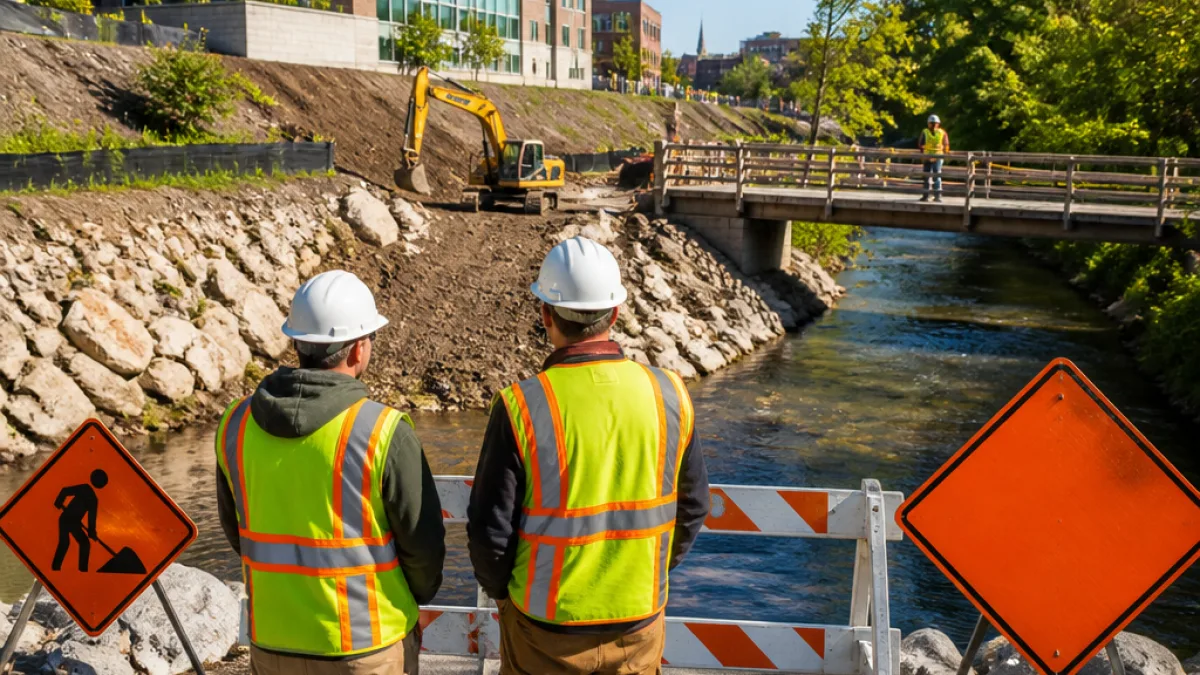
KNOXVILLE — Heavy equipment and crews have moved into Second Creek near the University of Tennessee at Knoxville, closing part of the Greenway and prompting visible changes along the stretch that runs beside the John D. Tickle Engineering Building.
What crews are doing on site
Photographs and onsite observations show an excavator operating at the top of a dirt ramp leading from the engineering building into the creek. Rocks have been shifted and small piles of equipment sit near the streambed as workers reinforce slopes and remove invasive vegetation.
University and contractor representatives have described the work as slope stabilization and ecological restoration — steps intended to reduce erosion, improve bank stability and replace nonnative plants with species native to East Tennessee.
- Slope reinforcement: moving and placing rock and soil to stabilize creek banks.
- Invasive plant removal: clearing nonnative species to limit their spread and make room for native plantings.
- Native replanting: establishing East Tennessee plants to restore habitat and reduce future erosion.
Access and visibility
Part of the pedestrian bridge that connects the Greenway to the John D. Tickle Engineering Building is closed off, and the equipment and work zone are clearly visible from nearby paths. That has drawn attention from campus users and residents who use the Greenway for walking, running and commuting.
University officials have not published a detailed schedule in the photographs reviewed, and no specific completion date was visible. Still, the presence of heavy machinery and constrained access indicates an active construction phase.
Why the work matters
Creek-bank stabilization and native plant restoration are common measures used to protect infrastructure, reduce sediment entering streams and improve habitat for local wildlife. Replacing invasive species with native plants can also improve bank resilience in the long term by reestablishing root systems better adapted to local soils and weather patterns.
For the UTK campus, stabilizing sections of Second Creek adjacent to buildings and pathways can reduce the likelihood of erosion-related damage and help maintain safe, accessible Greenway routes.
| Activity | Reported purpose |
|---|---|
| Excavation and rock placement | Slope stabilization and erosion control |
| Invasive species removal | Make room for native plants and improve ecological health |
| Native replanting | Restore habitat and strengthen banks |
Practical implications for Greenway users
People who regularly use the Greenway near the engineering building should expect limited access in the immediate work zone and visible construction activity. While officials have not posted formal detour maps in the materials reviewed, pedestrians and cyclists may need to use alternate nearby Greenway sections or campus sidewalks to navigate around the closed bridge access.
Users concerned about safety should avoid entering fenced or blocked work areas and follow posted signage. Construction zones around waterways can pose hazards including uneven ground, loose rock and equipment movement.
Context for local waterways
Second Creek flows through portions of Knoxville and the UTK campus, and work along its banks periodically occurs to address erosion, stormwater impacts and invasive vegetation. Projects of this type typically seek to balance infrastructure protection with ecological restoration, though timelines and specific techniques vary with site conditions.
Residents and campus visitors who want more precise information about the scope, timeline or contractor contact should consult official University of Tennessee communications or campus facilities notices. Those outlets will have the most complete updates on closures, expected durations and any future public outreach related to the project.
Photographs of the site show the current phase of work well underway, with machinery positioned on the creek bank and crews clearing and rearranging rock. For now, the visible changes to the Greenway serve as a reminder that local waterways require ongoing maintenance and occasional intervention to protect both people and property.
Brandon McAllister is the state correspondent for WE NEWS based in Knoxville.