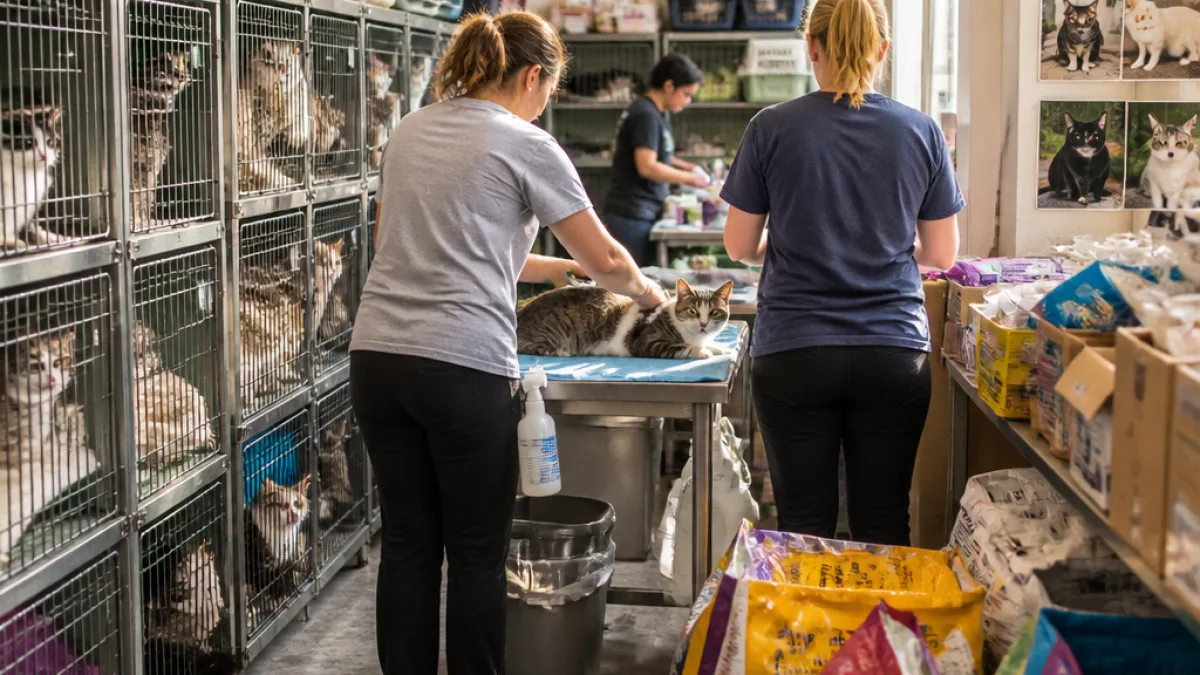
TACOMA — The Humane Society for Tacoma and Pierce County is facing a surge of felines after rescuers removed dozens of cats from a sailboat and an abandoned vehicle earlier this month, leaving shelter staff and volunteers scrambling to provide medical care, housing and foster placements.
Rescues and medical concerns
On Aug. 6, animal control officers seized 60 cats from a sailboat anchored off Owens Beach in Tacoma, authorities said. Shelter officials described the animals' living conditions on the boat as unhealthy and unsafe; since the rescue, nearly all have received medical examinations, vaccinations and other necessary care.
Shortly after the boat rescue, shelter staff took in an additional 20 cats found in an abandoned car. Some of those animals were only a few days old, and several were exposed to ringworm, a contagious fungal infection that requires treatment and separate housing until animals are cleared by veterinary staff.
Shelter capacity under pressure
The recent intakes come during what animal-welfare professionals call kitten season, a period of increased feline births and surrenders in the summer months. The Humane Society reported it currently has 190 cats housed at the shelter and an additional 230 cats placed with foster families.
Staff warned that large, sudden intakes like the recent rescues can strain resources and complicate routine operations, from medical care to daily husbandry and placement planning.
"This large intake can really drastically affect the shelter. We are already in the summer months where we are already seeing a large number of cats, we call it kitten season in animal welfare with a lot coming in. Prior to this, we already had a lot of animals in the shelter. So these large intakes of cats with a large influx at one time can be incredibly overwhelming and take a lot of resources and put a lot of strain on shelter capacity and population."
The quote above was provided by Stefanie Cornell of the Humane Society for Tacoma and Pierce County, who outlined how simultaneous rescues amplify the workload for staff and volunteers.
How Tacoma residents can help
Shelter officials said the newly rescued cats are not currently available for adoption while they undergo medical treatment and assessments. They are asking the public to consider the following ways to provide support:
- Sign up to foster cats or kittens to free up shelter space and provide individualized care.
- Purchase items from the shelter's supply wishlist, which helps cover food, bedding and medical supplies.
- Make a donation to assist with veterinary costs, treatment for ringworm and other medical needs.
Shelter staff direct interested community members to the Humane Society for Tacoma and Pierce County's website for details on fostering, donating and volunteering. They emphasized that fostering is especially important right now because it relieves crowding and reduces disease transmission risk within the shelter.
Numbers at a glance
| Item | Count |
|---|---|
| Cats seized from sailboat (Aug. 6) | 60 |
| Cats found in abandoned car | 20 |
| Cats currently in shelter | 190 |
| Cats in foster homes | 230 |
Staff and volunteers continue to triage medical needs, isolate animals exposed to contagious conditions like ringworm and coordinate placements with foster families. Shelter officials said managing the sudden influx requires time, space and funds to ensure every animal receives appropriate care.
For Tacoma residents considering assistance, fostering or donations may provide the most immediate relief. The Humane Society encouraged anyone interested to visit its website for the most current information on needs, supply lists and how to sign up to help.
As the community responds, shelter staff stressed that responsible pet ownership — including spay and neuter, vaccination and timely veterinary care — remains a key tool in reducing future overcrowding during peak seasons.